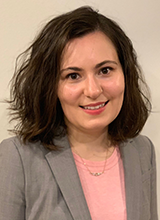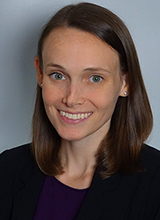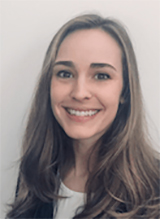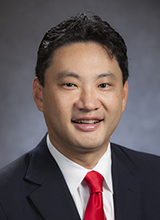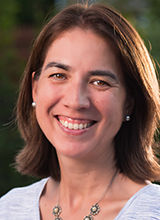
Dr. Hatch is an Associate Professor at the Addictions, Drug & Alcohol Institute (ADAI), Department of Psychiatry & Behavioral Sciences, UW School of Medicine. Her research interests are in the development and testing of behavioral and pharmacologic interventions for substance use disorders and HIV prevention. In particular, her work has focused on the intersection of substance use and HIV-related sex and drug risk behaviors from both the consumer and workforce perspectives, and on implementation factors that affect uptake of interventions. She has held multiple and varied roles in research projects since 1994, and has long-standing experience developing, implementing, and overseeing large-scale multi-site clinical trials with community treatment providers. In addition to her work at the University of Washington, Dr. Hatch is a licensed clinical psychologist at UWMC Outpatient Psychiatry Clinic. Her clinical work specializes in the treatment of drug and alcohol addictions and co-occurring depression, anxiety and trauma.
I am a perinatal and addiction psychiatrist and Assistant Professor in the Department of Psychiatry and Behavioral Sciences. My main area of interest and expertise is substance use disorders in the perinatal period as well as perinatal and reproductive psychiatry more generally. I am also passionate about doing my part to address inequities in healthcare.
Dr. Jaffe’s research is focused on responding to the public health problem of sexual assault and co-occurring alcohol misuse by improving understanding of survivors’ experiences and promoting recovery through novel interventions.
Taking an ecological perspective, Dr. Jaffe considers individual factors (e.g., cognitions, stress response), microsystems (e.g., interpersonal interactions, social networks), macrosystems (e.g., societal norms), and chronosystems (e.g., changes over time) that affect survivors’ recovery after sexual assault. Across these systems, she seeks to design and improve clinical interventions that support survivors’ recovery, mitigate post-assault alcohol misuse, and reduce distress.
I am interested in assessing risky alcohol and substance use and related consequences in young adults, with a specific focus on impaired driving-related behaviors. My work has mostly utilized a behavioral decision-making approach to understand factors that influence young adults’ decisions to engage in risky behaviors. I am also interested in developing and adapting prevention and intervention programs to reduce alcohol and substance use and consequences.
Personal Statement
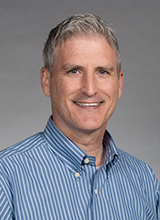
I am an investigator in the Seattle-Denver Center of Innovation for Veteran-Centered and Value-Driven Care and Associate Director of the Seattle Center of Excellence in Substance Abuse Treatment and Education (CESATE), one of two national VA centers devoted to improving the quality of care and clinical outcomes of veterans with substance use conditions. I am also a licensed clinical psychologist in Washington State. My primary research interests include evaluating and improving behavioral health and substance use outcomes of Veterans with alcohol and/or drug misuse conditions. I received his PhD from Brigham Young University.
My primary research interests include evaluating and improving behavioral health and substance use outcomes of Veterans with alcohol and/or drug misuse conditions. Ongoing research interests include prevention of alcohol misuse among Veteran populations and development of a collaborative care management intervention for patients with complex, recurrent substance use disorders and high utilization of hospital services. Current projects include evaluating collaborative care management approaches for treating Veterans with complex and chronic substance use disorders, estimating the relative risks of serious adverse events among Veterans with PTSD who are prescribed opioids and benzodiazepines concurrently, evaluating clinical decision support interventions to reduce concurrent use of opioid and benzodiazepine medications among high-risk Veterans and validation of quality indicators for recognition and management of problematic alcohol use, and assessing the recognition and management of alcohol misuse among OEF/OIF Veterans with and without TBI.
Personal Statement
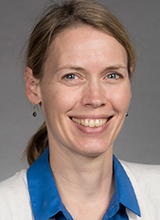
I am a Professor and Licensed Clinical Psychologist in the University of Washington’s Department of Psychiatry and Behavioral Sciences and am Board Certified in Cognitive and Behavioral Psychology. I received my Ph.D. in clinical psychology from the UW in 2006 and returned to UW as a faculty member in 2010.
My research interests include problematic substance use (including alcohol and marijuana), posttraumatic stress disorder (PTSD), identity and self-concept, and resilience. My work focuses on investigating implicit (i.e., non-conscious or automatic) cognitive processes and processes related to self-concept and identity that contribute to the development and maintenance of maladaptive behavior and psychopathology. A second line of my work focuses on developing and increasing access to briefer, effective interventions for individuals who are trauma-exposed. Support for my work has been provided by the National Institute on Alcohol Abuse and Alcoholism, the National Institute on Drug Abuse, and the University of Washington’s Garvey Institute for Brain Health Solutions and the Addictions, Drug & Alcohol Institute. I also serve as a consultant for dissemination projects aimed at training community-based mental health workers in Cognitive Processing Therapy and other evidence-based treatment for PTSD in locally, nationally, and internationally.
Personal Statement
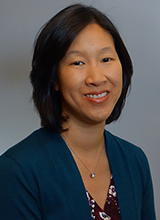
The transition to adulthood is the developmental period when alcohol use, marijuana use, and their associated consequences reach their lifetime peak. My scholarly interests focus on the etiology and prevention of substance use behaviors and consequences during adolescence and young/early adulthood. I have developed a highly successful portfolio of work bridging developmental, social, and motivational theory with applied prevention and intervention techniques to strategically address high-risk behaviors during the transition to adulthood.
My research addresses important questions regarding how recent marijuana legislation in Washington State impacts young adult marijuana use and consequences; what motivates young adults to engage in alcohol and marijuana use; how alcohol expectancies, alcohol use and consequences are linked in a natural feed-forward process that maintains high-risk behaviors; how developmental transitions and event timing influence use; and what are efficacious prevention and intervention strategies and for whom and under what conditions are these most effective.
Personal Statement
I am a clinical psychologist with research interests in the treatment of alcohol and substance use disorders and co-occurring mental health conditions.
My research focuses on understanding how to improve access to evidence-based treatments and understanding why and how patients benefit from treatment. I am particularly interested in research measurement-based care — i.e., the use of standardized measures to monitor treatment progress and inform clinical decision-making.
Broad areas of interest include:
- Alcohol and drug use disorder treatment, including the effectiveness of digital and behavioral interventions, mechanisms of behavioral change, and social and environmental determinants of change.
- Technology to support behavioral change, including patient- and clinician-facing tools that support clinical decision-making, treatment adherence, and treatment progress monitoring.
- Applied statistical analysis, including methods for analyzing longitudinal data, clinical trials data, multilevel data, missing data, psychometric analysis, and data visualization.
Personal Statement
I am a board certified psychiatrist and work at Fred Hutchinson Cancer Center. I am a Clinical Assistant Professor of Psychiatry and Behavioral Sciences at the University of Washington. I obtained a fellowship in consultation-liaison psychiatry, a specialty that focuses on providing psychiatric care for people with complex medical conditions. My primary clinical focus is people with cancer.
I love my work. Being ill is a vulnerable time and my goal is to ease suffering and provide a sense of connection and understanding for all I work with. I believe in working collaboratively with patients and families. We work together to identify what the goals of treatment are. I have expertise in diagnosis, psychopharmacology and psychotherapy and adapt my recommendations to best serve the goals of the person before me.
I am also passionate about education. I am the site director at Fred Hutch Cancer Center for our Psycho-oncology Fellowship Program. I supervise Cl fellows, addiction fellows, psychiatry residents and provide education to social workers and psychology trainees.