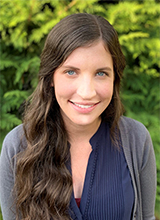
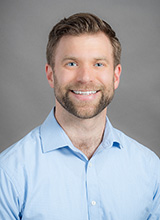
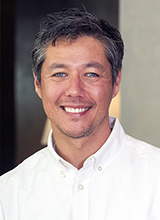
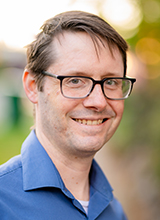
I am a health services researcher and implementation scientist focused on improving care for substance use disorders. My work seeks to increase access to this care through telehealth and implementation outside of traditional substance use treatment settings, as well as to improve care quality and patient-centeredness. I am an investigator at VA Puget Sound Health Care System and a VA Career Development Awardee.
I am an Acting Assistant Professor in the Department of Psychiatry and Behavioral Sciences at the University of Washington, primarily working clinically at Harborview Medical Center. I work with the Recovery Clinic, Intake and Brief Intervention Services (IBIS), the Behavioral Health Integration Program (BHIP), and Addiction Consult Service.
I am fellowship-trained in Addiction Psychiatry, and board certified in both general and addiction psychiatry by the American Board of Psychiatry and Neurology. My passion is providing excellent, compassionate and comprehensive psychiatric care to my patients regardless of background or resources. I believe quality healthcare is a human right for all people and am excited help make that a reality as part of the Harborview system.
Dr. Dahyeon Kang is an Assistant Professor at the University of Washington School of Medicine. She earned her doctoral degree from the University of Illinois at Urbana-Champaign, where her work focused on the etiology of alcohol and substance use disorders through multimodal research methods, including alcohol administration, neuroimaging, transdermal biosensors, and ecological momentary assessments. At the University of Washington’s Department of Psychiatry, Dr. Kang investigates how individual and social factors interact to influence alcohol and cannabis use behaviors.
As a clinical and quantitative psychologist, my work bridges statistical practice and psychological theory to better identify for whom, under what conditions, and why substance-related health disparities are greatest across development. My substantive research seeks to understand how individual differences in stress and developing self-regulation shape substance use and disorder from adolescence through young adulthood, and how these associations explain substance use disparities among sexual and gender minoritized communities. Stemming from this work, my methodological research is centered on improving the analysis and interpretation of nonlinear effects spanning parametric and non-parametric methodologies.
Hello! I’m the medical director for the Long Term Civil Commitment Units at the Center for Behavioral Health and Learning. This is a new program as of July 2024 and I am excited to help get it off the ground. I completed my medical school training at the University of Cincinnati, then residency at Oregon Health & Science University, then addiction psychiatry fellowship at UW, then worked at the Puget Sound VA for five years and Providence Swedish for six years prior to starting at UW. I’m thrilled to be part of the team here and looking forward to this next chapter in my career.
I am a trained Behavioral Scientist with a PhD in Health & Human Performance. The main goal of my work is to reduce substance-related harms and improve quality of life for people experiencing problems related to their substance use. I work closely with community members who use drugs to inform my line of research and address key needs identified. My primary appointment is at the Harm Reduction Research and Treatment (HaRRT) Center within the UW School of Medicine and hold an Affiliate Faculty appointment within the School of Public Health. My aim is to adapt, refine, and disseminate harm reduction programs through digital health interventions to empower individuals and ameliorate substance-related harms.
I am a behavioral neuroscientist who earned my PhD from Rutgers University and completed a postdoc here, in the Psychiatry and Behavioral Sciences Department at the University of Washington. My lab, located in the MIRECC at VA Puget Sound, aims to identify the neural mechanisms underlying substance use disorders and maladaptive decision making.
My primary focus is studying the neurobiological consequences and predictors of chronic fentanyl use. To accomplish this, I utilize cutting-edge in-vivo optical neuroscience tools (photometry, optogenetics, miniscopes) along with a newly developed oral-fentanyl self-administration model for rats and mice. I am also the lead developer for DeepSqueak, a popular software package for bioacoustics analysis that integrates machine-vision algorithms with an intuitive graphical interface to accelerate animal communication research.