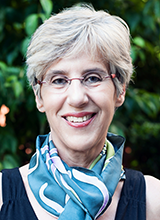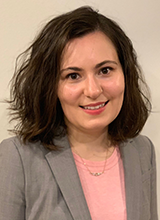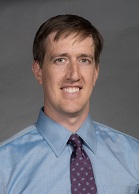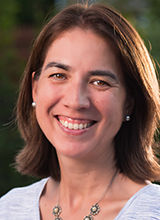
Dr. Hatch is an Associate Professor at the Addictions, Drug & Alcohol Institute (ADAI), Department of Psychiatry & Behavioral Sciences, UW School of Medicine. Her research interests are in the development and testing of behavioral and pharmacologic interventions for substance use disorders and HIV prevention. In particular, her work has focused on the intersection of substance use and HIV-related sex and drug risk behaviors from both the consumer and workforce perspectives, and on implementation factors that affect uptake of interventions. She has held multiple and varied roles in research projects since 1994, and has long-standing experience developing, implementing, and overseeing large-scale multi-site clinical trials with community treatment providers. In addition to her work at the University of Washington, Dr. Hatch is a licensed clinical psychologist at UWMC Outpatient Psychiatry Clinic. Her clinical work specializes in the treatment of drug and alcohol addictions and co-occurring depression, anxiety and trauma.
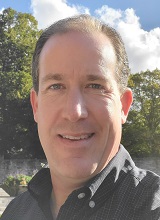
In two decades at UW, Dr. Hartzler’s principal focus has been on the dissemination and implementation of empirically-supported health services for persons with substance use disorders. To date, this includes local, regional, national, and international collaborations, encompassing federally-funded work with diverse community-based settings (i.e., addiction care, mental health, primary and specialty medical care, criminal justice, HIV care, schools, faith-based organizations), including those affiliated with the NIDA Clinical Trials Network. As director of the UW Center for Advancing Addiction Health Services (CAAHS), he oversees a broad portfolio, including: 1) the SAMHSA-funded Northwest Addiction Technology Transfer Center (Northwest ATTC), which provides universal, targeted, and intensive technical assistance to the addiction workforce in Alaska, Idaho, Oregon, and Washington 2) regional contribution to SAMHSA’s national Opioid Response Network (ORN), 3) a host of externally-sponsored implementation projects with single-state authorities as well as other organizations, and 4) contribution to NIH-funded and intramural health services research. In professional endeavors that span a science-to-service continuum, Dr. Hartzler seeks to promote adoption and implementation of useful treatment and recovery practices in community settings where they may benefit persons with substance use disorders.
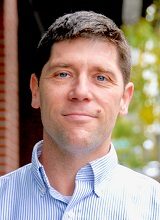
Dr. Banta-Green studies substance use involving opioids and stimulants and interventions to support recovery and reduce substance-related harms. He is particularly interested in developing interventions that are accessible to all people, including those who are most marginalized, such as those who are unhoused, utilizing services syringe service programs, and/or in the criminal legal system. He provides technical assistance and evaluation services for public health and safety interventions including the website http://stopoverdose.org, and information for the general public and professionals about effective treatments at http://learnabouttreatment.org. As an epidemiologist he develops innovative approaches to measuring the use and impacts of substances as well as service utilization. His health services research involves clinical trials, implementation research, and secondary data analyses. He serves on local, state, and federal workgroups and committees related to epidemiology, policy, and interventions for illicit substance-related problems. He is a member of the U.S. Health and Human Service’s Interdepartmental Substance Use Disorders Coordinating Committee.
I am a perinatal and addiction psychiatrist and Assistant Professor in the Department of Psychiatry and Behavioral Sciences. My main area of interest and expertise is substance use disorders in the perinatal period as well as perinatal and reproductive psychiatry more generally. I am also passionate about doing my part to address inequities in healthcare.
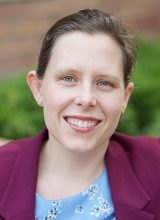
Personal Statement
I am a board certified psychiatrist and work at Fred Hutchinson Cancer Center. I am a Clinical Assistant Professor of Psychiatry and Behavioral Sciences at the University of Washington. I obtained a fellowship in consultation-liaison psychiatry, a specialty that focuses on providing psychiatric care for people with complex medical conditions. My primary clinical focus is people with cancer.
I love my work. Being ill is a vulnerable time and my goal is to ease suffering and provide a sense of connection and understanding for all I work with. I believe in working collaboratively with patients and families. We work together to identify what the goals of treatment are. I have expertise in diagnosis, psychopharmacology and psychotherapy and adapt my recommendations to best serve the goals of the person before me.
I am also passionate about education. I am the site director at Fred Hutch Cancer Center for our Psycho-oncology Fellowship Program. I supervise Cl fellows, addiction fellows, psychiatry residents and provide education to social workers and psychology trainees.
Personal Statement
I have pursued a career at the intersection of mental health and primary care, training in both family medicine and addiction psychiatry. I currently practice in various integrated care settings as a consulting psychiatrist and in the outpatient adult psychiatry clinic. I am the co-medical director for the University of Washington Psychiatry and Addiction Case Conference (UW PACC), a weekly online learning collaborative to help community providers across the state improve their psychiatric and addiction clinical skills. My area of interest is focused on improving addiction and psychiatric treatment to primary care settings. I also spend a significant amount of time training both family medicine and psychiatry trainees and fellows on integrated treatments for substance use disorders.
Personal Statement
I completed my Residency in Psychiatry with the UW in 1982 and since then have worked at Harborview Medical Center in the Psychiatry Department. I am a Clinical Associate Professor and provide weekend and on-call coverage for 5MB on the Intensive Psychiatric Unit.
Personal Statement
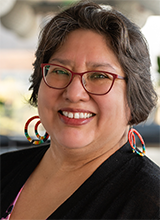
Myra Parker, JD, PhD is an Associate Professor of Psychiatry and Behavioral Sciences, and Director of Seven Directions: A Center for Indigenous Public Health, based within the Center for the Study of Health and Risk Behaviors, University of Washington. She received her doctorate in Health Services at UW School of Public Health, and has been a member of the faculty since 2014.
Dr. Parker’s research and clinical interests include: (1) cultural adaptation of alcohol and drug interventions among American Indians and Alaska Natives (with a particular focus on tribal college drinking harm reduction), (2) development and testing of parenting interventions to support early childhood development in American Indian and Alaska Native communities, (3) co-morbidity of substance use with depression, suicide, trauma, and PTSD, (4) research capacity development, including ethical aspects of research, for tribal and urban Indian communities; and, (5) dissemination and translation of evidence-based prevention and intervention approaches at the individual, institutional, and community level, including policy development. She has worked with tribal and urban Indian communities across the United States on these topics.
Personal Statement
I am a licensed clinical psychologist in Washington State. I am the Director of the University of Washington School of Medicine’s Psychology Internship Program which is accredited by the American Psychological Association’s Office of Program Consultation and Accreditation. And, I conduct research on health and risk behaviors across the lifespan. Specifically, I have conducted research in the areas of college student alcohol use, young adult gambling behavior, and co-morbidity of substance use and mental health/risk behaviors (i.e. risky sexual behaviors). I have extensive experience working with college students/young adults, military/veteran, and minority/diverse populations. I am also interested in mental health issues including depression, anxiety, and PTSD. I maintain an active clinical practice in the areas of mental health issues with patients diagnosed with hematological and oncological illness and have clinical responsibilities at the Fred Hutchinson Cancer Center. I also provide clinical supervision for psychology residents and psychology practicum students at Fred Hutchinson Cancer Center as well. Overall, my professional aspirations are to improve the public health through empirically-supported psychological interventions and providing mentorship to diverse trainees to expand the reach of psychology.