Scholarly Expertise: Adolescent/young adult
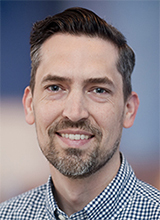
Douglas Russell
Dr. Russell’s professional interests include ADHD, integrated/collaborative care, prevention and complementary/integrative approaches to child and adolescent mental health. He takes a holistic approach to psychiatric well-being that extends beyond medications and psychotherapy to include other evidence-based practices shown to improve brain health including regular exercise, time in nature, supportive social interactions, mind-body activities, good nutrition and sleep hygiene.
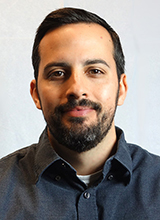
Jason Ramirez
Personal Statement
I came to the University of Washington in 2014 as a postdoctoral fellow supported by the National Institute on Alcohol Abuse and Alcoholism and has been faculty here since 2016. My research interests include examination of cognitive and psychosocial processes thought to underlie substance misuse predominantly among adolescents and young adults. Support for my work has been provided by the National Institute on Alcohol Abuse and Alcoholism, the National Institute on Drug Abuse, and by the Alcohol and Drug Abuse Institute at the University of Washington.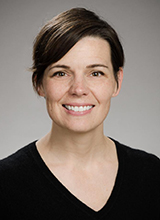
Sarah Cusworth Walker
Personal Statement
I am interested in methods of evidence translation and knowledge exchange that improve system and policymaking in behavioral health with a focal interest in public mental health for children and juvenile justice system reform.
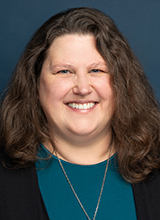
Katherine Anne (Kate) Comtois
Personal Statement
My career goal is to give suicidal clients and their clinicians the best chance to succeed. I have been working in the area of health services, treatment development, and clinical trials research to prevent suicide for over 30 years. My graduate training was in community/clinical psychology and focused on achieving clinical ends through prevention and other systemic interventions in socio-culturally diverse populations. I have brought these perspectives into health services research. I have developed or adapted interventions to improve care and clinician willingness to work with suicidal patients including Caring Contacts, Dialectical Behavior Therapy (DBT), Collaborative Assessment and Management of Suicidality (CAMS), and Preventing Addiction Related Suicide (PARS). I have developed an adaptation of DBT Next Steps, a program to assist psychiatrically disabled individuals find and maintain living wage employment. My research has been funded by NIMH, NIDA, the Department of Defense, American Foundation for Suicide Prevention, and the State of Washington.
I am the director of the Center for Suicide Prevention and Recovery (CSPAR) whose mission is to promote the recovery of suicidal individuals and the effectiveness and well-being the clinicians and families who care for them by conducting rigorous and ecologically valid research, developing innovative interventions, improving policies, systems and environments of care, and providing expert training and consultation. CSPAR faculty and staff seek a deep understanding of the cultures and settings in which we work that leads to meaningful and effective interventions ready for implementation.
I also direct the Suicide Care Research Center, an NIMH P50 funded research center focused on using Human Centered Design and MOST optimization methodology to improve the care of adolescents and young adults (age 13-30 years) in outpatient medical settings. We are conducting one fully powered trial, three R34s, and 4 pilot studies within UW Medicine and Seattle Children’s hospital to develop innovative interventions to support primary care, Collaborative Care, and specialty medical clinics care for patients experiencing suicidal thoughts and behavior. The center supports effort of over 20 faculty and 16 staff as well as 11 emerging and advanced collaborating scholars and funds 2 annual pilot grants (each $100,000 over two years).
In addition to clinical research, I founded the Society for Implementation Research Collaboration (SIRC) focused on disseminating and implementing innovative, evidence-based interventions in the systems that need them. Beyond my research, I directed the Harborview Dialectical Behavior Therapy program at Harborview Medical Center 1996-2019, co-lead the UWAnnual Comprehensive DBT Training Program and Suicide Care in Healthcare Systems: We Can Do Better Serving our Patients and Caring for our Clinicians, both of which meet the Washington State requirement for suicide prevention training. I have a long history of training and mentoring junior faculty, post-doctoral scholars, psychiatry residents, pre-doctoral psychology interns, undergraduate students, and post-baccalaureate trainees. I provide psychotherapy and consultation at the UWMC Outpatient Psychiatry Clinic.

Mark Stein
Personal Statement
I am clinical psychologist and a Professor of Psychiatry and Pediatrics, and a clinical researcher specializing in ADHD throughout the lifespan. I direct the PEARL Clinic (Program to enhance attention, regulation, and learning) at Seattle Children’s. The PEARL Clinic is based on a multidisciplinary and collaborative care model which works closely with PCP’s who refer families to PEARL for evaluation and access to our behavioral group treatment programs and treatment recommendations. The PEARL clinic also provided multidisciplinary training for psychologists, psychiatrists, pediatricians, family medicine physicians, and medical students. The majority of my clinical work involves diagnostic evaluations and consultations for the parents, referring physician, and schools. My research emphasis is on personalizing ADHD treatment, and determining how best to combine and sequence interventions throughout the lifespan for individuals with ADHD. I have assisted in the development of several stimulant and non stimulant medications, and participated in many clinical trials. Currently, we are conducting a study for parents with ADHD who have young children with ADHD symptoms where we are treating the parent with medication and behavioral parent training or behavior parent training. I am also investigating the relationship between genetic factors and ADHD treatment response. Other areas of interest include sleep problems and overlap with ADHD, and novel treatments such as Trigeminal Nerve Stimulation (TNS) and augmentation strategies such as mindfulness and physical exercise or activity level.Eileen Twohy
I am a clinical psychologist at Seattle Children’s Hospital and UW Medicine, where my work primarily consists of clinical care and teaching. My two areas of focus are the provision of effective, trauma-informed treatment for youth and families in suicidal crises and the promotion of equitable access to behavioral healthcare.
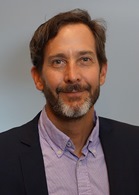
Eric J. Bruns
Personal Statement
I am a clinical psychologist and mental health services researcher. My overarching research aim is to produce and promote use of research, evaluation, and continuous quality improvement that aids high-quality implementation of effective models of care in real world service settings, such as in schools, public mental health systems, and family-and youth-run organizations. My research can be summarized as falling into three categories: (1) Care coordination models for youth with the most complex behavioral health needs; (2) school mental health; and (3) public sector implementation of research-based practices. In each area, I co-direct national training and TA centers. For example the National Wraparound Implementation Center (www.nwic.org), provides support to dozens of states and localities internationally on Wraparound. The National Wraparound Initiative (www.pdx.edu) serves to mobilize our research and policy activities. Our Wraparound fidelity tools and data systems can be found at www.wrapinfo.org. With respect to school mental health, our interdisciplinary UW School Mental Health Assessment, Research, and Training (SMART) Center — www.smartcenter.uw.edu — currently has over a dozen federal grants as well as state, local, and foundation funding focused on how best to ensure that evidence for effective mental health intervention and prevention is translated into effective programming in schools. The SMART Center also hosts the school mental health supplement of the UW Department of Psychiatry’s SAMHSA-funded Northwest Mental Health Training and Technical Assistance Center (MHTTC). Check out our extraordinary array of resources at https://mhttcnetwork.org/centers/northwest-mhttc/northwest-mhttc-school-mental-health.
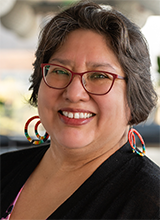
Myra Parker
Personal Statement
Myra Parker, JD, PhD is an Associate Professor of Psychiatry and Behavioral Sciences, and Director of Seven Directions: A Center for Indigenous Public Health, based within the Center for the Study of Health and Risk Behaviors, University of Washington. She received her doctorate in Health Services at UW School of Public Health, and has been a member of the faculty since 2014.
Dr. Parker’s research and clinical interests include: (1) cultural adaptation of alcohol and drug interventions among American Indians and Alaska Natives (with a particular focus on tribal college drinking harm reduction), (2) development and testing of parenting interventions to support early childhood development in American Indian and Alaska Native communities, (3) co-morbidity of substance use with depression, suicide, trauma, and PTSD, (4) research capacity development, including ethical aspects of research, for tribal and urban Indian communities; and, (5) dissemination and translation of evidence-based prevention and intervention approaches at the individual, institutional, and community level, including policy development. She has worked with tribal and urban Indian communities across the United States on these topics.