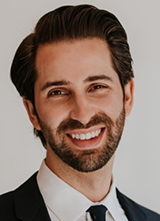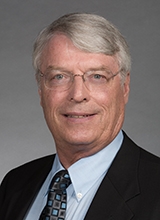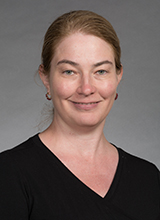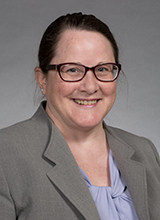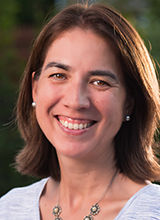
Dr. Hatch is an Associate Professor at the Addictions, Drug & Alcohol Institute (ADAI), Department of Psychiatry & Behavioral Sciences, UW School of Medicine. Her research interests are in the development and testing of behavioral and pharmacologic interventions for substance use disorders and HIV prevention. In particular, her work has focused on the intersection of substance use and HIV-related sex and drug risk behaviors from both the consumer and workforce perspectives, and on implementation factors that affect uptake of interventions. She has held multiple and varied roles in research projects since 1994, and has long-standing experience developing, implementing, and overseeing large-scale multi-site clinical trials with community treatment providers. In addition to her work at the University of Washington, Dr. Hatch is a licensed clinical psychologist at UWMC Outpatient Psychiatry Clinic. Her clinical work specializes in the treatment of drug and alcohol addictions and co-occurring depression, anxiety and trauma.
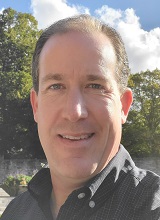
In two decades at UW, Dr. Hartzler’s principal focus has been on the dissemination and implementation of empirically-supported health services for persons with substance use disorders. To date, this includes local, regional, national, and international collaborations, encompassing federally-funded work with diverse community-based settings (i.e., addiction care, mental health, primary and specialty medical care, criminal justice, HIV care, schools, faith-based organizations), including those affiliated with the NIDA Clinical Trials Network. As director of the UW Center for Advancing Addiction Health Services (CAAHS), he oversees a broad portfolio, including: 1) the SAMHSA-funded Northwest Addiction Technology Transfer Center (Northwest ATTC), which provides universal, targeted, and intensive technical assistance to the addiction workforce in Alaska, Idaho, Oregon, and Washington 2) regional contribution to SAMHSA’s national Opioid Response Network (ORN), 3) a host of externally-sponsored implementation projects with single-state authorities as well as other organizations, and 4) contribution to NIH-funded and intramural health services research. In professional endeavors that span a science-to-service continuum, Dr. Hartzler seeks to promote adoption and implementation of useful treatment and recovery practices in community settings where they may benefit persons with substance use disorders.
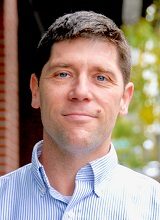
Dr. Banta-Green studies substance use involving opioids and stimulants and interventions to support recovery and reduce substance-related harms. He is particularly interested in developing interventions that are accessible to all people, including those who are most marginalized, such as those who are unhoused, utilizing services syringe service programs, and/or in the criminal legal system. He provides technical assistance and evaluation services for public health and safety interventions including the website http://stopoverdose.org, and information for the general public and professionals about effective treatments at http://learnabouttreatment.org. As an epidemiologist he develops innovative approaches to measuring the use and impacts of substances as well as service utilization. His health services research involves clinical trials, implementation research, and secondary data analyses. He serves on local, state, and federal workgroups and committees related to epidemiology, policy, and interventions for illicit substance-related problems. He is a member of the U.S. Health and Human Service’s Interdepartmental Substance Use Disorders Coordinating Committee.
I have always been interested in the thoughts and feelings that drive us. This led me to major in Psychological and Brain Sciences at Johns Hopkins University and to later enroll in the psychiatry residency training program at Washington University in St. Louis. Since completing training, I have had an excellent experience working at UW/Harborview’s emergency and inpatient psychiatry services. My teaching interests include the psychiatric interview, documentation, and fundamentals of clinical decision-making. Clinically, I enjoy taking a holistic approach to care, utilizing interventions across behavioral changes, pharmacology, and psychotherapy.
Personal Statement
I am a Professor of Psychiatry and Director of the Addictions Division in the Department of Psychiatry and Behavioral Sciences at the University of Washington School of Medicine in Seattle, Washington. I am also the clinical director of addictions treatment services at Harborview Medical Center, and work in the psychiatric rehabilitation and recovery services.
I am board-certified in Psychiatry by the American Board of Psychiatry and Neurology with Added Qualifications in Addiction Psychiatry, and the American Board of Addiction Medicine. A Distinguished Fellow of the American Psychiatric Association and a Fellow of the American Society of Addiction Medicine, I am on the editorial board and a reviewer for several scientific journals and holds a number of research grants from the National Institute of Health.
Personal Statement
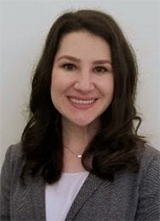
I am a licensed psychologist and Associate Professor in the Department of Psychiatry and Behavioral Sciences at the University of Washington. I received my Ph.D. from the University of Missouri, completed clinical psychology internship at the University of Washington, and subsequently was awarded an NIH-funded postdoctoral fellowship focused on addressing young adult substance misuse. I joined the University of Washington faculty in 2019.
My work integrates clinical research and evidence-based practice to improve adolescent and young adult health. My research focuses on developing and evaluating prevention and intervention programs to prevent and reduce substance misuse (alcohol, cannabis) and co-occurring mental health concerns (e.g., depression, PTSD, loneliness, coping-motivated substance use). I have led NIH-funded clinical trials and contributed to federally and state-funded prevention/intervention studies delivered across diverse platforms, including text messaging, web-based, web-conferencing, and in-person care. My work also examines etiological factors underlying substance misuse and mental health, including loneliness, social support, and barriers to accessing care. I have served as Principal Investigator on research funded by the National Institute of Alcohol Abuse and Alcoholism and other grants from the University of Washington.
Clinically, I provide evidence-based crisis intervention and treatment to adolescents experiencing suicidal crises and other acute mental health concerns through the Behavioral Health Crisis Care Clinic and Mood and Anxiety Program at Seattle Children’s Hospital.
- Recent Grants:
- Development of a behavioral economic intervention with personalized resource allocation feedback to reduce young adult alcohol misuse (PI: Cadigan, NIH/NIAAA1R34AA029478)
- Development of an interactive, web-based drinking to cope intervention and tools to assess coping skill utilization (PI: Cadigan, NIH/NIAAA R34AA028074)
Personal Statement
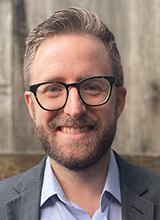
My research is focused on (1) developing innovative mHealth assessments and interventions for schizophrenia-spectrum disorders and cross-diagnostic persecutory ideation, as well as (2) “engagement mHealth,” or the development of mobile health interventions that increase the likelihood that underserved populations present to and receive evidence-based treatment, with a particular focus on young adults at risk for psychosis and their families. My research is supported by a NARSAD Young Investigator Award from the Brain and Behavior Research Foundation and multiple grants from NIMH including a K23 Mentored Patient-Oriented Research Career Development Award.
Prior to my faculty position at UW, I was an Advanced Fellow in VA Health Services Research and Development and the Department of Health Services at UW. I completed my clinical psychology internship at the VA Puget Sound Health Care System, where I was awarded the APA Division 18 Outstanding VA Trainee Award. Prior to internship, I completed my undergraduate and doctoral training at the University of North Carolina at Chapel Hill. Throughout my training, I have been dedicated to services for individual with serious mental illness, with experience in an inpatient state hospital, VA psychosocial rehabilitation, intensive outpatient and dual-diagnosis clinics, and in coordinated specialty care for young people with early psychosis.
In addition to my program of research and clinical work, I am committed to clinical supervision and training. I currently lead the development of one of the first clinical training sequences designed for frontline clinicians integrating mHealth into community mental health. I was the first-ever graduate student to win UNC’s David Galinsky Award, an honor recognizing excellence in clinical supervision that had previously only ever been won by faculty. I am currently active in providing supervision in CBT to third-year psychiatry residents at UW.
Personal Statement
I am experienced in the evaluation and treatment of a range of psychiatric conditions including anxiety and panic, mood disorders, psychosis, obsessive-compulsive disorder, posttraumatic stress disorder and personality disorders. I work with adult and geriatric patients in the outpatient setting.
Personal Statement
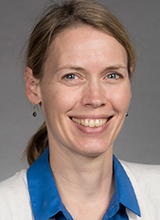
I am a Professor and Licensed Clinical Psychologist in the University of Washington’s Department of Psychiatry and Behavioral Sciences and am Board Certified in Cognitive and Behavioral Psychology. I received my Ph.D. in clinical psychology from the UW in 2006 and returned to UW as a faculty member in 2010.
My research interests include problematic substance use (including alcohol and marijuana), posttraumatic stress disorder (PTSD), identity and self-concept, and resilience. My work focuses on investigating implicit (i.e., non-conscious or automatic) cognitive processes and processes related to self-concept and identity that contribute to the development and maintenance of maladaptive behavior and psychopathology. A second line of my work focuses on developing and increasing access to briefer, effective interventions for individuals who are trauma-exposed. Support for my work has been provided by the National Institute on Alcohol Abuse and Alcoholism, the National Institute on Drug Abuse, and the University of Washington’s Garvey Institute for Brain Health Solutions and the Addictions, Drug & Alcohol Institute. I also serve as a consultant for dissemination projects aimed at training community-based mental health workers in Cognitive Processing Therapy and other evidence-based treatment for PTSD in locally, nationally, and internationally.
Personal Statement
I have been a member of the department faculty since 1995. My research and clinical interests include 1) prevention and treatment of alcohol and drug problems among adolescents and young adults (with a particular focus on college drinking prevention), 2) prediction of initiation of drinking and trajectories of alcohol and substance use during emerging adulthood, 3) co-morbidity of substance use with depression, suicide, trauma, PTSD, disordered eating, and gambling problems, 4) evaluation of housing and treatment programs for chronically homeless and incarcerated individuals and 5) dissemination of evidence-based prevention and treatment approaches into clinical, school, and work-site settings. I have published more than 100 articles and book chapters on these topics.