Scholarly Expertise: Telemedicine
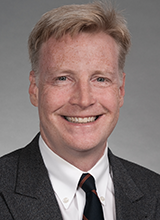
Bradford Felker
Personal Statement
Having always been interested in wholistic care, I completed a Med-Psych residency with board certification in both Internal Medicine and Psychiatry. My career has focused on integrating care to improve access to those who suffer from mental disorders. I have experience in developing, implementing, leading, and evaluating integrated Primary Care Mental Health programs. This work led to the development and national implementation of integrated care known in the VA as Primary Care Mental Health Integration (PCMHI). At VA Puget Sound, I led a team that implemented and developed the first PCMHI program which has been rated as one of the top 10. It was through this integrated PCMHI work that I realized rural populations lacked access to mental health care and I became interested in how the emerging digital technologies could be leveraged to provide care. With the goal to improve mental health care for this population, I developed, implemented, and led the first Telemental Health Service at VA Puget Sound known as Promoting Access to Telemental Health (PATH). This program focused on implementing digital health into routine mental health care, evaluation of implementation efforts, and digital health curriculum design. PATH has been fully implemented into VA Puget Sound Mental Health Service Line. As a researcher, I have served as a principal and co-investigator on numerous research projects that focused on the development and implementation PCMHI and Care Manager programs. More recently, my research has focused on evaluation and implementation of telemental health programs. Current work focuses on improving virtual integrated care in rural VA clinics, integrated care curricular design, evaluating mental health service delivery for the national VA Telehealth Clinical Resource Hubs, and supporting the UW Behavioral Health Institute to develop Digital Health Training programs. In addition, I am proud to serve as a Captain in the United States Navy Reserve and I am an Operation Iraqi Freedom Veteran.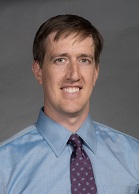
Mark Duncan
Personal Statement
I have pursued a career at the intersection of mental health and primary care, training in both family medicine and addiction psychiatry. I currently practice in various integrated care settings as a consulting psychiatrist and in the outpatient adult psychiatry clinic. I am the co-medical director for the University of Washington Psychiatry and Addiction Case Conference (UW PACC), a weekly online learning collaborative to help community providers across the state improve their psychiatric and addiction clinical skills. My area of interest is focused on improving addiction and psychiatric treatment to primary care settings. I also spend a significant amount of time training both family medicine and psychiatry trainees and fellows on integrated treatments for substance use disorders.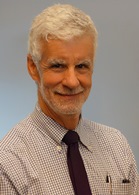
Mark Sullivan
Personal Statement
My clinical service and research focuses on the interaction of mental and physical illness, especially in patients with chronic pain. Much of my research in recent decades has focused on the risks of treating chronic pain with opioids. I have developed educational programs and outcome tracking tools to assist with opioid treatment of chronic pain. I have published a book about patient empowerment in chronic disease care, The Patient as Agent of Health and Health Care (Oxford, 2017). I have another book written with Jane Ballantyne forthcoming, The Right to Pain Relief and other deep roots of the opioid epidemic (Oxford, 2022).

Mark Stein
Personal Statement
I am clinical psychologist and a Professor of Psychiatry and Pediatrics, and a clinical researcher specializing in ADHD throughout the lifespan. I direct the PEARL Clinic (Program to enhance attention, regulation, and learning) at Seattle Children’s. The PEARL Clinic is based on a multidisciplinary and collaborative care model which works closely with PCP’s who refer families to PEARL for evaluation and access to our behavioral group treatment programs and treatment recommendations. The PEARL clinic also provided multidisciplinary training for psychologists, psychiatrists, pediatricians, family medicine physicians, and medical students. The majority of my clinical work involves diagnostic evaluations and consultations for the parents, referring physician, and schools. My research emphasis is on personalizing ADHD treatment, and determining how best to combine and sequence interventions throughout the lifespan for individuals with ADHD. I have assisted in the development of several stimulant and non stimulant medications, and participated in many clinical trials. Currently, we are conducting a study for parents with ADHD who have young children with ADHD symptoms where we are treating the parent with medication and behavioral parent training or behavior parent training. I am also investigating the relationship between genetic factors and ADHD treatment response. Other areas of interest include sleep problems and overlap with ADHD, and novel treatments such as Trigeminal Nerve Stimulation (TNS) and augmentation strategies such as mindfulness and physical exercise or activity level.
Ruth Varkovitzky
Thank you for your interest in learning more about me! My name is Dr. Ruth Varkovitzky (she/her) and I am a licensed clinical psychologist. I use a culturally sensitive evidence based approach in my clinical work; combining the best science while tailoring therapy to each individual. In the spirit of providing the highest quality of care possible, I am board certified in Behavioral and Cognitive Psychology by the American Board of Professional Psychology.
I specialize in providing therapy for trauma and sleep disorders, such as PTSD and insomnia. In addition, I offer a variety of treatments to address problems with depression, anxiety, and OCD. Supporting folks with these challenges is my passion; it’s an honor to work alongside my clients and see them heal and grow.
Public service has always been part of my journey, including collaboration with shelters for survivors of domestic violence, the Department of Veterans Affairs, the University of Washington Department of Psychiatry and Behavioral Sciences, and the Washington State Board of Psychologist Examiners. In addition to my passion for clinical work, I’ve enjoyed contributing to psychological science through academic and media publications. I established my private practice Renewal Psychology to offer my services to clients in Washington as well as the many state members of the Psychology Interjurisdictional Compact (PSYPACT).
I welcome being connected! Please reach out to me by email at: drruth@renewalpsych.com.
Debby Tsuang
Personal Statement
Over the past 20 years, my research has focused on the genetics of schizophrenia and neurodegenerative disorders, particularly on the use of clinical phenotyping and innovative genomic technologies to elucidate the complex genetic architecture underlying schizophrenia and Alzheimer’s disease (AD). I served as the Director of the Geriatric Research, Education, and Clinical Center (GRECC) at the VA Puget Sound Health (VAPS) from 2011-2022, in order to focus on my research on Alzheimer’s Disease and related disorders. My current research interests are two-pronged: 1) develop machine learning models in VA’s vast electronic health records in order to assign ADRD probability scores in older Black and White Veterans; and 2) use mobile health devices to promote early diagnosis of dementia with Lewy bodies. In In these capacities, I direct multidisciplinary efforts to better understand the biology, genetics, etiology, prevention, and treatment of these disorders, and I provide clinical expertise for the differential diagnosis of neurodegenerative disorders and treatment of behavioral disturbances in dementias.

Dror Ben-Zeev
Personal Statement
I am a Professor in the Department of Psychiatry and Behavioral Sciences at the University of Washington and licensed Clinical Psychologist who specializes in development and evaluation of technology-based approaches in the study, assessment, treatment, and prevention of mental illness. This work includes development of illness self-management apps for people with schizophrenia, texting interventions, behavioral sensing/digital phenotyping, computational psychiatry/predictive modelling, applications of Natural Language Processing (NLP), and development of culturally-relevant digital mental health resources for communities in low-and-middle-income countries. My research has been supported by grants and awards from the National Institutes of Health (NIH), National Science Foundation (NSF), Center for Medicare and Medicaid Innovation (CMMI) Patient Centered Outcomes Research Institute (PCORI), SYNERGY Clinical and Translational Science Institute, Myrtlewood Foundation, and John Sloan Dickey Center for International Understanding. I publish extensively in scientific journals and am a regular speaker at national and international scientific meetings including invited presentations at the White House and National Institute of Mental Health Director’s Innovation Speaker series. I have written editorials and commentaries on the use of technology-based interventions for Psychiatric Services, the BMJ, and the New York Times, and my research has been covered by Public Radio, Nature, Wired Magazine, Slate, and The Economist. I served on the Editorial Board of Schizophrenia Bulletin and am the Inaugural Editor of the “Technology in Mental Health” Column for Psychiatric Services (APA journal).
Ty Lostutter
Personal Statement
I am a licensed clinical psychologist in Washington State. I am the Director of the University of Washington School of Medicine’s Psychology Internship Program which is accredited by the American Psychological Association’s Office of Program Consultation and Accreditation. And, I conduct research on health and risk behaviors across the lifespan. Specifically, I have conducted research in the areas of college student alcohol use, young adult gambling behavior, and co-morbidity of substance use and mental health/risk behaviors (i.e. risky sexual behaviors). I have extensive experience working with college students/young adults, military/veteran, and minority/diverse populations. I am also interested in mental health issues including depression, anxiety, and PTSD. I maintain an active clinical practice in the areas of mental health issues with patients diagnosed with hematological and oncological illness and have clinical responsibilities at the Fred Hutchinson Cancer Center. I also provide clinical supervision for psychology residents and psychology practicum students at Fred Hutchinson Cancer Center as well. Overall, my professional aspirations are to improve the public health through empirically-supported psychological interventions and providing mentorship to diverse trainees to expand the reach of psychology.