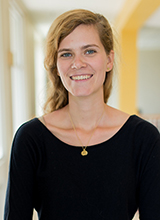
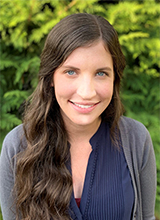
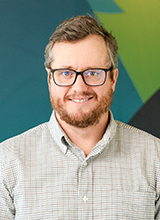
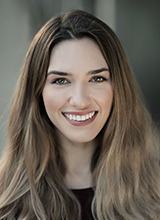
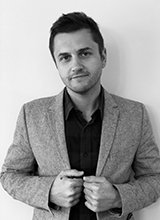
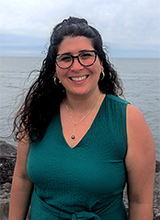
I am a health services researcher and implementation scientist focused on improving care for substance use disorders. My work seeks to increase access to this care through telehealth and implementation outside of traditional substance use treatment settings, as well as to improve care quality and patient-centeredness. I am an investigator at VA Puget Sound Health Care System and a VA Career Development Awardee.
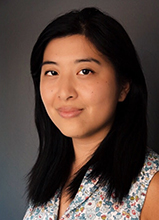
I am a licensed clinical psychologist in the University of Washington’s Department of Psychiatry and Behavioral Sciences, working in adult inpatient care within the Center for Behavioral Health & Learning. I bring specialized training in serious mental illness, inpatient psychiatric care, serving populations with comorbid substance use and/or medical complexity, and enjoy working collaboratively within multidisciplinary teams to optimize patient-centered care. I also bring a global public health background in improving service delivery and access in low-resource settings across Africa and Asia.
I graduated with a PsyD in clinical psychology from the University of Denver, after completing my pre-doctoral internship at Mt. Sinai/Elmhurst Hospital in New York. During this internship, I completed rotations in the adult inpatient unit, the child partial hospitalization program, psychiatric emergency room services, and the consultation-liaison psychiatric service, serving a patient population that is among the most ethnically and culturally diverse in the world. I am dedicated to providing high quality, empathetic, and innovative interventions to our inpatient population.
As a child and adolescent psychiatrist at the Child Study and Treatment Center, I am deeply inspired by the resilience of the youth we serve and by the collaborative spirit of our multidisciplinary teams. My work is grounded in curiosity, compassion, and respect for the complex systems that shape young people’s lives. My approach integrates evidence-based psychopharmacology with developmental and trauma-informed care, while always centering around the individual’s unique story and strengths. I value the relational and systemic dimensions of psychiatry: the interplay between family, community, and policy that influences recovery and growth. The multidisciplinary, relational model at CSTC reflects these values and continues to shape how I think about psychiatry: not only as a science, but as a deeply human endeavor.
Dr. Katherine Seldin is a faculty member and licensed clinical psychologist in the University of Washington’s Department of Psychiatry and Behavioral Sciences. Before joining this department, Dr. Seldin completed her PhD in Clinical Psychology at the University of Washington, residency at Northwestern University Feinberg School of Medicine, and fellowship at the University of Ilinois Chicago.
Dr. Seldin specializes in delivering evidence-based cognitive behavioral therapies (CBTs), including mindfulness-based and exposure-based psychotherapies such as Acceptance and Commitment Therapy (ACT) and Exposure and Response Prevention (ERP). Her research interests include mood disorders, sleep, digital intervention, emotional impulsivity, and ecological momentary assessment methodology.
My lab based at Fred Hutch Cancer Center develops and tests acceptance-based therapies delivered in digital and telehealth platforms. The most preventable causes of premature death and human suffering are cigarette smoking and obesity. To this end, my research team focuses on designing, developing, and testing AI-based chatbot, smartphone app-delivered, and telephone coach-delivered contextual behavioral interventions for smoking cessation and for weight loss. Research aims include main outcome comparisons, mediators, moderators, intervention engagement, and therapeutic process predictors of outcome. This research is currently supported by multiple NIH R01-level grants. Our lab’s latest grant focuses on testing a smartphone app for helping American Indians and Alaska Natives stop smoking commercial cigarettes.
See links for further information:
https://research.fredhutch.org/habit/en/habit-group-members.html
https://en.wikipedia.org/wiki/Jonathan_Bricker
I am a clinical psychologist by training and an Assistant Professor at the University of Washington, Department of Psychiatry and Behavioral Sciences. I am also a Health Service Research Scientist at the Seattle-Denver HSR&D Center of Innovation for Veteran-Centered and Value-Driven Care at the VA Puget Sound Health Care System. My research program broadly focuses on bringing a more holistic approach to healthcare (i.e., mind, body, and spirit) and centers around two interconnected areas of investigation: 1) meaning-making and meaning in life among individuals with chronic pain and psychological distress (in particular, PTSD) and 2) developing and testing mind-body interventions that improve physical and emotional health and well-being. I am particularly interested in improving health for those in rural settings. My work has been supported by the National Center for Complementary and Integrative Health and the U.S. Department of Veterans Affairs.
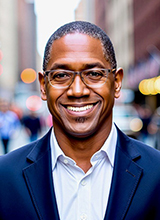
Dr. Clausell earned his doctoral degree in Clinical-Community Psychology from the University of Illinois at Urbana-Champaign in 2011. Dr. Clausell’s graduate research focused on the legacy of childhood attachment relationships on relationship satisfaction of Gay and Lesbian Romantic Couples. Results of this research were published in the journal Developmental Psychology (2008). He completed his Predoctoral Clinical Internship at Veterans Affairs Palo Alto Health Care System and served as a Postdoctoral Research Fellow in Clinical Psychology in the Department of Psychiatry and Behavioral Sciences, Stanford Medicine. Dr. Clausell currently serves as the Director of the Couples & Family Program at Veterans Affairs Puget Sound Health Care System, Seattle Division. In addition, Dr. Clausell serves as Lead Trainer and Consultant in VA Central Office of Family Services for the dissemination program of Integrative Behavioral Couple Therapy lead by Developer & Distinguished Research Professor Dr. Andrew Christensen, at University of California, Los Angeles. Currently, Dr. Clausell serves as clinical trainer and supervisor for Seattle VA’s Clinical training programs, including Predoctoral, Postdoctoral, and the University of Washington Department of Psychiatry and Behavioral Sciences Resident Program where he currently serves at Rotation Supervisor for the VA Outpatient Couple and Family Therapy Rotation.