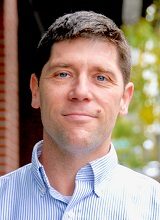
Dr. Banta-Green studies substance use involving opioids and stimulants and interventions to support recovery and reduce substance-related harms. He is particularly interested in developing interventions that are accessible to all people, including those who are most marginalized, such as those who are unhoused, utilizing services syringe service programs, and/or in the criminal legal system. He provides technical assistance and evaluation services for public health and safety interventions including the website http://stopoverdose.org, and information for the general public and professionals about effective treatments at http://learnabouttreatment.org. As an epidemiologist he develops innovative approaches to measuring the use and impacts of substances as well as service utilization. His health services research involves clinical trials, implementation research, and secondary data analyses. He serves on local, state, and federal workgroups and committees related to epidemiology, policy, and interventions for illicit substance-related problems. He is a member of the U.S. Health and Human Service’s Interdepartmental Substance Use Disorders Coordinating Committee.
Dr. Neuhaus has a broad research focus on social-emotional processes in individuals with neurodevelopmental disorders, particularly children with autism spectrum disorder (ASD), attention-deficit/hyperactivity disorder (ADHD), or inherited or de novo genetic events. Dr. Neuhaus’s research is informed by a number of methodological approaches, including clinical/behavioral assessment and physiological measures such as EEG and autonomic biomarkers. Dr. Neuhaus is particularly interested in how social and emotional processes relate to brain function and development, and in how they interact with one another to influence diagnostic outcomes (e.g., phenotypes within autism) and psychiatric trajectories over the course of development. Clinically, Dr. Neuhaus specializes in diagnostic assessment of ASD.
I am a clinical psychologist and researcher. My research focuses on pediatric psychology, intervention science, and leveraging digital technologies to disseminate and implement evidence-based psychosocial interventions for children, teens, and young adults with serious medical conditions and co-occurring anxiety, stress, and depression. Digital mental health care initiatives have the potential to scale-up interventions and overcome structural barriers and unequal access to psychosocial care. Current and future research investigations aim to help improve patient and family coping skills, psychosocial well-being, and quality of life by developing and implementing evidence-based mental health interventions.
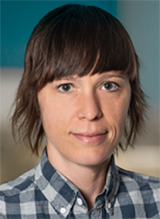
I am a child and adolescent psychiatrist at Seattle Children’s Hospital and faculty member at the University of Washington Medicine. My SCH practice locations include the Gender Clinic (Adolescent Medicine), Outpatient Psychiatry Clinic, Autism Center, and the inpatient unit- Psychiatry and Behavioral Medicine Unit (PBMU). I believe in delivering compassionate, evidence-based care in supporting patients and their families. My approach is both comprehensive and patient-centered, as it is important to consider the needs of the individual while also appreciating societal and cultural context. I specialize in working with diverse patient populations with various marginalized identities, such as those who identify as LGBTQ, gender diverse, and/or neurodiverse. I also work closely with the Adolescent Medicine Gender Clinic in supporting any mental health needs of transgender/gender diverse youth and their families. I also collaborate with colleagues in specialty medical clinics to coordinate care of medically complex patients. Additionally, I serve as a consultant with various school programs to support mental health initiatives and advocacy efforts.
Academically, I am involved with several initiatives both locally and nationally, particularly those that work to promote diversity and equity. I serve on committees supporting the SCH/UW CAP Fellowship Program, educating trainees and students through direct clinical supervision as well as with lectures and discussions. On a national level, I serve on the Sexual Orientation and Gender Identity Issues Committee (SOGIIC) for the American Academy of Child and Adolescent Psychiatry (AACAP). My clinical research focuses on finding strategies to better support the mental health and well-being of patients and families who are LGBTQ+. Additionally, I work on studies that explore the intersection between gender diversity and neuro diversity/autism spectrum.
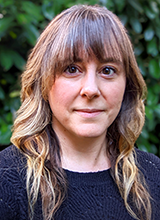
Dr. Jenness is a clinical child psychologist and Associate Professor in the Department of Psychiatry and Behavioral Sciences at the University of Washington. She earned her Ph.D. in Clinical Psychology from the University of Denver in 2015. Her past research includes NIMH-funded studies on the neural and behavioral changes that predict treatment response to behavioral activation for depressed adolescents (K23/NARSAD). As the director of the Adolescent Depression and Intervention Innovations (ADII) lab, her recent work focuses on innovative digital treatment approaches to improve adolescent depression care. Current projects include 1) adapting behavioral activation to an online platform, ActivaTeen (R03, NIMH R34); 2) leveraging paraprofessional coaching of video-guided depression care (Garvey Innovation Grant); and 3) developing and testing a digital just-in-time adaptive intervention (Sidekick; NIMH R61) as a first-step adolescent depression treatment within primary care settings. In addition to research, Dr. Jenness is an Attending Psychologist in the Mood and Anxiety Disorders Program at Seattle Children’s Hospital where she primarily treats adolescent depression and suicide. She has also trained mental health professionals at various sites around the US in the use of behavioral activation with adolescents.
I am a developmental psychologist with additional training and expertise in quantitative methods. I am an associate professor in the UW Department of Psychiatry and Behavioral Sciences, a core member of the Center for the Study of Health and Risk Behaviors (CSHRB), faculty affiliate of the Center for Studies in Demography and Ecology (CSDE), and adjunct faculty at the UW School of Social Work. My main collaborations at UW involve colleagues from CSHRB but I also maintain strong research collaborations with my colleagues from the Social Development Research Group (SDRG), School of Social Work, and other departments. In addition to research, I occasionally teach graduate-level classes on research methods and evaluation in social welfare (SOCW505, SOCW506, SOCW507) and research and theory (SOCWL599) at the School of Social Work. I am also actively involved in mentoring graduate students and postdoctoral fellows.
Personal Statement
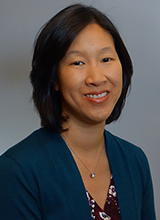
The transition to adulthood is the developmental period when alcohol use, marijuana use, and their associated consequences reach their lifetime peak. My scholarly interests focus on the etiology and prevention of substance use behaviors and consequences during adolescence and young/early adulthood. I have developed a highly successful portfolio of work bridging developmental, social, and motivational theory with applied prevention and intervention techniques to strategically address high-risk behaviors during the transition to adulthood.
My research addresses important questions regarding how recent marijuana legislation in Washington State impacts young adult marijuana use and consequences; what motivates young adults to engage in alcohol and marijuana use; how alcohol expectancies, alcohol use and consequences are linked in a natural feed-forward process that maintains high-risk behaviors; how developmental transitions and event timing influence use; and what are efficacious prevention and intervention strategies and for whom and under what conditions are these most effective.
Personal Statement
I am a clinical psychologist with research interests in the treatment of alcohol and substance use disorders and co-occurring mental health conditions.
My research focuses on understanding how to improve access to evidence-based treatments and understanding why and how patients benefit from treatment. I am particularly interested in research measurement-based care — i.e., the use of standardized measures to monitor treatment progress and inform clinical decision-making.
Broad areas of interest include:
- Alcohol and drug use disorder treatment, including the effectiveness of digital and behavioral interventions, mechanisms of behavioral change, and social and environmental determinants of change.
- Technology to support behavioral change, including patient- and clinician-facing tools that support clinical decision-making, treatment adherence, and treatment progress monitoring.
- Applied statistical analysis, including methods for analyzing longitudinal data, clinical trials data, multilevel data, missing data, psychometric analysis, and data visualization.
Personal Statement
I am a consultation-liaison psychiatrist and health services researcher in the Department of Psychiatry and Behavioral Sciences and Adjunct Professor in the Departments of Rehabilitation Medicine and Epidemiology. I am also Medical Director of the Department of Psychosocial Oncology at Fred Hutchinson Cancer Center.
My research interests are in psychiatric epidemiology, health services research, psychiatric oncology, and neuropsychiatry. In my clinical practice, I use a comprehensive, multifaceted approach that may include medications or counseling to help patients achieve their goals. My primary interest is helping people who are coping with medical illness. I am particularly interested in developing better approaches to delivering person-centered psychiatric care to these populations.
Personal Statement
I am Professor and Associate Director for Evidence-Based Psychosocial Interventions at the AIMS Center, and Director of the National Network of PST Clinicians, Trainers & Researchers. In these roles, I develop and lead implementation and training programs in a variety of behavioral health interventions.