Scholarly Expertise: Psychosocial outcomes
David Reed
I am a clinical psychologist by training and an Assistant Professor at the University of Washington, Department of Psychiatry and Behavioral Sciences. I am also a Health Service Research Scientist at the Seattle-Denver HSR&D Center of Innovation for Veteran-Centered and Value-Driven Care at the VA Puget Sound Health Care System. My research program broadly focuses on bringing a more holistic approach to healthcare (i.e., mind, body, and spirit) and centers around two interconnected areas of investigation: 1) meaning-making and meaning in life among individuals with chronic pain and psychological distress (in particular, PTSD) and 2) developing and testing mind-body interventions that improve physical and emotional health and well-being. I am particularly interested in improving health for those in rural settings. My work has been supported by the National Center for Complementary and Integrative Health and the U.S. Department of Veterans Affairs.

Dani Dahyeon Kang
Dr. Dahyeon Kang is an Assistant Professor at the University of Washington School of Medicine. She earned her doctoral degree from the University of Illinois at Urbana-Champaign, where her work focused on the etiology of alcohol and substance use disorders through multimodal research methods, including alcohol administration, neuroimaging, transdermal biosensors, and ecological momentary assessments. At the University of Washington’s Department of Psychiatry, Dr. Kang investigates how individual and social factors interact to influence alcohol and cannabis use behaviors.
Larissa Gaias
Larissa Gaias, Ph.D., is an Acting Assistant Professor of School Mental Health and Implementation Science, located at the SMART Center within the University of Washington School of Medicine Department of Psychiatry and Behavioral Sciences. In her position, she primarily works with the SMART Center’s Training and Technical Assistance Core (TACore) to support schools, districts, community organizations, state agencies, and other partners in building accessible, effective, and equitable mental health services and systems for youth. She is passionate about building collaborative partnerships that apply knowledge and expertise from research, practice, policy, and lived experience into action. Her research centers on incorporating an equity-explicit lens into the development, implementation, and evaluation of school- and community-based social-emotional, behavioral, and mental health practices and policies. Larissa also has methodological expertise that spans quantitative, qualitative, mixed, and participatory approaches.
Connor McCabe
As a clinical and quantitative psychologist, my work bridges statistical practice and psychological theory to better identify for whom, under what conditions, and why substance-related health disparities are greatest across development. My substantive research seeks to understand how individual differences in stress and developing self-regulation shape substance use and disorder from adolescence through young adulthood, and how these associations explain substance use disparities among sexual and gender minoritized communities. Stemming from this work, my methodological research is centered on improving the analysis and interpretation of nonlinear effects spanning parametric and non-parametric methodologies.
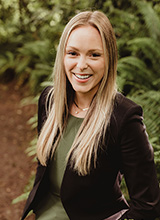
Anna Larsen
I am an epidemiologist and Assistant Professor in the Department of Psychiatry and Behavioral Sciences at the University of Washington. My research primarily focuses on improving mental health outcomes throughout the life course to support family wellbeing and thriving in low- and middle-income settings, with emphasis on: 1. men’s/father’s mental health and parenting skills, 2. digital mental health interventions to support families affected by early psychosis, 3. integrating perinatal mental health services into maternal-child health care. Current projects are based in East and West Africa. My work utilizes methods ranging from user-centered design of digital mental health interventions to advanced epidemiologic and statistical methods.
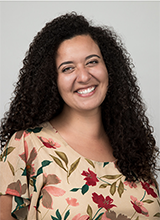
Lily Assaad
I am a faculty member and licensed clinical psychologist in the University of Washington’s Department of Psychiatry and Behavioral Sciences. Before joining this department, I completed my Ph.D. in clinical psychology at Purdue University, residency at the University of Washington, and fellowship at the University of Pennsylvania.
My research interests primarily center around romantic relationship functioning and personality disorder (PD) measurement. My line of PD research centers around how the use of a trait-based, dimensional approach to assessing and measuring PDs may increase construct validity, reliability, and diagnostic accuracy relating to PDs. My romantic relationship research centers around how romantic relationship functioning and interpersonal behaviors are associated with psychopathology diagnoses and symptoms.
As a clinician, I specialize in treating suicidality and self-harm using comprehensive Dialectical Behavior Therapy; in treating PTSD using Cognitive Processing Therapy and Prolonged Exposure; and in treating anxiety-related disorders using exposure therapies like Exposure and Response Prevention for OCD and Exposure for Social Anxiety. I am also passionate about providing couples’ therapy.
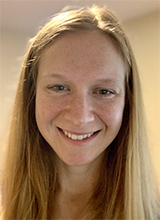
Sarah Danzo
My research broadly aims to better understand the etiology of depression and risk behaviors such as suicide and substance use across development, and translate findings to inform prevention and intervention strategies for youth and families. My work focuses on partnering with communities and primary care clinics to improve access to and use of effective mental health services.
My current projects include studies focused on adapting and evaluating suicide prevention intervention and implementation strategies for use with adolescents and their families in primary care and outpatient medical settings, including developing and adapting brief, just-in-time, and digital interventions to expand access to services.
In addition to research, I am also a clinical psychologist in the Mood and Anxiety Disorders Program and the Crisis Care Clinic at Seattle Children’s Hospital.
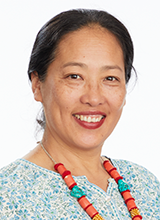
Maya Magarati
My scholarship is dedicated to reducing behavioral health disparities in Indigenous, immigrant and refugee communities. I have 13 years of experience and expertise in community-based participatory research (CBPR) science and practice, mixed-methods multi-level research design, cultural adaptation and translation of evidenced based interventions and culture-based practices, survey and measurement development, and dissemination and translation of findings. I am interested in examining culture-centered, land-based healing practices and mechanisms in addressing substance use, sexual health, and climate change impact.