Scholarly Expertise: Psychiatric problems
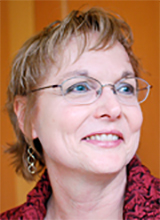
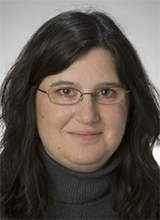
Heather Carmichael Olson
Personal Statement
I am a psychologist who carries out research, provides community education to a broad range of audiences, trains postgraduate students, works on public policy– and has served as a clinician with children and families for many years. My main interests are fetal alcohol spectrum disorders (FASD), early childhood mental health, and interventions for children born prenatally exposed to alcohol and other drugs and their families. My research is currently based at the Seattle Children’s Research Institute, but I also work in collaboration with UW researchers– and scientists at the University of Rochester in New York and multiple other academic institutions. A main research focus has been the Families Moving Forward (FMF) Program, a family-focused FASD intervention, now being disseminated primarily in the USA and Canada. The FMF Program is also now being translated into a mobile health application, called FMF Connect, for even broader use. Through Seattle Children’s, I co-direct a pilot service focused on assessment and short-term consultation for youth with prenatal substance exposure (including alcohol), and their families. I also offer mental health services to a broad range of young children and develops research focused on early childhood mental health. Over the years, beyond research and clinical work, I have been able to work toward change in national US public policy, collaborate with Indigenous communities and researchers in remote Northwestern Australia, and train dedicated young professionals in psychology and psychiatry. I am grateful for these remarkable career opportunities… and the chance to meet so many resilient and inspiring families. Note that you can only reach me through my Seattle Children’s email, at: heather.carmichaelolson@seattlechildrens.org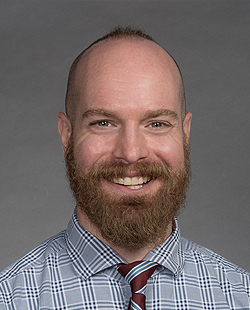
Erik S. Carlson
Personal Statement
I am a basic neuroscientist, a board-certified practicing psychiatrist, and an Assistant Professor of Psychiatry and Behavioral Sciences at the University of Washington Medical School. The goal of my research is to investigate the neural circuitry of cognitive, emotional and memory processing, particularly as it relates to the cerebellum, and illnesses affecting cerebellum including cognitive disorders, PTSD, TBI and dementia through the implementation of techniques in mouse behavioral genetics. In my clinical practice, I primarily see veterans with PTSD, mild cognitive impairment, and various forms of dementia in an outpatient clinic at the VAMC Puget Sound Geriatric Research, Education, and Clinical Center (GRECC) in Seattle. I have over 15 years of experience in basic science research with most of that time dedicated to the use of mouse models of neuropsychiatric disorders. Throughout my training prior to and during graduate school, I gained background in many contemporary molecular and biochemical lab techniques, such as molecular cloning, protein biochemistry, protein crystal production, fluorometric measurement of protein kinetics, in vivo NMR spectroscopy, gene targeting, microarray genomics, immunohistochemistry, and mammalian cell culture. I have a foundation in mouse genetics, neural development, and behavior which I developed in Michael Georgieff’s lab by investigating the role of iron in developing pyramidal neurons of the mouse hippocampus. During graduate training, I also received cross-training in child psychological development. In graduate school, I developed two mouse models of nonanemic neuron specific iron deficiency: 1) a conditional knockout of the Slc11a2 gene, encoding the iron transporter DMT-1 in forebrain neurons, including hippocampal pyramidal neurons, and 2) a transgenic mouse with a reversibly inducible dominant negative (nonfunctional) form of the transferrin receptor expressed only in hippocampal pyramidal neurons. I utilized and implemented different versions of the Morris Water Maze to study learning deficits in these mouse models of perinatal brain iron deficiency, a condition that is often a consequence of diabetes during pregnancy. During my residency training, I expanded my knowledge of neuropsychiatric disorders by directly evaluating and treating patients with neuropsychiatric disorders including PTSD, schizophrenia, Alzheimer’s disease, autism, major depression, substance abuse disorders, and personality disorders. I learned numerous pharmacological, neuromodulatory, and psychotherapeutic interventions and participated in the internally funded Neuroscience Research Track. I then received a NIMH career development award (K08) mentored by Larry Zweifel, Ph.D. In that position, I investigated interactions between catecholamines and the cerebellum in decision making, emotional and cognitive processing. In the 5 years I was in Dr. Zweifel’s lab, I learned many additional new techniques including use of viral vectors, in vivo electrophysiology, and several operant- and threat-based behaviors, and moved forward in my goal of becoming a physician scientist isolating important circuits underlying etiology of specific domains of behavioral function. This work culminated in my receiving an RO1 independent investigator award, without any gap in funding. My current research utilizes mouse behavior, in vivo electrophysiological recordings, gene targeting, viral vectors, translational profiling, chemo- and optogenetic tools, site-specific intracranial viral vector injection, and protein chemistry. I am now forging my path as an independent investigator, and my primary goal is to understand cerebellar circuits as they relate to psychiatric and neurodegenerative illnesses and utilize this knowledge to inform and improve current and novel psychiatric illnesses, primarily in cognitive and emotional domains. As such, I am pursuing a multidisciplinary approach combining genetic, electrophysiological, pharmacological, and behavioral techniques.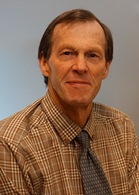
Christopher Varley
Personal Statement
My primary interest is Graduate Medical Education and Faculty Development in Child and Adolescent Psychiatry. I was the program director for the Child and Adolescent Psychiatry residency at the UWSOM for 32 years. I am now the Director of Education and Faculty Development in the Division of Child and Adolescent Psychiatry. My clinical interests are in pediatric psychopharmacology, particularly re ADHD.
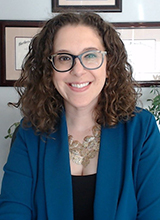
Ruth Varkovitzky
Thank you for your interest in learning more about me! My name is Dr. Ruth Varkovitzky (she/her) and I am a licensed clinical psychologist. I use a culturally sensitive evidence based approach in my clinical work; combining the best science while tailoring therapy to each individual. In the spirit of providing the highest quality of care possible, I am board certified in Behavioral and Cognitive Psychology by the American Board of Professional Psychology.
I specialize in providing therapy for trauma and sleep disorders, such as PTSD and insomnia. In addition, I offer a variety of treatments to address problems with depression, anxiety, and OCD. Supporting folks with these challenges is my passion; it’s an honor to work alongside my clients and see them heal and grow.
Public service has always been part of my journey, including collaboration with shelters for survivors of domestic violence, the Department of Veterans Affairs, the University of Washington Department of Psychiatry and Behavioral Sciences, and the Washington State Board of Psychologist Examiners. In addition to my passion for clinical work, I’ve enjoyed contributing to psychological science through academic and media publications. I established my private practice Renewal Psychology to offer my services to clients in Washington as well as the many state members of the Psychology Interjurisdictional Compact (PSYPACT).
I welcome being connected! Please reach out to me by email at: drruth@renewalpsych.com.Eileen Twohy
I am a clinical psychologist at Seattle Children’s Hospital and UW Medicine, where my work primarily consists of clinical care and teaching. My two areas of focus are the provision of effective, trauma-informed treatment for youth and families in suicidal crises and the promotion of equitable access to behavioral healthcare.
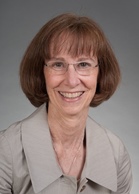
Judith Turner
Personal Statement
I received a PhD in clinical psychology from UCLA, then completed post-doctoral training in pain and geriatrics at the University of Washington. Since 1980, I have served on the faculty at the University of Washington School of Medicine. I work clinically with patients with chronic pain at the UW Medicine Center for Pain Relief. My research interests include clinical trials of medical, surgical, and psychosocial interventions for chronic pain; prediction of pain outcomes; and long-term opioid therapy for chronic pain. I have published over 230 peer-reviewed articles related to chronic pain studies and am internationally recognized for this research (e.g., Wilbert E. Fordyce Clinical Investigator award from the American Pain Society for contributions to clinical pain research, International Society for the Study of the Lumbar Spine prize for clinical pain research). I have had leadership roles in national and international professional organizations related to pain, including having served as President of the International Association for the Study of Pain.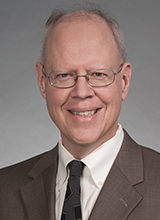
Eric Turner
Personal Statement
My research program focuses on understanding brain circuitry involved in mood regulation, including models of depression and anxiety, and also circuits related to substance abuse. Our experiments are conducted in mice that have been genetically engineered to disrupt the function of certain brain regions, or to allow the manipulation of brain activity with pulses of light, a method called “optogenetics.” Our studies uses neuroanatomical methods, electrophysiology, and behavioral assays to understand the the outcome of these genetic and optogenetic manipulations. Of current interest in the lab is the function of a poorly understood brain region called the habenula. Historically my laboratory has also focused on brain development and the role of regulatory molecules called transcription factors in determining the identity of specific kinds of neurons. We are continuing to study developmental gene regulation in the context of craniofacial development and birth defects. Our research is funded by grants from the NIH institutes NIMH and NIDA.
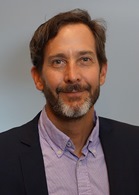
Eric J. Bruns
Personal Statement
I am a clinical psychologist and mental health services researcher. My overarching research aim is to produce and promote use of research, evaluation, and continuous quality improvement that aids high-quality implementation of effective models of care in real world service settings, such as in schools, public mental health systems, and family-and youth-run organizations. My research can be summarized as falling into three categories: (1) Care coordination models for youth with the most complex behavioral health needs; (2) school mental health; and (3) public sector implementation of research-based practices. In each area, I co-direct national training and TA centers. For example the National Wraparound Implementation Center (www.nwic.org), provides support to dozens of states and localities internationally on Wraparound. The National Wraparound Initiative (www.pdx.edu) serves to mobilize our research and policy activities. Our Wraparound fidelity tools and data systems can be found at www.wrapinfo.org. With respect to school mental health, our interdisciplinary UW School Mental Health Assessment, Research, and Training (SMART) Center — www.smartcenter.uw.edu — currently has over a dozen federal grants as well as state, local, and foundation funding focused on how best to ensure that evidence for effective mental health intervention and prevention is translated into effective programming in schools. The SMART Center also hosts the school mental health supplement of the UW Department of Psychiatry’s SAMHSA-funded Northwest Mental Health Training and Technical Assistance Center (MHTTC). Check out our extraordinary array of resources at https://mhttcnetwork.org/centers/northwest-mhttc/northwest-mhttc-school-mental-health.
Debby Tsuang
Personal Statement
Over the past 20 years, my research has focused on the genetics of schizophrenia and neurodegenerative disorders, particularly on the use of clinical phenotyping and innovative genomic technologies to elucidate the complex genetic architecture underlying schizophrenia and Alzheimer’s disease (AD). I served as the Director of the Geriatric Research, Education, and Clinical Center (GRECC) at the VA Puget Sound Health (VAPS) from 2011-2022, in order to focus on my research on Alzheimer’s Disease and related disorders. My current research interests are two-pronged: 1) develop machine learning models in VA’s vast electronic health records in order to assign ADRD probability scores in older Black and White Veterans; and 2) use mobile health devices to promote early diagnosis of dementia with Lewy bodies. In In these capacities, I direct multidisciplinary efforts to better understand the biology, genetics, etiology, prevention, and treatment of these disorders, and I provide clinical expertise for the differential diagnosis of neurodegenerative disorders and treatment of behavioral disturbances in dementias.