Scholarly Expertise: Psychiatric problems
Michael Storck
Personal Statement
I am a Child and Adolescent Psychiatrist who has served for over 20 years as the attending psychiatrist on the middle-schooler unit at Child Study and Treatment Center. I also serve, 25% time , as “College Mentor” in the UW School of Medicine Introduction to Clinical Medicine Curriculum where I mentor six students in each UW SoM class through their four year curriculum. I serve as preceptor/supervisor for one CAP fellow during their rotation at CSTC. I also run the elective clerkship for fourth year medical students (approximately 10 students/year) during 2 and 4 week rotations at CSTC.
Richard C. Veith
Personal Statement
| I am a Seattle native who has spent my entire academic career at the University of Washington School of Medicine. I joined the faculty of the UW Department of Psychiatry and Behavioral Sciences in 1977 and was based at the Seattle VA Puget Sound Health Care System. I joined the Seattle-American Lake Geriatric Research, Education and Clinical Center (GRECC) in 1977 as a clinical investigator and later served as GRECC Director from 1987-1998. In 1998, I was appointed Chair of the Department of Psychiatry and Behavioral Sciences and held this position until February, 2014. I am certified by the American Board of Psychiatry and Neurology with Added Qualifications in Geriatric Psychiatry and am listed in America’s Top Doctors and Best Doctors in America. I am recipient of the 2005 American Academy of Child & Adolescent Psychiatry, Robert Cancro Academic Leadership Award: Best Chair. I have conducted extensive research on the treatment of depression in patients with heart disease and stroke and has published more than 140 scientific publications. I am active in community efforts to improve the quality of care for the seriously mentally ill and with my faculty colleagues am implementing regionally, nationally, and internationally innovative and highly effective models of care that integrate mental health care into primary care settings. I am working with medical schools and the health ministries in Vietnam and Cambodia to strengthen psychiatric education, expand the mental health workforce, and develop delivery systems for psychiatric care in those countries. |
Jennifer Piel
Personal Statement
As a clinical and forensic psychiatrist, my professional roles include being the Director of the UW Center for Mental Health, Policy, and the Law; Associate Professor in the Department of Psychiatry; and a Staff Psychiatrist at the VA Puget Sound. I hold multiple board certifications: Psychiatry, Forensic Psychiatry, Brain Injury Medicine, and Sports and Performance Psychiatry. In addition to my medical training, I earned my law degree from the University of Washington. As a member of the American Academy of Psychiatry and the Law (AAPL), I serve on the Ethics, Research, and Resident Education Committees and I twice earned AAPL’s Young Investigator Award. I am the Legal Digest Editor for the Journal of the American Academy of Psychiatry and the Law. I have served as an expert witness or consultant in legal cases involving criminal and civil competencies; criminal responsibility; malpractice; personal injury; sexual and gender harassment; and fitness for duty, among others. I teach courses in forensic mental health at the University of Washington and speak locally and nationally on topics related to psychiatry and the law.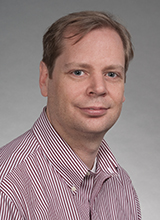
Paul Phillips
Personal Statement
My lab’s focus is reward processing, how it differs under behavior phenotypes that are more vulnerable or resilient to mental illness and how it is changed by psychiatric pathology. Our primary focus is dopamine transmission and the circuits in which is participates.
We developed tools that allow us to track dopamine with sub-second resolution in animals over the course of months (Clark et al, Nat Methods, 2010). This approach allows us to study trajectories of precise neurochemical encoding of behaviors over the course of the development of symptomology and subsequent treatment in animal models of disease. We also have adapted this technology for intraoperative recording in humans (Kishida et al, PLoS One, 2011).
Our research highlights include contributions in the area of dopamine’s role in learning (Flagel et al, Nature, 2012), decision making (Gan et al, Nat Neurosci, 2010) and goal navigation (Howe et al, Nature, 2013). We have gleaned information on how stress impacts appetitive motivation (Wanat et al, Nat Neurosci, 2013), how adolescent alcohol use produces enhanced risk taking later in life (Clark et al, PLoS One, 2012), and identified biological mechanisms for the motivational shift in stress-induced depressive disorders (Lemos et al, Nature, 2012) and the switch to excessive drug intake in substance abuse (Willuhn et al, Nat Neurosci, 2014).
These approaches have attracted a large number of collaborations, including National Academy members Akil, Palmiter, Graybiel and Kandel.
Brian Coleman
Personal Statement
I completed my Residency in Psychiatry with the UW in 1982 and since then have worked at Harborview Medical Center in the Psychiatry Department. I am a Clinical Associate Professor and provide weekend and on-call coverage for 5MB on the Intensive Psychiatric Unit.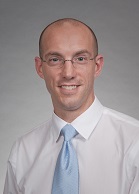
Jason Veitengruber
Personal Statement
I am a board-certified Psychiatrist at Harborview and UW Medicine and a UW Associate Professor of Psychiatry and Behavioral Sciences. I enjoy acting as a consultant to my patients in helping them achieve their healthcare and life goals. My clinical interests include medical student and resident education, medical co-morbidities of psychiatric patients and evidenced-based medicine. I practice, teach, and supervise in Harborview’s acute inpatient psychiatric units as an Attending Physician and Medical Director of Inpatient Psychiatry.Elaine Peskind
Personal Statement
I am Co-Director of the VA VISN 20 (Northwest Network) Mental Illness Research, Education, and Clinical Center (MIRECC). I am also the Friends of Alzheimer’s Research Professor of Psychiatry and Behavioral Sciences at the University of Washington (UW) School of Medicine and am Associate Director of the UW Alzheimer’s Disease Research Center. My research over the past 30 years has addressed cognitive and behavioral problems and cerebrospinal fluid (CSF) biomarkers in neurodegenerative dementing disorders such as Alzheimer’s disease. More recently, my research has focused on combat trauma posttraumatic stress disorder and the clinical phenomenology as well as neuroimaging and CSF biomarkers of neurodegeneration in combat blast concussion mild traumatic brain injury and in Gulf War Veterans Illness. I continue to conduct single site as well as multi-site large scale studies of CSF biomarkers and pharmacological treatment trials for behavioral disorders and traumatic brain injury.
Summary of my research program:
Blast Concussion Mild Traumatic Brain Injury (mTBI)
Strategies: multimodal neuroimaging: structural and functional magnetic resonance imaging (diffusion tensor imaging [DTI], DTI tractography, macromolecular proton fraction mapping, resting state and task-based functional MRI; susceptibility-weighted imaging, FDG-positron emission tomography [PET]; cerebrospinal fluid and plasma biomarkers; genetic risk factors; clinical, neurocognitive and behavioral assessments,
Gulf War Veterans Illness (GWVI)
Strategies: multimodal neuroimaging and CSF and plasma biomarkers as described above, epigenetics, pain sensitivity testing and ability to activate endogenous opioid systems, and functional activity of paraoxonase I, the enzyme that metabolizes organophosphate insecticides.
Cerebrospinal Fluid and Plasma Biomarkers of Neurodegeneration Strategies: Bead-based multiplex assays using Luminex and Meso-Scale platforms, Quanterix ultra-sensitive platform, and broad-scale mass spectrometry for measurement of proteins, circulating RNAs, microRNAs in collaboration with VA/UW and Institute for Systems Biology investigators.
Pharmacologic Treatment of Disruptive Agitation in Alzheimer’s Disease (AD)
Strategies: Alzheimer’s Disease Cooperative Study multi-center randomized placebo-controlled trial of the alpha-1 adrenoreceptor antagonist, prazosin, for treatment of disruptive agitation in AD.
Mark Reger
Personal Statement
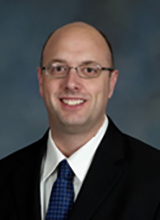
I am the Senior Manager for Mental Health at the Office of Research & Development in the Veterans Health Administration and Professor of Psychiatry & Behavioral Sciences at the University of Washington School of Medicine. I am a suicide prevention researcher and health services investigator who has served as the principal investigator for a variety of large federally-funded suicide prevention studies. My research focuses on Veteran and military suicide prevention. I am interested in risk and protective factors that are unique to the military community. My work focuses on systematic clinical and public health approaches to reducing suicide behaviors. I have had the opportunity to contribute to national initiatives to translate research into policy and best-practices, and I have been fortunate to have my work highlighted in interviews with numerous national TV, radio, and news outlets.