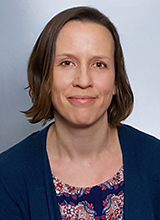
Scholarly Expertise: Primary care
Kevin Hallgren
Personal Statement
I am a clinical psychologist with research interests in the treatment of alcohol and substance use disorders and co-occurring mental health conditions. My research focuses on understanding how to improve access to evidence-based treatments and understanding why and how patients benefit from treatment. I am particularly interested in research measurement-based care — i.e., the use of standardized measures to monitor treatment progress and inform clinical decision-making. Broad areas of interest include:- Alcohol and drug use disorder treatment, including the effectiveness of digital and behavioral interventions, mechanisms of behavioral change, and social and environmental determinants of change.
- Technology to support behavioral change, including patient- and clinician-facing tools that support clinical decision-making, treatment adherence, and treatment progress monitoring.
- Applied statistical analysis, including methods for analyzing longitudinal data, clinical trials data, multilevel data, missing data, psychometric analysis, and data visualization.
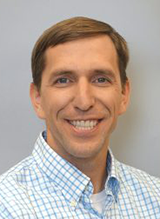
John Fortney
Personal Statement
I am a Professor in the Department of Psychiatry and Behavioral Sciences at the University of Washington School of Medicine, and the Director of the Division of Population Health. I am also a Core Investigator at the HSR&D Center for Innovation for Veteran-Centered and Value-Driven Care at the VA Puget Sound Health Care System, and the Director of the VA Virtual Care QUERI Program. For the last 35 years, my research has focused on access to care. I have published a framework for conceptualizing access to care in the digital age that incorporates virtual care technologies. I have conducted clinical trials to test the effectiveness of virtual care technologies to facilitate the delivery of evidence-based mental health services in rural primary care clinics. I have also conducted implementation trials to test the effectiveness of strategies to promote the uptake of virtual care technologies by primary care patients and providers. My research has been supported by NIMH, NIAAA, PCORI, and VA HSR/QUERI.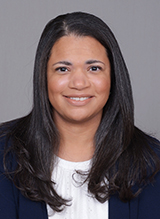
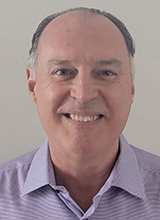
Tiffanie Fennell
As a board-certified clinical health psychologist, I have primarily focused my clinical work on preventive medicine with special expertise in diabetes, weight management, and tobacco use cessation. I train clinicians in motivational interviewing and health coaching, and am currently a co-investigator on a research study examining an intervention with peer health coaches in the Veterans Health Administration (VHA). After nearly two decades of working in complex healthcare settings, like the VHA and serving in several leadership roles within and external to the VHA, I have grown a passion for supporting those who serve others and improving workplace well-being. I am an Associate Certified Coach and am enrolled in a Masters program in Leadership and Organizational Development. I coach leaders and individual contributors on their professional and personal goals, help teams work better together, engage clinics in identifying and implementing meaningful changes to improve workplace satisfaction.
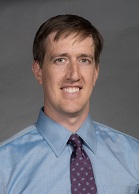
Mark Duncan
Personal Statement
I have pursued a career at the intersection of mental health and primary care, training in both family medicine and addiction psychiatry. I currently practice in various integrated care settings as a consulting psychiatrist and in the outpatient adult psychiatry clinic. I am the co-medical director for the University of Washington Psychiatry and Addiction Case Conference (UW PACC), a weekly online learning collaborative to help community providers across the state improve their psychiatric and addiction clinical skills. My area of interest is focused on improving addiction and psychiatric treatment to primary care settings. I also spend a significant amount of time training both family medicine and psychiatry trainees and fellows on integrated treatments for substance use disorders.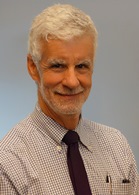
Mark Sullivan
Personal Statement
My clinical service and research focuses on the interaction of mental and physical illness, especially in patients with chronic pain. Much of my research in recent decades has focused on the risks of treating chronic pain with opioids. I have developed educational programs and outcome tracking tools to assist with opioid treatment of chronic pain. I have published a book about patient empowerment in chronic disease care, The Patient as Agent of Health and Health Care (Oxford, 2017). I have another book written with Jane Ballantyne forthcoming, The Right to Pain Relief and other deep roots of the opioid epidemic (Oxford, 2022).
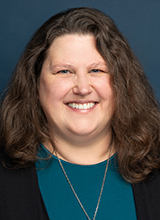
Katherine Anne (Kate) Comtois
Personal Statement
My career goal is to give suicidal clients and their clinicians the best chance to succeed. I have been working in the area of health services, treatment development, and clinical trials research to prevent suicide for over 30 years. My graduate training was in community/clinical psychology and focused on achieving clinical ends through prevention and other systemic interventions in socio-culturally diverse populations. I have brought these perspectives into health services research. I have developed or adapted interventions to improve care and clinician willingness to work with suicidal patients including Caring Contacts, Dialectical Behavior Therapy (DBT), Collaborative Assessment and Management of Suicidality (CAMS), and Preventing Addiction Related Suicide (PARS). I have developed an adaptation of DBT Next Steps, a program to assist psychiatrically disabled individuals find and maintain living wage employment. My research has been funded by NIMH, NIDA, the Department of Defense, American Foundation for Suicide Prevention, and the State of Washington.
I am the director of the Center for Suicide Prevention and Recovery (CSPAR) whose mission is to promote the recovery of suicidal individuals and the effectiveness and well-being the clinicians and families who care for them by conducting rigorous and ecologically valid research, developing innovative interventions, improving policies, systems and environments of care, and providing expert training and consultation. CSPAR faculty and staff seek a deep understanding of the cultures and settings in which we work that leads to meaningful and effective interventions ready for implementation.
I also direct the Suicide Care Research Center, an NIMH P50 funded research center focused on using Human Centered Design and MOST optimization methodology to improve the care of adolescents and young adults (age 13-30 years) in outpatient medical settings. We are conducting one fully powered trial, three R34s, and 4 pilot studies within UW Medicine and Seattle Children’s hospital to develop innovative interventions to support primary care, Collaborative Care, and specialty medical clinics care for patients experiencing suicidal thoughts and behavior. The center supports effort of over 20 faculty and 16 staff as well as 11 emerging and advanced collaborating scholars and funds 2 annual pilot grants (each $100,000 over two years).
In addition to clinical research, I founded the Society for Implementation Research Collaboration (SIRC) focused on disseminating and implementing innovative, evidence-based interventions in the systems that need them. Beyond my research, I directed the Harborview Dialectical Behavior Therapy program at Harborview Medical Center 1996-2019, co-lead the UWAnnual Comprehensive DBT Training Program and Suicide Care in Healthcare Systems: We Can Do Better Serving our Patients and Caring for our Clinicians, both of which meet the Washington State requirement for suicide prevention training. I have a long history of training and mentoring junior faculty, post-doctoral scholars, psychiatry residents, pre-doctoral psychology interns, undergraduate students, and post-baccalaureate trainees. I provide psychotherapy and consultation at the UWMC Outpatient Psychiatry Clinic.
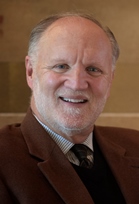
Richard C. Veith
Personal Statement
| I am a Seattle native who has spent my entire academic career at the University of Washington School of Medicine. I joined the faculty of the UW Department of Psychiatry and Behavioral Sciences in 1977 and was based at the Seattle VA Puget Sound Health Care System. I joined the Seattle-American Lake Geriatric Research, Education and Clinical Center (GRECC) in 1977 as a clinical investigator and later served as GRECC Director from 1987-1998. In 1998, I was appointed Chair of the Department of Psychiatry and Behavioral Sciences and held this position until February, 2014. I am certified by the American Board of Psychiatry and Neurology with Added Qualifications in Geriatric Psychiatry and am listed in America’s Top Doctors and Best Doctors in America. I am recipient of the 2005 American Academy of Child & Adolescent Psychiatry, Robert Cancro Academic Leadership Award: Best Chair. I have conducted extensive research on the treatment of depression in patients with heart disease and stroke and has published more than 140 scientific publications. I am active in community efforts to improve the quality of care for the seriously mentally ill and with my faculty colleagues am implementing regionally, nationally, and internationally innovative and highly effective models of care that integrate mental health care into primary care settings. I am working with medical schools and the health ministries in Vietnam and Cambodia to strengthen psychiatric education, expand the mental health workforce, and develop delivery systems for psychiatric care in those countries. |

Mark Stein
Personal Statement
I am clinical psychologist and a Professor of Psychiatry and Pediatrics, and a clinical researcher specializing in ADHD throughout the lifespan. I direct the PEARL Clinic (Program to enhance attention, regulation, and learning) at Seattle Children’s. The PEARL Clinic is based on a multidisciplinary and collaborative care model which works closely with PCP’s who refer families to PEARL for evaluation and access to our behavioral group treatment programs and treatment recommendations. The PEARL clinic also provided multidisciplinary training for psychologists, psychiatrists, pediatricians, family medicine physicians, and medical students. The majority of my clinical work involves diagnostic evaluations and consultations for the parents, referring physician, and schools. My research emphasis is on personalizing ADHD treatment, and determining how best to combine and sequence interventions throughout the lifespan for individuals with ADHD. I have assisted in the development of several stimulant and non stimulant medications, and participated in many clinical trials. Currently, we are conducting a study for parents with ADHD who have young children with ADHD symptoms where we are treating the parent with medication and behavioral parent training or behavior parent training. I am also investigating the relationship between genetic factors and ADHD treatment response. Other areas of interest include sleep problems and overlap with ADHD, and novel treatments such as Trigeminal Nerve Stimulation (TNS) and augmentation strategies such as mindfulness and physical exercise or activity level.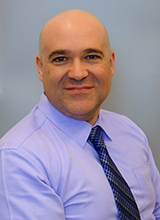
Ty Lostutter
Personal Statement
I am a licensed clinical psychologist in Washington State. I am the Director of the University of Washington School of Medicine’s Psychology Internship Program which is accredited by the American Psychological Association’s Office of Program Consultation and Accreditation. And, I conduct research on health and risk behaviors across the lifespan. Specifically, I have conducted research in the areas of college student alcohol use, young adult gambling behavior, and co-morbidity of substance use and mental health/risk behaviors (i.e. risky sexual behaviors). I have extensive experience working with college students/young adults, military/veteran, and minority/diverse populations. I am also interested in mental health issues including depression, anxiety, and PTSD. I maintain an active clinical practice in the areas of mental health issues with patients diagnosed with hematological and oncological illness and have clinical responsibilities at the Fred Hutchinson Cancer Center. I also provide clinical supervision for psychology residents and psychology practicum students at Fred Hutchinson Cancer Center as well. Overall, my professional aspirations are to improve the public health through empirically-supported psychological interventions and providing mentorship to diverse trainees to expand the reach of psychology.