Treatment: Telepsychiatry
Christopher Varley
Personal Statement
My primary interest is Graduate Medical Education and Faculty Development in Child and Adolescent Psychiatry. I was the program director for the Child and Adolescent Psychiatry residency at the UWSOM for 32 years. I am now the Director of Education and Faculty Development in the Division of Child and Adolescent Psychiatry. My clinical interests are in pediatric psychopharmacology, particularly re ADHD.
Ann Vander Stoep
Personal Statement
| As a child psychiatric epidemiologist, I conduct research about the etiology of child and adolescent mental health conditions and about the effectiveness of interventions that are designed to address these conditions. I co-direct the Developmental Pathways Research Program, the centerpiece of which is the Developmental Pathways Project, a longitudinal study of a cohort of 521 adolescents recruited as 11-12 year-olds from Seattle public middle schools. Members of the cohort are currently undergoing their eighth assessment that has followed their mental health and associated factors from early adolescence through young adulthood. DPP has contributed to our understanding of the development of co-morbid depression and conduct problems, as well as antecedents and consequences of problem substance use. I have collaborated with intervention researchers to develop and test school-based interventions to address mental health problems that interfere with academic performance and social well-being and to conduct randomized controlled trials of interventions that extend the reach of child mental health services to underserved communities. I teach public mental health research methods to graduate students at the University of Washington and to faculty and trainees with an research interest in mental health at the University of Nairobi in Kenya. I provide research mentorship to many UW masters and doctoral students in epidemiology and health services and to junior faculty in the Division of Child and Adolescent Psychiatry. |
Debby Tsuang
Personal Statement
Over the past 20 years, my research has focused on the genetics of schizophrenia and neurodegenerative disorders, particularly on the use of clinical phenotyping and innovative genomic technologies to elucidate the complex genetic architecture underlying schizophrenia and Alzheimer’s disease (AD). I served as the Director of the Geriatric Research, Education, and Clinical Center (GRECC) at the VA Puget Sound Health (VAPS) from 2011-2022, in order to focus on my research on Alzheimer’s Disease and related disorders. My current research interests are two-pronged: 1) develop machine learning models in VA’s vast electronic health records in order to assign ADRD probability scores in older Black and White Veterans; and 2) use mobile health devices to promote early diagnosis of dementia with Lewy bodies. In In these capacities, I direct multidisciplinary efforts to better understand the biology, genetics, etiology, prevention, and treatment of these disorders, and I provide clinical expertise for the differential diagnosis of neurodegenerative disorders and treatment of behavioral disturbances in dementias.
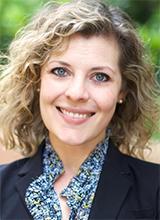
Nicole Bates
As a psycho-oncologist at Fred Hutchinson Cancer Center (FHCC), I serve patients as a psychiatrist specializing in mental health issues arising during the course of cancer and hematologic diseases. My approach to care is person-centered, focusing on your story as a person as well as a patient, and combining psychotherapeutic and pharmacologic approaches to help you navigate your journey with medical illness.
I bring fellowship training in consultation-liaison psychiatry to understanding the interplay between medical conditions and mental health issues, and I believe that partnering with both patients and their medical teams is essential to create a successful plan of care. While I often oversee psychiatric medications during cancer treatment, I also have a background in supportive, psychodynamic, CBT-focused, and meaning-centered psychotherapy, and I incorporate psychotherapy elements into each appointment.
Within the field of psycho-oncology, my specific interests include working with palliative care populations, supporting existential issues that arise during journeys with cancer, and strengthening collaborative care models in oncology settings. I am also fortunate to teach outstanding UW psychiatry residents and fellows who complete clinical rotations at FHCC.
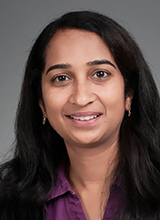
Amritha Bhat
Personal Statement
I am a perinatal psychiatrist and Associate Professor in the Department of Psychiatry and Behavioral Sciences. I earned my medical degree from Bangalore Medical College, India, and completed a psychiatry residency in St. John’s Medical College, India. I completed a second residency in Psychiatry with a focus on women’s mental health and integrated care from the University of Washington, and a fellowship in Primary Care in Psychiatry. I also earned a Master’s in Public Health from the University of Washington School of Public Health. I am board certified with the American Board of Psychiatry and Neurology.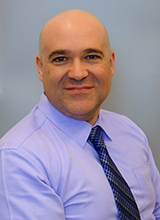
Ty Lostutter
Personal Statement
I am a licensed clinical psychologist in Washington State. I am the Director of the University of Washington School of Medicine’s Psychology Internship Program which is accredited by the American Psychological Association’s Office of Program Consultation and Accreditation. And, I conduct research on health and risk behaviors across the lifespan. Specifically, I have conducted research in the areas of college student alcohol use, young adult gambling behavior, and co-morbidity of substance use and mental health/risk behaviors (i.e. risky sexual behaviors). I have extensive experience working with college students/young adults, military/veteran, and minority/diverse populations. I am also interested in mental health issues including depression, anxiety, and PTSD. I maintain an active clinical practice in the areas of mental health issues with patients diagnosed with hematological and oncological illness and have clinical responsibilities at the Fred Hutchinson Cancer Center. I also provide clinical supervision for psychology residents and psychology practicum students at Fred Hutchinson Cancer Center as well. Overall, my professional aspirations are to improve the public health through empirically-supported psychological interventions and providing mentorship to diverse trainees to expand the reach of psychology.