Treatment: Collaborative Care / Integrated Care
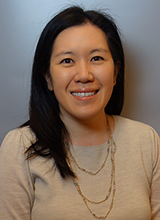
Denise Chang
Personal Statement
As a consulting psychiatrist working in the Behavioral Health Integration Program, I work in an Integrated Care model where I work closely with primary care providers, social workers and other clinical staff members to help provide evidence-based mental health care in an outpatient primary care setting. This collaboration between providers allows for improved access to mental health care that is patient-centered and focuses on whole person care. Through my work in Integrated Care, I have also developed interests in Population Health and Quality Improvement, with a particular desire to improve our population approach to mental health conditions and the ways in which we can improve our processes to enhance the quality of care being delivered. It is been a privilege to work with an interdisciplinary team of providers who are dedicated to delivering quality mental health care and I am grateful to work at a healthcare organization that is devoted to improving the health of the public.
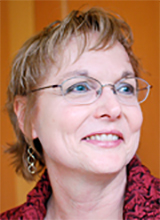
Heather Carmichael Olson
Personal Statement
I am a psychologist who carries out research, provides community education to a broad range of audiences, trains postgraduate students, works on public policy– and has served as a clinician with children and families for many years. My main interests are fetal alcohol spectrum disorders (FASD), early childhood mental health, and interventions for children born prenatally exposed to alcohol and other drugs and their families. My research is currently based at the Seattle Children’s Research Institute, but I also work in collaboration with UW researchers– and scientists at the University of Rochester in New York and multiple other academic institutions. A main research focus has been the Families Moving Forward (FMF) Program, a family-focused FASD intervention, now being disseminated primarily in the USA and Canada. The FMF Program is also now being translated into a mobile health application, called FMF Connect, for even broader use. Through Seattle Children’s, I co-direct a pilot service focused on assessment and short-term consultation for youth with prenatal substance exposure (including alcohol), and their families. I also offer mental health services to a broad range of young children and develops research focused on early childhood mental health. Over the years, beyond research and clinical work, I have been able to work toward change in national US public policy, collaborate with Indigenous communities and researchers in remote Northwestern Australia, and train dedicated young professionals in psychology and psychiatry. I am grateful for these remarkable career opportunities… and the chance to meet so many resilient and inspiring families. Note that you can only reach me through my Seattle Children’s email, at: heather.carmichaelolson@seattlechildrens.org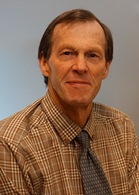
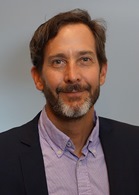
Christopher Varley
Personal Statement
My primary interest is Graduate Medical Education and Faculty Development in Child and Adolescent Psychiatry. I was the program director for the Child and Adolescent Psychiatry residency at the UWSOM for 32 years. I am now the Director of Education and Faculty Development in the Division of Child and Adolescent Psychiatry. My clinical interests are in pediatric psychopharmacology, particularly re ADHD.
Eric J. Bruns
Personal Statement
I am a clinical psychologist and mental health services researcher. My overarching research aim is to produce and promote use of research, evaluation, and continuous quality improvement that aids high-quality implementation of effective models of care in real world service settings, such as in schools, public mental health systems, and family-and youth-run organizations. My research can be summarized as falling into three categories: (1) Care coordination models for youth with the most complex behavioral health needs; (2) school mental health; and (3) public sector implementation of research-based practices. In each area, I co-direct national training and TA centers. For example the National Wraparound Implementation Center (www.nwic.org), provides support to dozens of states and localities internationally on Wraparound. The National Wraparound Initiative (www.pdx.edu) serves to mobilize our research and policy activities. Our Wraparound fidelity tools and data systems can be found at www.wrapinfo.org. With respect to school mental health, our interdisciplinary UW School Mental Health Assessment, Research, and Training (SMART) Center — www.smartcenter.uw.edu — currently has over a dozen federal grants as well as state, local, and foundation funding focused on how best to ensure that evidence for effective mental health intervention and prevention is translated into effective programming in schools. The SMART Center also hosts the school mental health supplement of the UW Department of Psychiatry’s SAMHSA-funded Northwest Mental Health Training and Technical Assistance Center (MHTTC). Check out our extraordinary array of resources at https://mhttcnetwork.org/centers/northwest-mhttc/northwest-mhttc-school-mental-health.
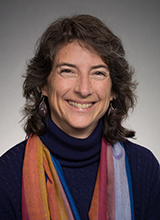
Lorin Boynton
Personal Statement
My primary interests are Nutrition and Lifestyle Psychiatry, Cultural Psychiatry and the interface of Religion and Spirituality with Psychiatry. I love guiding patients to achieve healing using a domains of health approach- addressing Nutrition, Sleep, Relaxation, Movement and Connectedness/ Purpose.
Jesse Bledsoe
Personal Statement
| I am interested in how cognitive development and brain development are affected in children experiencing cancer and comorbid psychological disorders. My research interests include using structural neuroimaging and neuropsychological assessment methods to evaluate brain-behavior relationships and development. My clinical interests overlap with my research interests. I am a clinical neuropsychologist with the Seattle Children’s Neuropsychological Service and conduct neurocognitive evaluations with various pediatric populations including children with brain tumors, leukemia, and genetic disorders. |
Taylor Black
Personal Statement
I came to the UW to train in psychosomatic medicine and to work in a complex comorbid population as a clinician and a teacher. Most medical and surgical patients served at Harborview will have psychosocial needs; often these are as critical to their recovery and health as somatic health problems. Working across disciplines is challenging but also clinically valuable, intellectually stimulating, and exciting to our trainees when we can address care in a more integrated and holistic manner. I like to focus my academic work on defining what the needs of Harborview’s clinical population are, and how our busy psychiatric consultation services can be best utilized to promote the health of our patients and our institutions.
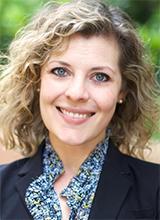
Nicole Bates
As a psycho-oncologist at Fred Hutchinson Cancer Center (FHCC), I serve patients as a psychiatrist specializing in mental health issues arising during the course of cancer and hematologic diseases. My approach to care is person-centered, focusing on your story as a person as well as a patient, and combining psychotherapeutic and pharmacologic approaches to help you navigate your journey with medical illness.
I bring fellowship training in consultation-liaison psychiatry to understanding the interplay between medical conditions and mental health issues, and I believe that partnering with both patients and their medical teams is essential to create a successful plan of care. While I often oversee psychiatric medications during cancer treatment, I also have a background in supportive, psychodynamic, CBT-focused, and meaning-centered psychotherapy, and I incorporate psychotherapy elements into each appointment.
Within the field of psycho-oncology, my specific interests include working with palliative care populations, supporting existential issues that arise during journeys with cancer, and strengthening collaborative care models in oncology settings. I am also fortunate to teach outstanding UW psychiatry residents and fellows who complete clinical rotations at FHCC.