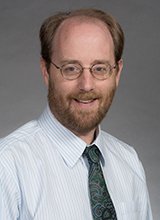
Bill O’Connell

As part of my faculty appointment, I am Director of the Behavioral Health Support Specialist (BHSS) Workforce Development Project.  My responsibilities include oversight of curriculum development, practicum guidelines, development of community partnerships and advocacy for reimbursement pathways.

Behavioral Health Support Specialist Workforce Development Project

I am working with a talented project team to develop a competency framework and curriculum to prepare a bachelor level Behavioral Health Support Specialist (BHSS).  A BHSS will deliver brief, culturally responsive, evidence-informed interventions for common mental and behavioral health conditions under supervision in a team-based setting.  The BHSS will use a measurement-based care approach to ensure patients are receiving the right level of care at the right dose.  Crisis services, integrated care and specialty behavioral healthcare are examples of work environments that will benefit from a BHSS.  Our project goal is to support higher educational programs across the state implement the BHSS clinical training program in academic year 25-26. During my time working as a primary care behavioral health consultant, I frequently met with senior patients from diverse backgrounds who had never spoken with a behavioral health provider in their lifetime despite experiencing moderate to severe symptoms of a mental or behavioral health condition.  One reason I found unacceptable was lack of access to services.  The bachelor level Behavioral Health Support Specialist role is one solution of many to improving access to care and expanding the available workforce.

Scholarship

My current scholarship focuses on behavioral health workforce development and best practices in teaching and training bachelor level intervention specialists for behavioral health settings. In addition to my current role as BHSS project co-investigator, I served as principal investigator for a philanthropic gift from Robert Craves to expand access to school counseling services at Bailey Gatzert Elementary School in the Yesler Terrace neighborhood of Seattle. I also engaged in community-based research with Village Spirit Center for Community Change and Healing located in the Central District to produce a mental health needs assessment for residents who had experienced homelessness prior to obtaining secure housing. Previous peer reviewed publications focused on counselor preparation for employment in behavioral health agencies, best practices in counselor preparation and ethical dilemmas in counselor practice.

Certification and Licensure

I am a Licensed Mental Health Counselor (LMHC) in the State of Washington and a Licensed Professional Counselor (LPC) in Colorado.  Additionally, I am a National Certified Counselor (NCC), and an Approved Clinical Supervisor (ACS) through the National Board of Certified Counselors and the Center for Credentialing and Education.

Career Roles

  • Associate Professor (WOT), Psychiatry and Behavioral Sciences, University of Washington (2022-Present).
  • Regional Director of Behavioral Health and Primary Care Behavioral Health Consultant for One Medical Seniors (2018-2021)
  • Founding Chair of the Department of Leadership and Professional Studies at Seattle University (2014-2017)
  • Associate Professor with Tenure of Clinical Mental Health and School Counseling at Seattle University (2010-2019)
  • Associate Professor with Tenure of Clinical Mental Health and School Counseling at Xavier University in Ohio (2006-2010)
  • Assistant Professor of Clinical Mental Health and School Counseling at Xavier University in Ohio (2001-2006)
  • Past President of the Ohio Counseling Association (2006-2009)
  • Assistant Clinical Director for Talbert House Inc. (1998-2001)
  • *Private Practice Therapist and Consultant (1997-2010)
  • Adult Therapist for Clermont Counseling Center in Milford, Ohio (1994-1997)
  • Crisis Intervention Specialist for Talbert House Inc. (1990-1993)
  • Adult Therapist for Care Unit Chemical Dependency Hospital in Ohio (1988-1990)

*I owned a private practice in the Greater Cincinnati Area for twelve years providing behavioral medicine consultation in an integrated pain management practice, clinical consultation to behavioral health organizations, and training and education on ethical and professional issues for mental health providers.  Additionally, I provided individual, couple and family counseling in a group psychology practice with a special focus on serving the LGBTQI+ community and persons with trauma history.
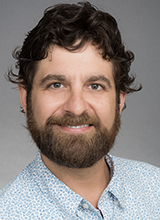
Nathan Sackett

Nathan Sackett, MD, MS  is trained as an addiction psychiatrist, focusing on the intersection between substance use and psychiatric disorders. He attended medical school and nursing school at UCSF, graduate school at UC Berkeley and completed his adult psychiatry residency and addiction psychiatry fellowship at the University of Washington. He is now a junior faculty at the University of Washington in the Department of Psychiatry and Behavioral Sciences where he splits his time between seeing patients and research. Clinically, he works primarily outpatient seeing a range of patients with primary psychiatric issues and substance use disorders. His research focuses on the use of psychedelics to treat substance use disorders with a particular interest in how psychedelics can augment the psychotherapeutic process and facilitate behavioral change. When he is not working, he is spending time with his family and playing in the ocean.

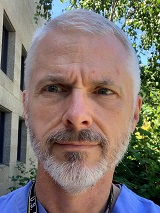
Douglas Lane

I am a clinical psychologist with board certification in geriatric psychology.  I am based in the Geriatrics and Extended Care Service of the VA Puget Sound Healthcare System.

Caleb Banta-Green

Dr. Banta-Green studies substance use involving opioids and stimulants and interventions to support recovery and reduce substance-related harms. He is particularly interested in developing interventions that are accessible to all people, including those who are most marginalized, such as those who are unhoused, utilizing services syringe service programs, and/or in the criminal legal system. He provides technical assistance and evaluation services for public health and safety interventions including the website http://stopoverdose.org, and information for the general public and professionals about effective treatments at http://learnabouttreatment.org. As an epidemiologist he develops innovative approaches to measuring the use and impacts of substances as well as service utilization. His health services research involves clinical trials, implementation research, and secondary data analyses. He serves on local, state, and federal workgroups and committees related to epidemiology, policy, and interventions for illicit substance-related problems. He is a member of the U.S. Health and Human Service’s Interdepartmental Substance Use Disorders Coordinating Committee.

Anna Jaffe

Dr. Jaffe’s research is focused on responding to the public health problem of sexual assault and co-occurring alcohol misuse by improving understanding of survivors’ experiences and promoting recovery through novel interventions.

Taking an ecological perspective, Dr. Jaffe considers individual factors (e.g., cognitions, stress response), microsystems (e.g., interpersonal interactions, social networks), macrosystems (e.g., societal norms), and chronosystems (e.g., changes over time) that affect survivors’ recovery after sexual assault. Across these systems, she seeks to design and improve clinical interventions that support survivors’ recovery, mitigate post-assault alcohol misuse, and reduce distress.

Sarah Campbell

My research broadly seeks to understand the ways in which our social and romantic relationships intersect with physical and mental health. Additionally, I work in treatment development and evaluation with the aim of improving and harnessing social relationships to increase physical and mental wellbeing. I was recently funded by a 5-year Career Development Award through VA HSR&D. This award aims to both improve clinicians’ measurement of social relationships in the context of mental health care and modify and test brief, Primary Care-based interventions for PTSD and social support. In this line of research, I am PI of an HSR&D and VAPS R&D-funded nationwide survey of veterans both with and without PTSD that seeks to collect psychometric and acceptability data on social support instruments for future use in measurement-based care. I am also collaborating with colleagues in HSR&D to develop and test a dyadic intervention for improving health behavior. I am lucky to provide clinical care as a staff psychologist in the PTSD Outpatient Clinic at VA Puget Sound, where I deliver individual, group, and couples treatments for PTSD and provide psychoeducation on trauma and related conditions to loved ones of veterans with PTSD.

Robert Hilt

Robert Hilt, MD is a Professor in the UW Department of Psychiatry and Behavioral Sciences and a psychiatrist at Seattle Children’s Hospital. He is the program director for the Partnership Access Line (PAL), a child mental health consultation service for primary care providers in Washington, Wyoming and Alaska. He is the Program Director for the Medicaid Medication Second Opinion Programs of Wyoming, Washington and Alaska, and Multidisciplinary Team (MDT) Psychiatric Consult Service in Wyoming for children in foster care. He has been involved in several collaborative care projects, in school support projects, and has helped to establish a statewide mental health referral service in Washington.  Dr. Hilt’s primary interest is to increase professional collaboration between child psychiatrists and pediatric medical providers, and to increase access to high quality care.

Barbara McCann

Personal Statement

I am interested in mood and anxiety disorders and the intersection of these with chronic medical illnesses. My approach to treatment is integrative. Working within a cognitive-behavioral framework, I use many traditional CBT methods, including hypnosis, mindfulness training, and concepts from third-generation cognitive and behavioral methods.

Kevin Hallgren

Personal Statement

I am a clinical psychologist with research interests in the treatment of alcohol and substance use disorders and co-occurring mental health conditions. My research focuses on understanding how to improve access to evidence-based treatments and understanding why and how patients benefit from treatment. I am particularly interested in research measurement-based care — i.e., the use of standardized measures to monitor treatment progress and inform clinical decision-making. Broad areas of interest include:
  • Alcohol and drug use disorder treatment, including the effectiveness of digital and behavioral interventions, mechanisms of behavioral change, and social and environmental determinants of change.
  • Technology to support behavioral change, including patient- and clinician-facing tools that support clinical decision-making, treatment adherence, and treatment progress monitoring.
  • Applied statistical analysis, including methods for analyzing longitudinal data, clinical trials data, multilevel data, missing data, psychometric analysis, and data visualization.