
Scholarly Expertise: Quality Improvement (QI)
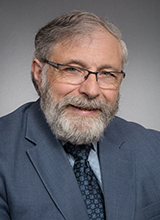
Christos Dagadakis
Personal Statement
I have had a career long interest and focus on crisis and stress management, and assessment of disability. My 19 years as director of emergency psychiatry initially at UW Medical Center and later Harborview Medical Center and current work as an attending psychiatrist and past 20 years as Medical Director of the Harborview Mental Health Services intake and Brief Intervention Service have been where I have worked with families and individuals with acute stress , mental illness , and/or both together( usually these are together) have been my source of knowledge and practical experience. Thirty one years of doing consultation and assessments about disability have given me an appreciation for the severe impact of mental disorder on function and relationships. Teaching stress management classes and doing workshops and consultation with multiple companies and organizations have focused me on efforts to prevention whenever possible. Initial prevention is almost always preferable to needing to do stabilization and reconstitution and subsequent preventive efforts. in summary, prevention efforts whether initially or after crisis have been and are a major focus and value for me. 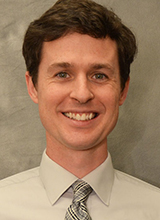
Mark Newman
Personal Statement
I am a board-certified Consult-Liaison psychiatrist at UW Medical Center – Montlake and the General Internal Medicine Clinic, as well as a Clinical Associate Professor in the Department of Psychiatry and Behavioral Sciences.
When working with patients, my goal is to understand their life history and personalities in addition to their medical and psychiatric conditions. I am also involved in teaching UW medical students as well as practicing mental health providers across the state.
I earned my M.D. from the University of Florida, Gainesville, then completed residency at the University of Michigan and a fellowship at Northwestern University. My interests include treatment of psychiatric conditions in medically ill patients, collaborative care, quality improvement, delirium, and medical education.
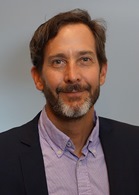
Eric J. Bruns
Personal Statement
I am a clinical psychologist and mental health services researcher. My overarching research aim is to produce and promote use of research, evaluation, and continuous quality improvement that aids high-quality implementation of effective models of care in real world service settings, such as in schools, public mental health systems, and family-and youth-run organizations. My research can be summarized as falling into three categories: (1) Care coordination models for youth with the most complex behavioral health needs; (2) school mental health; and (3) public sector implementation of research-based practices. In each area, I co-direct national training and TA centers. For example the National Wraparound Implementation Center (www.nwic.org), provides support to dozens of states and localities internationally on Wraparound. The National Wraparound Initiative (www.pdx.edu) serves to mobilize our research and policy activities. Our Wraparound fidelity tools and data systems can be found at www.wrapinfo.org. With respect to school mental health, our interdisciplinary UW School Mental Health Assessment, Research, and Training (SMART) Center — www.smartcenter.uw.edu — currently has over a dozen federal grants as well as state, local, and foundation funding focused on how best to ensure that evidence for effective mental health intervention and prevention is translated into effective programming in schools. The SMART Center also hosts the school mental health supplement of the UW Department of Psychiatry’s SAMHSA-funded Northwest Mental Health Training and Technical Assistance Center (MHTTC). Check out our extraordinary array of resources at https://mhttcnetwork.org/centers/northwest-mhttc/northwest-mhttc-school-mental-health.

Anna Ratzliff
Personal Statement
I am a national expert on collaborative care and specifically, on training teams to implement and deliver mental health treatment in primary care settings. My passion for translating complex research ideas into practical real-world applications began when I received my MD and PhD in Anatomy and Neurobiology as part of the Medical Scientist Training Program at the University of California at Irvine. I am currently a Professor in the Department of Psychiatry and Behavioral Sciences at the University of Washington where I have developed additional expertise in suicide prevention training, mental health workforce development, adult learning best practices, and mentorship. I am the Co-Director of the AIMS Center (Advancing Integrated Mental Health Solutions) and Director of the UW Integrated Care Training Program for residents and fellows.
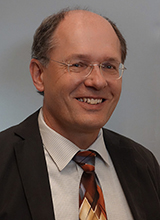
Jürgen Unützer
Personal Statement
My work focuses on the integration of mental health services and general medical care and on translating research on evidence-based mental health interventions into effective clinical and public health practice. I have published over 300 scientific papers and I am the recipient of numerous federal and foundation grants and awards for my research on integrated behavioral health care. I work with national and international organizations dedicated to improving behavioral health care for diverse populations. I have served as Senior Scientific Advisor to the World Health Organization and as an advisor to the President’s New Freedom Commission on Mental Health.