Personal Statement
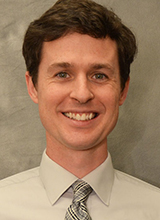
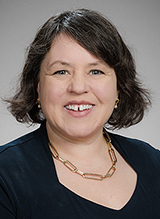
I am a board-certified Consult-Liaison psychiatrist at UW Medical Center – Montlake and the General Internal Medicine Clinic, as well as a Clinical Associate Professor in the Department of Psychiatry and Behavioral Sciences.
When working with patients, my goal is to understand their life history and personalities in addition to their medical and psychiatric conditions. I am also involved in teaching UW medical students as well as practicing mental health providers across the state.
I earned my M.D. from the University of Florida, Gainesville, then completed residency at the University of Michigan and a fellowship at Northwestern University. My interests include treatment of psychiatric conditions in medically ill patients, collaborative care, quality improvement, delirium, and medical education.
Personal Statement
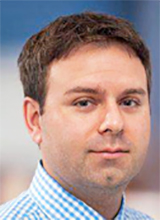
I am a clinical psychologist and mental health services researcher. My overarching research aim is to produce and promote use of research, evaluation, and continuous quality improvement that aids high-quality implementation of effective models of care in real world service settings, such as in schools, public mental health systems, and family-and youth-run organizations. My research can be summarized as falling into three categories: (1) Care coordination models for youth with the most complex behavioral health needs; (2) school mental health; and (3) public sector implementation of research-based practices. In each area, I co-direct national training and TA centers. For example the National Wraparound Implementation Center (www.nwic.org), provides support to dozens of states and localities internationally on Wraparound. The National Wraparound Initiative (www.pdx.edu) serves to mobilize our research and policy activities. Our Wraparound fidelity tools and data systems can be found at www.wrapinfo.org. With respect to school mental health, our interdisciplinary UW School Mental Health Assessment, Research, and Training (SMART) Center — www.smartcenter.uw.edu — currently has over a dozen federal grants as well as state, local, and foundation funding focused on how best to ensure that evidence for effective mental health intervention and prevention is translated into effective programming in schools. The SMART Center also hosts the school mental health supplement of the UW Department of Psychiatry’s SAMHSA-funded Northwest Mental Health Training and Technical Assistance Center (MHTTC). Check out our extraordinary array of resources at https://mhttcnetwork.org/centers/northwest-mhttc/northwest-mhttc-school-mental-health.
Personal Statement
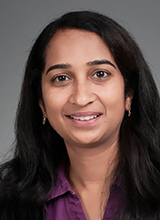
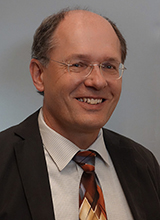
I am a perinatal psychiatrist and Associate Professor in the Department of Psychiatry and Behavioral Sciences.
I earned my medical degree from Bangalore Medical College, India, and completed a psychiatry residency in St. John’s Medical College, India. I completed a second residency in Psychiatry with a focus on women’s mental health and integrated care from the University of Washington, and a fellowship in Primary Care in Psychiatry.
I also earned a Master’s in Public Health from the University of Washington School of Public Health. I am board certified with the American Board of Psychiatry and Neurology.
Personal Statement
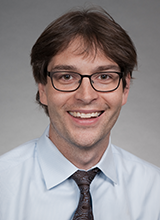
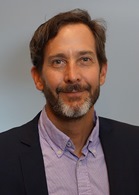
James Basinski is an assistant clinical professor at Harborview Medical Center where he works at both the Psychiatric Intensive Care Unit as well as the Health Care for the Homeless program at the Third Avenue Clinic. He graduated from the University of Pittsburgh Medical School, and then moved to Seattle where he completed his psychiatry residency at the University of Washington and served as chief resident at Harborview Medical Center. He currently an advanced clinical associate the Seattle Psychoanalytic Society and Institute. He also maintains a private practice in Seattle delivering medication management and psychotherapy services
Personal Statement
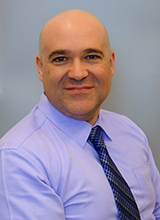
I am a licensed clinical psychologist in Washington State. I am the Director of the University of Washington School of Medicine’s Psychology Internship Program which is accredited by the American Psychological Association’s Office of Program Consultation and Accreditation. And, I conduct research on health and risk behaviors across the lifespan. Specifically, I have conducted research in the areas of college student alcohol use, young adult gambling behavior, and co-morbidity of substance use and mental health/risk behaviors (i.e. risky sexual behaviors). I have extensive experience working with college students/young adults, military/veteran, and minority/diverse populations. I am also interested in mental health issues including depression, anxiety, and PTSD. I maintain an active clinical practice in the areas of mental health issues with patients diagnosed with hematological and oncological illness and have clinical responsibilities at the Fred Hutchinson Cancer Center. I also provide clinical supervision for psychology residents and psychology practicum students at Fred Hutchinson Cancer Center as well. Overall, my professional aspirations are to improve the public health through empirically-supported psychological interventions and providing mentorship to diverse trainees to expand the reach of psychology.
Personal Statement
I am a national expert on collaborative care and specifically, on training teams to implement and deliver mental health treatment in primary care settings. My passion for translating complex research ideas into practical real-world applications began when I received my MD and PhD in Anatomy and Neurobiology as part of the Medical Scientist Training Program at the University of California at Irvine.
I am currently a Professor in the Department of Psychiatry and Behavioral Sciences at the University of Washington where I have developed additional expertise in suicide prevention training, mental health workforce development, adult learning best practices, and mentorship. I am the Co-Director of the AIMS Center (Advancing Integrated Mental Health Solutions) and Director of the UW Integrated Care Training Program for residents and fellows.
Personal Statement
Dr. Unützer’s work focuses on improving access to mental health care, integrating mental health and general medical services, and translating research on effective mental health interventions into clinical and public health practice. He has published over 350 scientific papers and is the recipient of numerous federal and foundation grants and awards for his work on integrated behavioral health care. He works with national and international organizations dedicated to improving behavioral health care for diverse populations and he has served as a Scientific Advisor to the World Health Organization and the President’s New Freedom Commission on Mental Health.