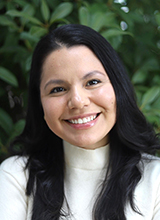
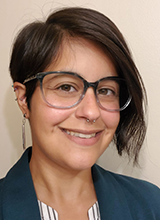
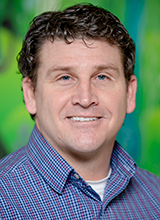
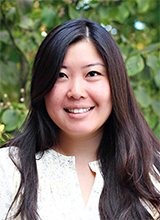
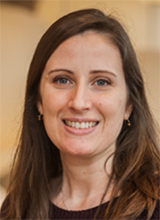
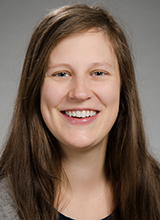
Lupita Santillan, PhD, is an Acting Assistant Professor in the department of Psychiatry and Behavioral Sciences. Dr. Santillan is an attending psychologist for the Early Childhood Clinic and the CALMA Clinic at Seattle Children’s Hospital. She is passionate about increasing access to evidence-based early childhood interventions and the provision of mental and behavioral health in Spanish. Her clinical training has focused on providing care to families and children with developmental delays and neurodevelopmental disabilities. Dr. Santillan’s research focuses on the development, implementation, and efficacy of evidence-based behavioral treatments to support children with developmental delays and neurodevelopmental disabilities.
My work focuses on the development, dissemination, and implementation of tools for the assessment and treatment of autism spectrum disorder. I am also interested in transdiagnostic interventions for autism spectrum disorder to increase efficacy for individuals and families, as well as access to care. My clinical pursuits include conducting diagnostic evaluations for autism for youth of all ages, as well as running groups and classes for autistic individuals and their families.
My clinical work focuses on the assessment and treatment of children and adolescents with intellectual and developmental disabilities (IDD) who engage in severe challenging behavior. My interest in this underserved population is in the development of a continuum of care, providing evidence-based care, and in the dissemination of best practices through research and training. At the University of Washington, I work on the Psychiatry and Behavioral Medicine Unit at Seattle Children’s and lead the sub-unit that specializes in patients with IDD.
Jill Locke, Ph.D., is an Associate Professor in the UW Department of Psychiatry and Behavioral Sciences, a licensed child psychologist and the former co-Director of the SMART Center from 2020-23. To date, her research has focused on the: 1) presentation of social impairment for autistic youth; 2) identification of best practices for autistic youth; and 3) understanding of successful implementation and sustainment of evidence-based practices (EBPs) for autistic youth in public school settings. Her current research focuses on understanding EBP use to support autistic youth in inclusive settings and developing and testing implementation strategies to support the adoption, implementation, and sustainment of EBPs in public schools.
Dr. Neuhaus has a broad research focus on social-emotional processes in individuals with neurodevelopmental disorders, particularly children with autism spectrum disorder (ASD), attention-deficit/hyperactivity disorder (ADHD), or inherited or de novo genetic events. Dr. Neuhaus’s research is informed by a number of methodological approaches, including clinical/behavioral assessment and physiological measures such as EEG and autonomic biomarkers. Dr. Neuhaus is particularly interested in how social and emotional processes relate to brain function and development, and in how they interact with one another to influence diagnostic outcomes (e.g., phenotypes within autism) and psychiatric trajectories over the course of development. Clinically, Dr. Neuhaus specializes in diagnostic assessment of ASD.
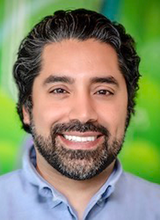
I am a Board-certified Child and Adolescent Psychiatrist at Seattle Children’s Hospital, a faculty member of the University of Washington School of Medicine since 2020, a board member of the ARC Trust of Washington. Clinically, I am an inpatient attending psychiatrist on the Psychiatry and Behavioral Medicine Unit at SCH, and I also see children and families on an outpatient basis at the SCH Autism Center. In each of these roles I am involved in the teaching and supervision of medical students, residents, and fellows. Academically, I am the Director of Career Advising in Psychiatry, helping guide graduating medical students towards residency and careers in Psychiatry. In the CAP fellowship, I am the course director for the Genetics component of the didactics series, and also presenter for the Child Psychiatry portion of the Mind, Brain, and Body course. My professional interests include autism spectrum disorder, neurodevelopmental and genetic disorders, catatonia, bullying, trauma-informed care, and anxiety in children of immigrant families. In all facets of my work I utilize evidence-based practices, and aim to to create strong partnerships with patients and families to achieve positive outcomes.
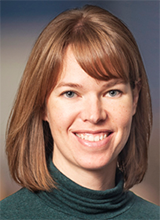
My primary research and clinical interests are in diagnosis and management of neurodevelopmental disorders, particularly, autism spectrum disorder. I am a psychologist at the Seattle Children’s Autism Center where I participate in team evaluations for children and teens with co-occurring medical or psychiatric complexity, and I also see patients through our Gender Clinic. I also work at the University of Washington’s Institute on Human Development and Disability (IHDD) where I see patients in the Infant Development Follow-up Clinic and in the Child Development Clinic. I love the interdisciplinary nature of CHDD and I am proud to be a faculty mentor for the LEND program (Leadership Education in Neurodevelopmental and Related Disabilities). Overarchingly, I am invested in learning more about how to support individuals and families, how to embrace the neurodiversity movement, encourage affirming care where strengths are celebrated, and work toward equitable treatment for the families I serve.
Dr. Megan Goldenshteyn works as a licensed psychologist at the Institute on Human Development and Disability (IHDD) in the Child Development Clinic, Cardiac Neurodevelopment Clinic, Down Syndrome Specialty Clinic, and the Infant Development Follow-up Clinic. Dr. Goldenshteyn conducts psychological and developmental evaluations and supervises the psychology trainees, including the postdoctoral fellow and residents.