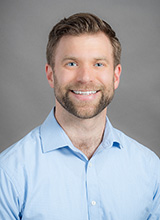
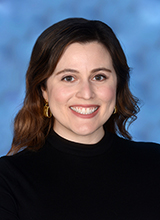
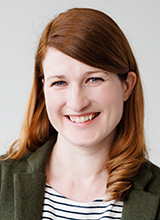
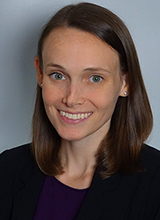
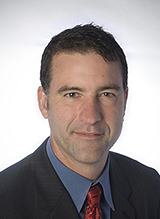
I am an Acting Assistant Professor in the Department of Psychiatry and Behavioral Sciences at the University of Washington, primarily working clinically at Harborview Medical Center. I work with the Recovery Clinic, Intake and Brief Intervention Services (IBIS), the Behavioral Health Integration Program (BHIP), and Addiction Consult Service.
I am fellowship-trained in Addiction Psychiatry, and board certified in both general and addiction psychiatry by the American Board of Psychiatry and Neurology. My passion is providing excellent, compassionate and comprehensive psychiatric care to my patients regardless of background or resources. I believe quality healthcare is a human right for all people and am excited help make that a reality as part of the Harborview system.
Koriann Cox, Ph.D. graduated from Northeastern University and is licensed in the state of Washington. She completed a postdoctoral fellowship in co-occurring addiction and mental health and has a range of clinical experience with a variety of concerns including depression, anxiety, trauma, reproductive mental health, and substance and behavioral addictions. Dr. Cox’s strengths-focused approach emphasizes the mutual development of goals for therapy and ongoing collaboration between herself, the patient, and the care team. Dr. Cox uses a number of therapeutic modalities including but not limited to Cognitive Behavioral Therapy, Acceptance and Commitment Therapy, and Cognitive Processing Therapy.

Dr. Charles Engel is Professor in the Department of Psychiatry and Behavioral Sciences at the University of Washington School of Medicine, Core VA HSR Investigator in the Seattle Center for Innovation, Co-Director of the Center’s Advanced Fellowship on Health Systems Research, and Adjunct Physician Policy Researcher at the RAND Corporation. Engel’s work focuses on trauma-informed health systems and strategies for improving the quality of primary care for chronic mental and physical health conditions. His research has covered traumatic injury and post-trauma syndromes ranging from blast injury, mild traumatic brain injury and Gulf War syndrome to PTSD and depression. Engel is experienced at mixed qualitative and quantitative methods and has led large pragmatic randomized trials, program evaluations, and implementation science studies. He has authored or coauthored nearly 200 scholarly papers, including in the New England Journal of Medicine, JAMA, and the American Journal of Psychiatry. Funding for his work has come from the National Institutes of Health, Centers for Disease Control, Department of Veterans Affairs, Department of Defense and other organizations. Before joining UW Psychiatry and the AIMS Center in 2021, Dr. Engel was Senior Physician Policy Researcher at the RAND Corporation from 2013 to 2020 and Associate Chair (Research) at Uniformed Services University’s Department of Psychiatry from 2001-2013. Engel has served on the board of directors of the International Society for Traumatic Stress Studies, has testified twice before Congress, received a number of awards, and delivered invited lectures in over 10 countries. He received both his MD and MPH from the University of Washington.
Dr. Jaffe’s research is focused on responding to the public health problem of sexual assault and co-occurring alcohol misuse by improving understanding of survivors’ experiences and promoting recovery through novel interventions.
Taking an ecological perspective, Dr. Jaffe considers individual factors (e.g., cognitions, stress response), microsystems (e.g., interpersonal interactions, social networks), macrosystems (e.g., societal norms), and chronosystems (e.g., changes over time) that affect survivors’ recovery after sexual assault. Across these systems, she seeks to design and improve clinical interventions that support survivors’ recovery, mitigate post-assault alcohol misuse, and reduce distress.
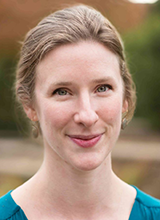
My research broadly seeks to understand the ways in which our social and romantic relationships intersect with physical and mental health. Additionally, I work in treatment development and evaluation with the aim of improving and harnessing social relationships to increase physical and mental wellbeing. I was recently funded by a 5-year Career Development Award through VA HSR&D. This award aims to both improve clinicians’ measurement of social relationships in the context of mental health care and modify and test brief, Primary Care-based interventions for PTSD and social support. In this line of research, I am PI of an HSR&D and VAPS R&D-funded nationwide survey of veterans both with and without PTSD that seeks to collect psychometric and acceptability data on social support instruments for future use in measurement-based care. I am also collaborating with colleagues in HSR&D to develop and test a dyadic intervention for improving health behavior. I am lucky to provide clinical care as a staff psychologist in the PTSD Outpatient Clinic at VA Puget Sound, where I deliver individual, group, and couples treatments for PTSD and provide psychoeducation on trauma and related conditions to loved ones of veterans with PTSD.
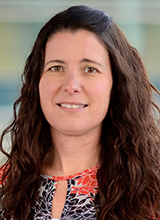
I am a Psychologist and the Coordinator of the DBT Program at the VA Puget Sound Health Care System as well as an Associate Professor in the Department of Psychiatry and Behavioral Sciences and Adjunct Associate Professor in the Department of Psychology at the University of Washington. I previously worked as the Research Director of Dr. Marsha Linehan’s Behavioral Research and Therapy Clinics at the University of Washington (2006-2018), Director of Research and Development for Behavioral Tech, LLC (2014-2017), and Director of Behavioral Tech Research, Inc. (2013-2016). My research focuses on the development and evaluation of the DBT Prolonged Exposure protocol for PTSD as well as methods of disseminating and implementing this and other evidence-based treatments into clinical practice. I regularly provide training and consultation nationally and internationally in DBT and DBT PE and have published extensively on these treatments. I am a certified DBT therapist, a certified PE therapist and supervisor, am board certified in Behavioral and Cognitive therapy, and am licensed as a psychologist in the state of Washington.

I am a child and adolescent psychiatrist at Seattle Children’s Hospital and faculty member at the University of Washington Medicine. My SCH practice locations include the Gender Clinic (Adolescent Medicine), Outpatient Psychiatry Clinic, Autism Center, and the inpatient unit- Psychiatry and Behavioral Medicine Unit (PBMU). I believe in delivering compassionate, evidence-based care in supporting patients and their families. My approach is both comprehensive and patient-centered, as it is important to consider the needs of the individual while also appreciating societal and cultural context. I specialize in working with diverse patient populations with various marginalized identities, such as those who identify as LGBTQ, gender diverse, and/or neurodiverse. I also work closely with the Adolescent Medicine Gender Clinic in supporting any mental health needs of transgender/gender diverse youth and their families. I also collaborate with colleagues in specialty medical clinics to coordinate care of medically complex patients. Additionally, I serve as a consultant with various school programs to support mental health initiatives and advocacy efforts.
Academically, I am involved with several initiatives both locally and nationally, particularly those that work to promote diversity and equity. I serve on committees supporting the SCH/UW CAP Fellowship Program, educating trainees and students through direct clinical supervision as well as with lectures and discussions. On a national level, I serve on the Sexual Orientation and Gender Identity Issues Committee (SOGIIC) for the American Academy of Child and Adolescent Psychiatry (AACAP). My clinical research focuses on finding strategies to better support the mental health and well-being of patients and families who are LGBTQ+. Additionally, I work on studies that explore the intersection between gender diversity and neuro diversity/autism spectrum.
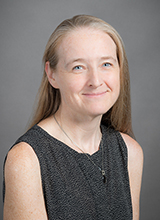
The Hendrickson research group explores underlying biological mechanisms related to the development and maintenance of posttraumatic stress disorder (PTSD) and related conditions, including mild traumatic brain injury, as well as the potential for interaction between different types of stress and trauma. Through the design and implementation of translational clinical studies, we apply this work directly to the pursuit of new treatment options for people who have experienced a traumatic stress.
A primary goal of our team is to understand broadly the ways traumatic stress interferes with people’s lives, and to prioritize the areas of greatest clinical need. We look for ways to prevent persistent symptoms after trauma, to match patients more quickly to the treatment options that will be most effective for them as individuals, and to develop new treatment options for those for whom current options are simply not adequate.
In addition to my research work, I am a staff psychiatrist in the VA PTSD Outpatient Clinic and a member of the VA Dialectical Behavioral Therapy (DBT) Team, and provide teaching and mentorship for residents in the UW Psychiatry Training Program.
Personal Statement
I am a board certified child and adolescent psychiatrist in the Pediatric Clinic at Harborview, Seattle Children’s Hospital, and Odessa Brown Children’s Clinic in the Division of Psychiatry and Behavioral Medicine.
In my clinical work, I strive to create active partnerships with my patients and their families to achieve the best possible outcomes regardless of their needs and circumstances. I am lucky to have great behavioral health and primary care partners across the different clinics I work in, who are invaluable collaborators in caring for our patients and families.
I am involved in the child and adolescent training program and supervises trainees at several outpatient clinics. My clinical and research interests include integrating mental healthcare into primary care settings, ADHD, disruptive behaviors, aggression, trauma-related disorders, and improving clinical supervision of child and adolescent psychiatry trainees.