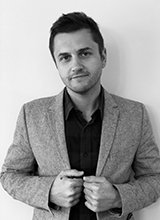
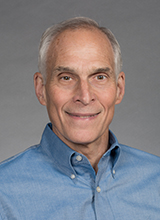
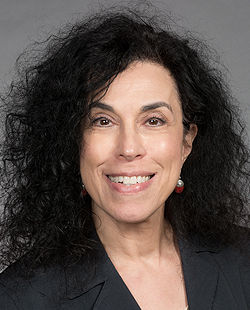
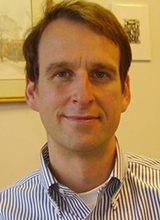
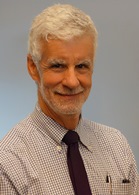
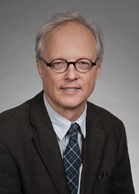
I am a clinical psychologist by training and an Assistant Professor at the University of Washington, Department of Psychiatry and Behavioral Sciences. I am also a Health Service Research Scientist at the Seattle-Denver HSR&D Center of Innovation for Veteran-Centered and Value-Driven Care at the VA Puget Sound Health Care System. My research program broadly focuses on bringing a more holistic approach to healthcare (i.e., mind, body, and spirit) and centers around two interconnected areas of investigation: 1) meaning-making and meaning in life among individuals with chronic pain and psychological distress (in particular, PTSD) and 2) developing and testing mind-body interventions that improve physical and emotional health and well-being. I am particularly interested in improving health for those in rural settings. My work has been supported by the National Center for Complementary and Integrative Health and the U.S. Department of Veterans Affairs.
I am a trained Behavioral Scientist with a PhD in Health & Human Performance. The main goal of my work is to reduce substance-related harms and improve quality of life for people experiencing problems related to their substance use. I work closely with community members who use drugs to inform my line of research and address key needs identified. My primary appointment is at the Harm Reduction Research and Treatment (HaRRT) Center within the UW School of Medicine and hold an Affiliate Faculty appointment within the School of Public Health. My aim is to adapt, refine, and disseminate harm reduction programs through digital health interventions to empower individuals and ameliorate substance-related harms.

Dr. Charles Engel is Professor in the Department of Psychiatry and Behavioral Sciences at the University of Washington School of Medicine, Core VA HSR Investigator in the Seattle Center for Innovation, Co-Director of the Center’s Advanced Fellowship on Health Systems Research, and Adjunct Physician Policy Researcher at the RAND Corporation. Engel’s work focuses on trauma-informed health systems and strategies for improving the quality of primary care for chronic mental and physical health conditions. His research has covered traumatic injury and post-trauma syndromes ranging from blast injury, mild traumatic brain injury and Gulf War syndrome to PTSD and depression. Engel is experienced at mixed qualitative and quantitative methods and has led large pragmatic randomized trials, program evaluations, and implementation science studies. He has authored or coauthored nearly 200 scholarly papers, including in the New England Journal of Medicine, JAMA, and the American Journal of Psychiatry. Funding for his work has come from the National Institutes of Health, Centers for Disease Control, Department of Veterans Affairs, Department of Defense and other organizations. Before joining UW Psychiatry and the AIMS Center in 2021, Dr. Engel was Senior Physician Policy Researcher at the RAND Corporation from 2013 to 2020 and Associate Chair (Research) at Uniformed Services University’s Department of Psychiatry from 2001-2013. Engel has served on the board of directors of the International Society for Traumatic Stress Studies, has testified twice before Congress, received a number of awards, and delivered invited lectures in over 10 countries. He received both his MD and MPH from the University of Washington.
Personal Statement
My area of expertise is addiction psychiatry.
Personal Statement
My professional interests are in the area of behavioral medicine and health psychology, with particular interests in psychological aspects of chronic pain and illness. I also have a strong interest in psychology training and served as Training Director of the Psychology Internship Program at the UW Dept of Psychiatry and Behavioral Sciences from 2003-2013. I have also served as Secretary and member of the Executive Board of the American Pain Society.
Personal Statement
I am a geriatric psychiatrist and health services researcher. My research focuses on ways of improving mental health and well-being among older adults, especially those with dementia and their caregivers.
Personal Statement
My clinical service and research focuses on the interaction of mental and physical illness, especially in patients with chronic pain. Much of my research in recent decades has focused on the risks of treating chronic pain with opioids. I have developed educational programs and outcome tracking tools to assist with opioid treatment of chronic pain. I have published a book about patient empowerment in chronic disease care, The Patient as Agent of Health and Health Care (Oxford, 2017). I have another book written with Jane Ballantyne forthcoming, The Right to Pain Relief and other deep roots of the opioid epidemic (Oxford, 2022).
Personal Statement
My primary interests are in diagnostic evaluation, psychiatric methods, psychosomatic medicine, fatigue syndromes, pain disorders, abnormal illness behaviors, and human temperament and personality. I have conducted research jointly with colleagues at the University of Washington and the University of Washington Twin Registry on chronic widespread pain, depression and related phenomena.

Personal Statement
I received a PhD in clinical psychology from UCLA, then completed post-doctoral training in pain and geriatrics at the University of Washington. Since 1980, I have served on the faculty at the University of Washington School of Medicine. I work clinically with patients with chronic pain at the UW Medicine Center for Pain Relief.
My research interests include clinical trials of medical, surgical, and psychosocial interventions for chronic pain; prediction of pain outcomes; and long-term opioid therapy for chronic pain. I have published over 230 peer-reviewed articles related to chronic pain studies and am internationally recognized for this research (e.g., Wilbert E. Fordyce Clinical Investigator award from the American Pain Society for contributions to clinical pain research, International Society for the Study of the Lumbar Spine prize for clinical pain research). I have had leadership roles in national and international professional organizations related to pain, including having served as President of the International Association for the Study of Pain.