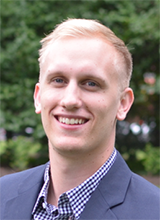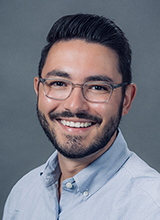
Dr. Antoine Lebeaut is a licensed clinical psychologist and an Acting Assistant Professor in the Department of Psychiatry and Behavioral Sciences at the University of Washington. He specializes in the treatment of posttraumatic stress and anxiety, with a particular focus on co-occurring conditions. His research centers on identifying risk and maintenance factors for posttraumatic stress and problematic alcohol use among adults and first responder populations, as well as developing and adapting trauma-informed strategies to improve the accessibility and efficacy of evidence-based behavioral health approaches.
Dr. Lebeaut’s work has been presented at national and international conferences, published in several peer-reviewed journals, and funded by the American Psychological Association, National Institute on Alcohol Abuse and Alcoholism, American Psychological Foundation, and the National Register of Health Service Psychologists.
He aims to advance community-driven, trauma-informed, and scalable behavioral health approaches through collaborations with local, state, and federal partners to support applied research, training, and clinical service delivery for first responders. Dr. Lebeaut also provides psychotherapy to patients at the University of Washington’s Outpatient Psychiatry Clinic and provides clinical supervision and training in CBT to psychiatry residents.
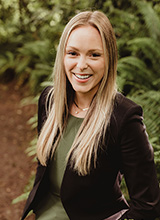
I am an epidemiologist and Assistant Professor in the Department of Psychiatry and Behavioral Sciences at the University of Washington. My research primarily focuses on improving mental health outcomes throughout the life course to support family wellbeing and thriving in low- and middle-income settings, with emphasis on: 1. men’s/father’s mental health and parenting skills, 2. digital mental health interventions to support families affected by early psychosis, 3. integrating perinatal mental health services into maternal-child health care. Current projects are based in East and West Africa. My work utilizes methods ranging from user-centered design of digital mental health interventions to advanced epidemiologic and statistical methods.
My interests focus on understanding etiology of substance use among adolescents and young adults, high risk events and the development of brief intervention and prevention efforts to reduce substance related harm. I have worked for over 20 years conducting research in governmental, private and academic settings to assess needs, assist in policy decisions and design intervention and prevention efforts. I am keenly interested in exploring opportunities to implement evidence-based approaches to enhance policies and practice.
I am a trained Behavioral Scientist with a PhD in Health & Human Performance. The main goal of my work is to reduce substance-related harms and improve quality of life for people experiencing problems related to their substance use. I work closely with community members who use drugs to inform my line of research and address key needs identified. My primary appointment is at the Harm Reduction Research and Treatment (HaRRT) Center within the UW School of Medicine and hold an Affiliate Faculty appointment within the School of Public Health. My aim is to adapt, refine, and disseminate harm reduction programs through digital health interventions to empower individuals and ameliorate substance-related harms.
My research focuses on how social influences shape individuals’ health behaviors in both constructive (e.g., physical activity) and risky ways (e.g., alcohol use). I take a translational approach to my research in that I aim to understand how social processes, such as normative influences, relate to behavior so that we can leverage these influences to reduce harm and improve health.
Specific areas of interest include alcohol and other substance use, mental health, and gambling/sports betting. My primary focus is helping young adults during the transition into adulthood.
I have a background in sport psychology, and am passionate about helping athletes navigate the unique stressors involved in high-level sport. In this domain, I serve as a fellow at the U.S. Center for Mental Health and Sport.
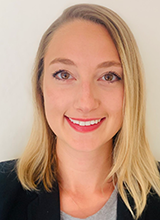
Dr. Walukevich-Dienst (hear my name) is a licensed clinical psychologist and an Assistant Professor at the University of Washington.
Her research is focused on identifying psychosocial and contextual factors associated with alcohol and cannabis misuse and co-use among young adults, including social influences (e.g., romantic partners, use partnerships), affect management motives, co-occurring mental health concerns, and high-risk substance use events and contexts.
Dr. Walukevich-Dienst aims to leverage this information to develop and test innovative, technology-informed prevention and intervention efforts to disseminate in real world settings.
She also provides psychotherapy to patients at the University of Washington’s Outpatient Psychiatry Clinic and provides supervision and training to psychology graduate students and psychiatry residents in Cognitive Behavioral Therapy.
Link to Dr. Walukevich-Dienst’s CV.
Dr. Blayney’s research aims to understand the risks for and consequences of sexual victimization. More specifically, this work centers around how social contexts influence sexual victimization risk as well as variation in post-victimization recovery, such as posttraumatic stress disorder, alcohol use, and sexual risk behaviors.