Scholarly Expertise: Health behaviors
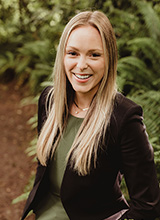
Anna Larsen
I am an epidemiologist and Assistant Professor in the Department of Psychiatry and Behavioral Sciences at the University of Washington. My research primarily focuses on improving mental health outcomes throughout the life course to support family wellbeing and thriving in low- and middle-income settings, with emphasis on: 1. men’s/father’s mental health and parenting skills, 2. digital mental health interventions to support families affected by early psychosis, 3. integrating perinatal mental health services into maternal-child health care. Current projects are based in East and West Africa. My work utilizes methods ranging from user-centered design of digital mental health interventions to advanced epidemiologic and statistical methods.
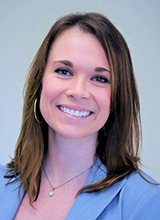
Tessa Frohe
I am a trained Behavioral Scientist with a PhD in Health & Human Performance. The main goal of my work is to reduce substance-related harms and improve quality of life for people experiencing problems related to their substance use. I work closely with community members who use drugs to inform my line of research and address key needs identified. My primary appointment is at the Harm Reduction Research and Treatment (HaRRT) Center within the UW School of Medicine and hold an Affiliate Faculty appointment within the School of Public Health. My aim is to adapt, refine, and disseminate harm reduction programs through digital health interventions to empower individuals and ameliorate substance-related harms.
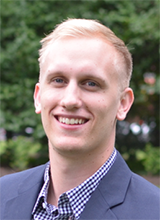
Scott Graupensperger
My research focuses on how social influences shape individuals’ health behaviors in both constructive (e.g., physical activity) and risky ways (e.g., alcohol use). I take a translational approach to my research in that I aim to understand how social processes, such as normative influences, relate to behavior so that we can leverage these influences to reduce harm and improve health.
Specific areas of interest include alcohol and other substance use, mental health, and gambling/sports betting. My primary focus is helping young adults during the transition into adulthood.
I have a background in sport psychology, and am passionate about helping athletes navigate the unique stressors involved in high-level sport. In this domain, I serve as a fellow at the U.S. Center for Mental Health and Sport.
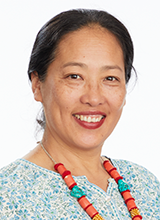
Maya Magarati
My scholarship is dedicated to reducing behavioral health disparities in Indigenous, immigrant and refugee communities. I have 13 years of experience and expertise in community-based participatory research (CBPR) science and practice, mixed-methods multi-level research design, cultural adaptation and translation of evidenced based interventions and culture-based practices, survey and measurement development, and dissemination and translation of findings. I am interested in examining culture-centered, land-based healing practices and mechanisms in addressing substance use, sexual health, and climate change impact.
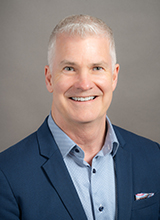
Bill O’Connell
As part of my faculty appointment, I am Director of the Behavioral Health Support Specialist (BHSS) Workforce Development Project. My responsibilities include oversight of curriculum development, practicum guidelines, development of community partnerships and advocacy for reimbursement pathways.
Behavioral Health Support Specialist Workforce Development Project
I am working with a talented project team to develop a competency framework and curriculum to prepare a bachelor level Behavioral Health Support Specialist (BHSS). A BHSS will deliver brief, culturally responsive, evidence-informed interventions for common mental and behavioral health conditions under supervision in a team-based setting. The BHSS will use a measurement-based care approach to ensure patients are receiving the right level of care at the right dose. Crisis services, integrated care and specialty behavioral healthcare are examples of work environments that will benefit from a BHSS. Our project goal is to support higher educational programs across the state implement the BHSS clinical training program in academic year 25-26. During my time working as a primary care behavioral health consultant, I frequently met with senior patients from diverse backgrounds who had never spoken with a behavioral health provider in their lifetime despite experiencing moderate to severe symptoms of a mental or behavioral health condition. One reason I found unacceptable was lack of access to services. The bachelor level Behavioral Health Support Specialist role is one solution of many to improving access to care and expanding the available workforce.
My current scholarship focuses on behavioral health workforce development and best practices in teaching and training bachelor level intervention specialists for behavioral health settings. In addition to my current role as BHSS project co-investigator, I served as principal investigator for a philanthropic gift from Robert Craves to expand access to school counseling services at Bailey Gatzert Elementary School in the Yesler Terrace neighborhood of Seattle. I also engaged in community-based research with Village Spirit Center for Community Change and Healing located in the Central District to produce a mental health needs assessment for residents who had experienced homelessness prior to obtaining secure housing. Previous peer reviewed publications focused on counselor preparation for employment in behavioral health agencies, best practices in counselor preparation and ethical dilemmas in counselor practice.
Certification and Licensure
I am a Licensed Mental Health Counselor (LMHC) in the State of Washington and a Licensed Professional Counselor (LPC) in Colorado. Additionally, I am a National Certified Counselor (NCC), and an Approved Clinical Supervisor (ACS) through the National Board of Certified Counselors and the Center for Credentialing and Education.
Career Roles
- Associate Professor (WOT), Psychiatry and Behavioral Sciences, University of Washington, Seattle, Washington (2022-Present)
- Regional Director of Behavioral Health and Primary Care Behavioral Health Consultant for One Medical Seniors, Washington and Colorado Markets (2018-2021)
- Founding Chair, Department of Leadership and Professional Studies, Seattle University, Seattle, Washington (2014-2017)
- Associate Professor with Tenure of Clinical Mental Health and School Counseling, Seattle University, Seattle, Washington (2010-2019)
- Associate Professor with Tenure of Clinical Mental Health and School Counseling at Xavier University in Ohio (2006-2010)
- Assistant Professor, Clinical Mental Health and School Counseling, Xavier University, Cincinnati, Ohio (2001-2006)
- Past President of the Ohio Counseling Association (2006-2009)
- Continuous Adjunct Instructor, Community and School Counseling at Xavier University, Cincinnati, Ohio (1994-2001)
- Founding Assistant Clinical Director for Talbert House Inc. (1998-2001)
- *Private Practice Therapist and Consultant, Cincinnati, Ohio (1997-2010)
- Adjunct Instructor, University of Cincinnati College of Evening and Continuing Education (1997-2000)
- Adult Therapist, Clermont Counseling Center in Milford, Ohio (1994-1997)
- Crisis Intervention Specialist for Talbert House Inc., Cincinnati, Ohio (1990-1993)
- Adult Therapist, Care Unit Chemical Dependency Hospital, Cincinnati, Ohio (1988-1990)
- Clinical Pastoral Education Intern, Children’s Hospital Medical Center, Cincinnati, Ohio (1988)
*I owned a private practice in the Greater Cincinnati Area for twelve years providing behavioral medicine consultation in an integrated pain management practice, clinical consultation to behavioral health organizations, and training and education on ethical and professional issues for mental health providers. Additionally, I provided individual, couple and family counseling in a group psychology practice with a special focus on serving the LGBTQI+ community and persons with trauma history.
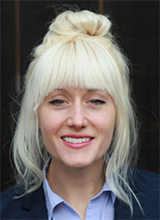
Jessica A. Blayney
Dr. Blayney’s research aims to understand the risks for and consequences of sexual victimization. More specifically, this work centers around how social contexts influence sexual victimization risk as well as variation in post-victimization recovery, such as posttraumatic stress disorder, alcohol use, and sexual risk behaviors.
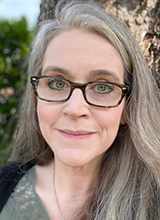
Susan Stoner
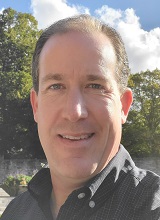
Bryan Hartzler
In two decades at UW, Dr. Hartzler’s principal focus has been on the dissemination and implementation of empirically-supported health services for persons with substance use disorders. To date, this includes local, regional, national, and international collaborations, encompassing federally-funded work with diverse community-based settings (i.e., addiction care, mental health, primary and specialty medical care, criminal justice, HIV care, schools, faith-based organizations), including those affiliated with the NIDA Clinical Trials Network. As director of the UW Center for Advancing Addiction Health Services (CAAHS), he oversees a broad portfolio, including: 1) the SAMHSA-funded Northwest Addiction Technology Transfer Center (Northwest ATTC), which provides universal, targeted, and intensive technical assistance to the addiction workforce in Alaska, Idaho, Oregon, and Washington 2) regional contribution to SAMHSA’s national Opioid Response Network (ORN), 3) a host of externally-sponsored implementation projects with single-state authorities as well as other organizations, and 4) contribution to NIH-funded and intramural health services research. In professional endeavors that span a science-to-service continuum, Dr. Hartzler seeks to promote adoption and implementation of useful treatment and recovery practices in community settings where they may benefit persons with substance use disorders.
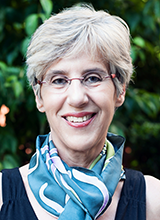
Beatriz Carlini
I am a Research Associate Professor at the Psychiatry Department, Addiction, Drug & Alcohol Institute where I direct the Cannabis Education and Research Program, a team (CERP) that systematically interacts with state and county agencies and community coalitions, with the purpose of supporting the adoption of evidence-base policies and interventions. I have published extensively in peer-reviewed journals, secured research funds both as Principal Investigator and Co-Investigator, and have collaborated with colleagues from various U.S. universities and abroad. Besides cannabis, I have interest and research experience in tobacco control.
A little bit about my trajectory: I obtained my PhD in Social Psychology in my home country, Brazil. As a faculty in the University of Sao Paulo Preventive Medicine Department, my professional life was dedicated to research and service disparate populations, such as street kids and substance-using youth. As an academic of a developing nation, I had the honor to collaborate internationally and serve in various World Health Organization working groups and committees.
After moving to the United States in 2000, I obtained a Master of Public Health at UW, with an emphasis in Social and Behavioral Sciences. This second degree provided me with the skills and the contextual perspective to successfully transition my professional focus from health care disparities in developing nations to the inequities experienced by historically marginalized communities living in the richest and most powerful country on Earth, the U.S. As a dual citizen, I consider inequity, racism, discrimination and stigma as important determinants of addiction and substance use in an increased globalized world.
I prefer the pronouns she, her, hers.