Treatment: Brief interventions (specifics)
Amelia Dubovsky
Personal Statement
I am a Clinical Assistant Professor in the Department of Psychiatry and Behavioral Sciences at the University of Washington. I received my MD from New York University and completed my adult residency at the Harvard Massachusetts General Hospital/McLean Hospital program where I was chief resident. I then went on to complete a fellowship in psychosomatic medicine at the University of Washington. I am currently on faculty at Harborview Medical Center on the inpatient psychiatry consult service. I have a longstanding interest in the intersection between medicine and psychiatry, and am the author of numerous published articles on topics ranging from the neuropsychiatric effects of steroids to managing borderline personality disorder in the primary care setting. I have a particular interest in the use of electroconvulsive therapy, including in the treatment of catatonia. I am currently involved in research projects in conjunction with the division of nephrology and the neurosurgery department. In addition to my clinical and research interests, I am also an associate program director for the UW Adult Psychiatry Residency at Harborview Medical Center.
Doyanne Darnell
Personal Statement
My research aims to improve the public health impact of evidence-based behavioral health interventions for addressing comorbidities common among ethnoculturally diverse and underserved victims of trauma, including PTSD, depression, suicidal ideation, and risky substance use. I study the integration of behavioral interventions into general medical settings, with an emphasis on provider-centered training methods to support the delivery of patient-centered interventions. My current interest is in harnessing technologic innovations in machine learning and artificial intelligence, along with user-centered design, to enhance suicide prevention training scalability and sustainability. https://darnell.psychiatry.uw.edu/

Seema L. Clifasefi (she/her)
Personal Statement
My research lies at the intersection of substance use, mental health, criminal justice and housing policy, with an emphasis on populations with lived experience of homelessness, substance use and/or involvement in the criminal justice system. Since 2006, I have been part of a collaborative academic and community-based research team evaluating the effects of Housing First, which entails the provision of immediate, permanent, low-barrier, nonabstinence-based housing to individuals with the lived experience of homelessness and alcohol problems.
I am committed to and passionate about social and racial justice and my career path reflects this commitment. My most recent work focuses on the development, evaluation, and dissemination of a comprehensive, multi-dimensional program that aims to improve alcohol, health, and quality of life related outcomes for this population. Ultimately, through my work, I hope to help create positive social change by promoting understanding and compassion across different demographic and socio-economic class systems.
Heather Carmichael Olson
Personal Statement
I am a psychologist who carries out research, provides community education to a broad range of audiences, trains postgraduate students, works on public policy– and has served as a clinician with children and families for many years. My main interests are fetal alcohol spectrum disorders (FASD), early childhood mental health, and interventions for children born prenatally exposed to alcohol and other drugs and their families. My research is currently based at the Seattle Children’s Research Institute, but I also work in collaboration with UW researchers– and scientists at the University of Rochester in New York and multiple other academic institutions. A main research focus has been the Families Moving Forward (FMF) Program, a family-focused FASD intervention, now being disseminated primarily in the USA and Canada. The FMF Program is also now being translated into a mobile health application, called FMF Connect, for even broader use. Through Seattle Children’s, I co-direct a pilot service focused on assessment and short-term consultation for youth with prenatal substance exposure (including alcohol), and their families. I also offer mental health services to a broad range of young children and develops research focused on early childhood mental health. Over the years, beyond research and clinical work, I have been able to work toward change in national US public policy, collaborate with Indigenous communities and researchers in remote Northwestern Australia, and train dedicated young professionals in psychology and psychiatry. I am grateful for these remarkable career opportunities… and the chance to meet so many resilient and inspiring families. Note that you can only reach me through my Seattle Children’s email, at: heather.carmichaelolson@seattlechildrens.org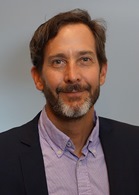
Eric J. Bruns
Personal Statement
I am a clinical psychologist and mental health services researcher. My overarching research aim is to produce and promote use of research, evaluation, and continuous quality improvement that aids high-quality implementation of effective models of care in real world service settings, such as in schools, public mental health systems, and family-and youth-run organizations. My research can be summarized as falling into three categories: (1) Care coordination models for youth with the most complex behavioral health needs; (2) school mental health; and (3) public sector implementation of research-based practices. In each area, I co-direct national training and TA centers. For example the National Wraparound Implementation Center (www.nwic.org), provides support to dozens of states and localities internationally on Wraparound. The National Wraparound Initiative (www.pdx.edu) serves to mobilize our research and policy activities. Our Wraparound fidelity tools and data systems can be found at www.wrapinfo.org. With respect to school mental health, our interdisciplinary UW School Mental Health Assessment, Research, and Training (SMART) Center — www.smartcenter.uw.edu — currently has over a dozen federal grants as well as state, local, and foundation funding focused on how best to ensure that evidence for effective mental health intervention and prevention is translated into effective programming in schools. The SMART Center also hosts the school mental health supplement of the UW Department of Psychiatry’s SAMHSA-funded Northwest Mental Health Training and Technical Assistance Center (MHTTC). Check out our extraordinary array of resources at https://mhttcnetwork.org/centers/northwest-mhttc/northwest-mhttc-school-mental-health.
Ty Lostutter
Personal Statement
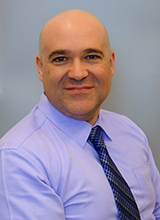
I am a licensed clinical psychologist in Washington State. I am the Director of the University of Washington School of Medicine’s Psychology Internship Program which is accredited by the American Psychological Association’s Office of Program Consultation and Accreditation. And, I conduct research on health and risk behaviors across the lifespan. Specifically, I have conducted research in the areas of college student alcohol use, young adult gambling behavior, and co-morbidity of substance use and mental health/risk behaviors (i.e. risky sexual behaviors). I have extensive experience working with college students/young adults, military/veteran, and minority/diverse populations. I am also interested in mental health issues including depression, anxiety, and PTSD. I maintain an active clinical practice in the areas of mental health issues with patients diagnosed with hematological and oncological illness and have clinical responsibilities at the Fred Hutchinson Cancer Center. I also provide clinical supervision for psychology residents and psychology practicum students at Fred Hutchinson Cancer Center as well. Overall, my professional aspirations are to improve the public health through empirically-supported psychological interventions and providing mentorship to diverse trainees to expand the reach of psychology.