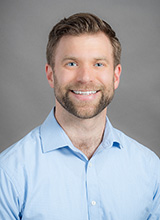
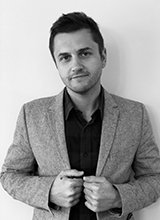
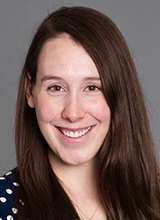
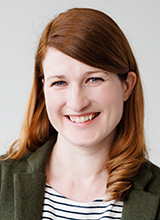
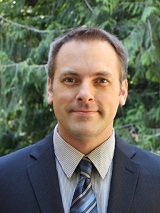
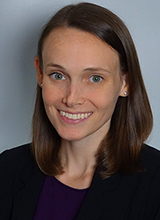
I am an Acting Assistant Professor in the Department of Psychiatry and Behavioral Sciences at the University of Washington, primarily working clinically at Harborview Medical Center. I work with the Recovery Clinic, Intake and Brief Intervention Services (IBIS), the Behavioral Health Integration Program (BHIP), and Addiction Consult Service.
I am fellowship-trained in Addiction Psychiatry, and board certified in both general and addiction psychiatry by the American Board of Psychiatry and Neurology. My passion is providing excellent, compassionate and comprehensive psychiatric care to my patients regardless of background or resources. I believe quality healthcare is a human right for all people and am excited help make that a reality as part of the Harborview system.
I am a clinical psychologist by training and an Assistant Professor at the University of Washington, Department of Psychiatry and Behavioral Sciences. I am also a Health Service Research Scientist at the Seattle-Denver HSR&D Center of Innovation for Veteran-Centered and Value-Driven Care at the VA Puget Sound Health Care System. My research program broadly focuses on bringing a more holistic approach to healthcare (i.e., mind, body, and spirit) and centers around two interconnected areas of investigation: 1) meaning-making and meaning in life among individuals with chronic pain and psychological distress (in particular, PTSD) and 2) developing and testing mind-body interventions that improve physical and emotional health and well-being. I am particularly interested in improving health for those in rural settings. My work has been supported by the National Center for Complementary and Integrative Health and the U.S. Department of Veterans Affairs.
I am a clinical psychologist with specialized training in serious mental illness and inpatient psychiatric care. I earned my PhD from the University of Washington in 2023 after completing my pre-doctoral internship at the same institution, training in serious mental illness and inpatient care at Harborview Medical Center and psycho-oncology at Fred Hutch Cancer Center. My research focuses on developing novel technologies to support patients with serious mental illness, improve the provision of psychological interventions in the inpatient setting, and more efficiently and effectively train future generations of mental health clinicians. I also work as a psychologist on UW’s long-term civil commitment inpatient psychiatry program.
I am an Acting Assistant Professor and licensed clinical psychologist in the Department of Psychiatry & Behavioral Sciences at the University of Washington School of Medicine. I received my Ph.D. in clinical psychology from the University of California, Berkeley and completed by postdoctoral training at the University of Washington. I am also a consultant for multiple teaching and implementation projects aimed helping community mental health providers deliver effective evidence-based trauma-informed care.
My career goal is to help survivors of complex trauma learn to thrive. My research and clinical work explores how mobile technology, principles of evidence-based practice, and our sociocultural context can be used to help survivors of trauma and their communities recover faster. My work specifically emphasizes recovery from complex racial trauma and other forms of identity-based trauma.
My clinical and research work focus on ways to improve care for children with complex neurodevelopmental and behavioral concerns, especially in the context of prenatal substance exposures and fetal alcohol spectrum disorders (FASD).
Current projects include developing training to reduce stigma and improve accurate retrospective screening for prenatal alcohol exposure; examining factors influencing response to the Families Moving Forward Program for FASD; and, evaluating the clinical utility of the proposed diagnosis ND-PAE.
Koriann Cox, Ph.D. graduated from Northeastern University and is licensed in the state of Washington. She completed a postdoctoral fellowship in co-occurring addiction and mental health and has a range of clinical experience with a variety of concerns including depression, anxiety, trauma, reproductive mental health, and substance and behavioral addictions. Dr. Cox’s strengths-focused approach emphasizes the mutual development of goals for therapy and ongoing collaboration between herself, the patient, and the care team. Dr. Cox uses a number of therapeutic modalities including but not limited to Cognitive Behavioral Therapy, Acceptance and Commitment Therapy, and Cognitive Processing Therapy.
Dr. Blayney’s research aims to understand the risks for and consequences of sexual victimization. More specifically, this work centers around how social contexts influence sexual victimization risk as well as variation in post-victimization recovery, such as posttraumatic stress disorder, alcohol use, and sexual risk behaviors.
My primary areas of research include artificial intelligence, AI/machine ethics, behavioral health technologies, telemedicine, telehealth, forensic psychology, and military and Veteran population health. I’ve consulted widely on the topic of military and veteran health and technology in healthcare and have helped to develop national guidelines for telemental health, clinical best practices for technology-based treatments, and standards for human-AI interaction transparency. My vision is to build, and help others to build, technologies that help promote behavioral change and that improve the lives of people.
Dr. Jaffe’s research is focused on responding to the public health problem of sexual assault and co-occurring alcohol misuse by improving understanding of survivors’ experiences and promoting recovery through novel interventions.
Taking an ecological perspective, Dr. Jaffe considers individual factors (e.g., cognitions, stress response), microsystems (e.g., interpersonal interactions, social networks), macrosystems (e.g., societal norms), and chronosystems (e.g., changes over time) that affect survivors’ recovery after sexual assault. Across these systems, she seeks to design and improve clinical interventions that support survivors’ recovery, mitigate post-assault alcohol misuse, and reduce distress.