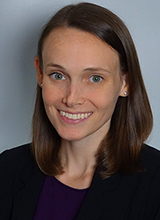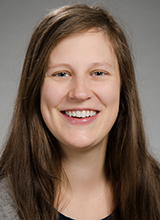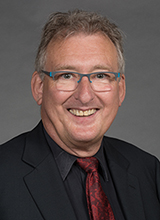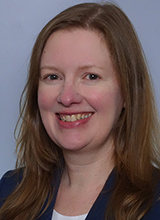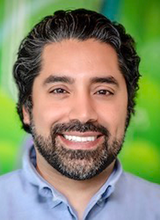
I am a Board-certified Child and Adolescent Psychiatrist at Seattle Children’s Hospital, a faculty member of the University of Washington School of Medicine since 2020, a board member of the ARC Trust of Washington. Clinically, I am an inpatient attending psychiatrist on the Psychiatry and Behavioral Medicine Unit at SCH, and I also see children and families on an outpatient basis at the SCH Autism Center. In each of these roles I am involved in the teaching and supervision of medical students, residents, and fellows. Academically, I am the Director of Career Advising in Psychiatry, helping guide graduating medical students towards residency and careers in Psychiatry. In the CAP fellowship, I am the course director for the Genetics component of the didactics series, and also presenter for the Child Psychiatry portion of the Mind, Brain, and Body course. My professional interests include autism spectrum disorder, neurodevelopmental and genetic disorders, catatonia, bullying, trauma-informed care, and anxiety in children of immigrant families. In all facets of my work I utilize evidence-based practices, and aim to to create strong partnerships with patients and families to achieve positive outcomes.
Dr. Jaffe’s research is focused on responding to the public health problem of sexual assault and co-occurring alcohol misuse by improving understanding of survivors’ experiences and promoting recovery through novel interventions.
Taking an ecological perspective, Dr. Jaffe considers individual factors (e.g., cognitions, stress response), microsystems (e.g., interpersonal interactions, social networks), macrosystems (e.g., societal norms), and chronosystems (e.g., changes over time) that affect survivors’ recovery after sexual assault. Across these systems, she seeks to design and improve clinical interventions that support survivors’ recovery, mitigate post-assault alcohol misuse, and reduce distress.

My primary research and clinical interests are in diagnosis and management of neurodevelopmental disorders, particularly, autism spectrum disorder. I am a psychologist at the Seattle Children’s Autism Center where I participate in team evaluations for children and teens with co-occurring medical or psychiatric complexity, and I also see patients through our Gender Clinic. I also work at the University of Washington’s Institute on Human Development and Disability (IHDD) where I see patients in the Infant Development Follow-up Clinic and in the Child Development Clinic. I love the interdisciplinary nature of CHDD and I am proud to be a faculty mentor for the LEND program (Leadership Education in Neurodevelopmental and Related Disabilities). Overarchingly, I am invested in learning more about how to support individuals and families, how to embrace the neurodiversity movement, encourage affirming care where strengths are celebrated, and work toward equitable treatment for the families I serve.

My research broadly seeks to understand the ways in which our social and romantic relationships intersect with physical and mental health. Additionally, I work in treatment development and evaluation with the aim of improving and harnessing social relationships to increase physical and mental wellbeing. I was recently funded by a 5-year Career Development Award through VA HSR&D. This award aims to both improve clinicians’ measurement of social relationships in the context of mental health care and modify and test brief, Primary Care-based interventions for PTSD and social support. In this line of research, I am PI of an HSR&D and VAPS R&D-funded nationwide survey of veterans both with and without PTSD that seeks to collect psychometric and acceptability data on social support instruments for future use in measurement-based care. I am also collaborating with colleagues in HSR&D to develop and test a dyadic intervention for improving health behavior. I am lucky to provide clinical care as a staff psychologist in the PTSD Outpatient Clinic at VA Puget Sound, where I deliver individual, group, and couples treatments for PTSD and provide psychoeducation on trauma and related conditions to loved ones of veterans with PTSD.
I am a clinical psychologist and researcher. My research focuses on pediatric psychology, intervention science, and leveraging digital technologies to disseminate and implement evidence-based psychosocial interventions for children, teens, and young adults with serious medical conditions and co-occurring anxiety, stress, and depression. Digital mental health care initiatives have the potential to scale-up interventions and overcome structural barriers and unequal access to psychosocial care. Current and future research investigations aim to help improve patient and family coping skills, psychosocial well-being, and quality of life by developing and implementing evidence-based mental health interventions.
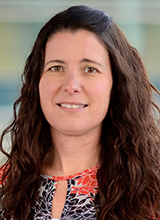
I am a Psychologist and the Coordinator of the DBT Program at the VA Puget Sound Health Care System as well as an Associate Professor in the Department of Psychiatry and Behavioral Sciences and Adjunct Associate Professor in the Department of Psychology at the University of Washington. I previously worked as the Research Director of Dr. Marsha Linehan’s Behavioral Research and Therapy Clinics at the University of Washington (2006-2018), Director of Research and Development for Behavioral Tech, LLC (2014-2017), and Director of Behavioral Tech Research, Inc. (2013-2016). My research focuses on the development and evaluation of the DBT Prolonged Exposure protocol for PTSD as well as methods of disseminating and implementing this and other evidence-based treatments into clinical practice. I regularly provide training and consultation nationally and internationally in DBT and DBT PE and have published extensively on these treatments. I am a certified DBT therapist, a certified PE therapist and supervisor, am board certified in Behavioral and Cognitive therapy, and am licensed as a psychologist in the state of Washington.
Dr. Megan Goldenshteyn works as a licensed psychologist at the Institute on Human Development and Disability (IHDD) in the Child Development Clinic, Cardiac Neurodevelopment Clinic, Down Syndrome Specialty Clinic, and the Infant Development Follow-up Clinic. Dr. Goldenshteyn conducts psychological and developmental evaluations and supervises the psychology trainees, including the postdoctoral fellow and residents.
My work focuses on the diagnosis and treatment of post traumatic stress disorder (PTSD), mild traumatic brain injury (mTBI), and neurodegenerative dementias, as well as applications of positron emission tomography (PET) and other functional neuroimaging modalities to elucidating the pathophysiology of PTSD, mTBI, Alzheimer’s Disease, and other neurodegenerative dementias.