Personal Statement
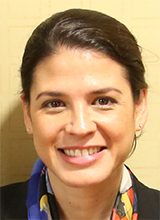
Having always been interested in wholistic care, I completed a Med-Psych residency with board certification in both Internal Medicine and Psychiatry. My career has focused on integrating care to improve access to those who suffer from mental disorders. I have experience in developing, implementing, leading, and evaluating integrated Primary Care Mental Health programs. This work led to the development and national implementation of integrated care known in the VA as Primary Care Mental Health Integration (PCMHI).
At VA Puget Sound, I led a team that implemented and developed the first PCMHI program which has been rated as one of the top 10. It was through this integrated PCMHI work that I realized rural populations lacked access to mental health care and I became interested in how the emerging digital technologies could be leveraged to provide care. With the goal to improve mental health care for this population, I developed, implemented, and led the first Telemental Health Service at VA Puget Sound known as Promoting Access to Telemental Health (PATH). This program focused on implementing digital health into routine mental health care, evaluation of implementation efforts, and digital health curriculum design. PATH has been fully implemented into VA Puget Sound Mental Health Service Line.
As a researcher, I have served as a principal and co-investigator on numerous research projects that focused on the development and implementation PCMHI and Care Manager programs. More recently, my research has focused on evaluation and implementation of telemental health programs. Current work focuses on improving virtual integrated care in rural VA clinics, integrated care curricular design, evaluating mental health service delivery for the national VA Telehealth Clinical Resource Hubs, and supporting the UW Behavioral Health Institute to develop Digital Health Training programs. In addition, I am proud to serve as a Captain in the United States Navy Reserve and I am an Operation Iraqi Freedom Veteran.
Personal Statement
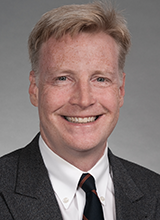
My research aims to improve the public health impact of evidence-based behavioral health interventions for addressing comorbidities common among ethnoculturally diverse and underserved victims of trauma, including PTSD, depression, suicidal ideation, and risky substance use. I study the integration of behavioral interventions into general medical settings, with an emphasis on provider-centered training methods to support the delivery of patient-centered interventions. My current interest is in harnessing technologic innovations in machine learning and artificial intelligence, along with user-centered design, to enhance suicide prevention training scalability and sustainability. https://darnell.psychiatry.uw.edu/
Personal Statement
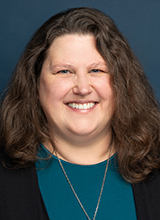
My career goal is to give suicidal clients and their clinicians the best chance to succeed. I have been working in the area of health services, treatment development, and clinical trials research to prevent suicide for over 30 years. My graduate training was in community/clinical psychology and focused on achieving clinical ends through prevention and other systemic interventions in socio-culturally diverse populations. I have brought these perspectives into health services research. I have developed or adapted interventions to improve care and clinician willingness to work with suicidal patients including Caring Contacts, Dialectical Behavior Therapy (DBT), Collaborative Assessment and Management of Suicidality (CAMS), and Preventing Addiction Related Suicide (PARS). I have developed an adaptation of DBT Next Steps, a program to assist psychiatrically disabled individuals find and maintain living wage employment. My research has been funded by NIMH, NIDA, the Department of Defense, American Foundation for Suicide Prevention, and the State of Washington.
I am the director of the Center for Suicide Prevention and Recovery (CSPAR) whose mission is to promote the recovery of suicidal individuals and the effectiveness and well-being the clinicians and families who care for them by conducting rigorous and ecologically valid research, developing innovative interventions, improving policies, systems and environments of care, and providing expert training and consultation. CSPAR faculty and staff seek a deep understanding of the cultures and settings in which we work that leads to meaningful and effective interventions ready for implementation.
I also direct the Suicide Care Research Center, an NIMH P50 funded research center focused on using Human Centered Design and MOST optimization methodology to improve the care of adolescents and young adults (age 13-30 years) in outpatient medical settings. We are conducting one fully powered trial, three R34s, and 4 pilot studies within UW Medicine and Seattle Children’s hospital to develop innovative interventions to support primary care, Collaborative Care, and specialty medical clinics care for patients experiencing suicidal thoughts and behavior. The center supports effort of over 20 faculty and 16 staff as well as 11 emerging and advanced collaborating scholars and funds 2 annual pilot grants (each $100,000 over two years).
In addition to clinical research, I founded the Society for Implementation Research Collaboration (SIRC) focused on disseminating and implementing innovative, evidence-based interventions in the systems that need them. Beyond my research, I directed the Harborview Dialectical Behavior Therapy program at Harborview Medical Center 1996-2019, co-lead the UWAnnual Comprehensive DBT Training Program and Suicide Care in Healthcare Systems: We Can Do Better Serving our Patients and Caring for our Clinicians, both of which meet the Washington State requirement for suicide prevention training. I have a long history of training and mentoring junior faculty, post-doctoral scholars, psychiatry residents, pre-doctoral psychology interns, undergraduate students, and post-baccalaureate trainees. I provide psychotherapy and consultation at the UWMC Outpatient Psychiatry Clinic.
Personal Statement
I am a national expert on collaborative care and specifically, on training teams to implement and deliver mental health treatment in primary care settings. My passion for translating complex research ideas into practical real-world applications began when I received my MD and PhD in Anatomy and Neurobiology as part of the Medical Scientist Training Program at the University of California at Irvine.
I am currently a Professor in the Department of Psychiatry and Behavioral Sciences at the University of Washington where I have developed additional expertise in suicide prevention training, mental health workforce development, adult learning best practices, and mentorship. I am the Co-Director of the AIMS Center (Advancing Integrated Mental Health Solutions) and Director of the UW Integrated Care Training Program for residents and fellows.
Personal Statement
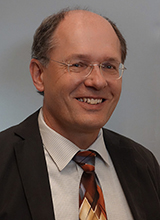
Dr. Unützer’s work focuses on improving access to mental health care, integrating mental health and general medical services, and translating research on effective mental health interventions into clinical and public health practice. He has published over 350 scientific papers and is the recipient of numerous federal and foundation grants and awards for his work on integrated behavioral health care. He works with national and international organizations dedicated to improving behavioral health care for diverse populations and he has served as a Scientific Advisor to the World Health Organization and the President’s New Freedom Commission on Mental Health.