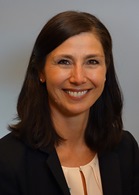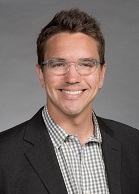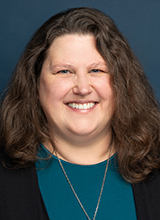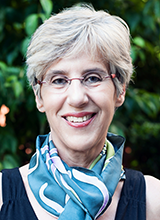
Beatriz Carlini

I am a Research Associate Professor at the Psychiatry Department,  Addiction, Drug & Alcohol Institute where I direct the Cannabis Education and Research Program, a team (CERP) that systematically interacts with state and county agencies and community coalitions, with the purpose of supporting the adoption of evidence-base policies and interventions. I have published extensively in peer-reviewed journals, secured research funds both as Principal Investigator and Co-Investigator, and have collaborated with colleagues from various U.S. universities and abroad. Besides cannabis, I have interest and research experience in tobacco control.

A little bit about my trajectory: I obtained my PhD in Social Psychology in my home country, Brazil. As a faculty in the University of Sao Paulo Preventive Medicine Department, my professional life was dedicated to research and service disparate populations, such as street kids and substance-using youth. As an academic of a developing nation, I had the honor to collaborate internationally and serve in various World Health Organization working groups and committees.

After moving to the United States in 2000, I obtained a Master of Public Health at UW, with an emphasis in Social and Behavioral Sciences. This second degree provided me with the skills and the contextual perspective to successfully transition my professional focus from health care disparities in developing nations to the inequities experienced by historically marginalized communities living in the richest and most powerful country on Earth, the U.S. As a dual citizen, I consider inequity, racism, discrimination and stigma as important determinants of addiction and substance use in an increased globalized world.

I prefer the pronouns she, her, hers.
Melanie Harned

I am a Psychologist and the Coordinator of the DBT Program at the VA Puget Sound Health Care System as well as an Associate Professor in the Department of Psychiatry and Behavioral Sciences and Adjunct Associate Professor in the Department of Psychology at the University of Washington. I previously worked as the Research Director of Dr. Marsha Linehan’s Behavioral Research and Therapy Clinics at the University of Washington (2006-2018), Director of Research and Development for Behavioral Tech, LLC (2014-2017), and Director of Behavioral Tech Research, Inc. (2013-2016). My research focuses on the development and evaluation of the DBT Prolonged Exposure protocol for PTSD as well as methods of disseminating and implementing this and other evidence-based treatments into clinical practice. I regularly provide training and consultation nationally and internationally in DBT and DBT PE and have published extensively on these treatments. I am a certified DBT therapist, a certified PE therapist and supervisor, am board certified in Behavioral and Cognitive therapy, and am licensed as a psychologist in the state of Washington.

Erin Dillon-Naftolin

I am a child and adolescent psychiatrist with experience in delivering evidence based care for youth with psychiatric disorders.  My clinical work is primarily in the outpatient setting and I have experience with telehealth, community mental health, consultation to primary care and developing integrated care systems with pediatricians.  I am a psychiatrist on the Partnership Access Line, which provides phone consultation  regarding diagnosis and treatment to pediatricians and other primary care physicians throughout Washington, Wyoming and Alaska.  I have worked as part of an integrated care team by providing consultation in person at Kent-Des Moines and Roosevelt clinics.  I have expertise in the treatment of common childhood psychiatric disorders  and I am particularly interested in treating anxiety and ADHD.  I am also trained in cognitive behavioral therapy (CBT) and dialectical behavioral therapy (DBT) and incorporate this background in my work.  I value working collaboratively with patients and their families to make a decision about treatment options based on the best evidence we have for safe and effective treatment.
Academically, I have enjoyed being part of the fellowship training program teaching about Integrated Care and currently co-chair the child and adolescent curriculum for the University of Washington Integrated Care Fellowship.

William French

Personal Statement

I am a board certified child and adolescent psychiatrist in the Pediatric Clinic at Harborview, Seattle Children’s Hospital, and Odessa Brown Children’s Clinic in the Division of Psychiatry and Behavioral Medicine.

In my clinical work, I strive to create active partnerships with my patients and their families to achieve the best possible outcomes regardless of their needs and circumstances.  I am lucky to  have great behavioral health and primary care partners across the different clinics I work in, who are invaluable collaborators in caring for our patients and families.

I am involved in the child and adolescent training program and supervises trainees at several outpatient clinics. My clinical and research interests include integrating mental healthcare into primary care settings, ADHD, disruptive behaviors, aggression, trauma-related disorders, and improving clinical supervision of child and adolescent psychiatry trainees.

Jennifer Erickson

Personal Statement

I am board-certified in Psychiatry, Consultation Liaison Psychiatry, Neuropsychiatric, and Brain Injury Medicine. I primarily work in the inpatient and consultation settings at UW Medical Center Mountlake campus. In addition, I am the medical director of the UW TBI BH ECHO program.

I specialize in the collaborative care model, consultation liaison psychiatry, and neuropsychiatry. I strive to create active partnerships with my patients and clinical partners to achieve the best possible outcomes. I am a core faculty member of the UW Integrated Care Training Program. My clinical and research interests include neuropsychiatry, telepsychiatry/e-health, population health, and medical education.

Theresa Hoeft

Personal Statement

I am a mixed methods health services researcher and health economist with a PhD in population health and background in community-based participatory research and community-engaged research. I enjoy working with partners in clinic and community settings to develop scalable programs to improve mental health services and community well-being. Such programs may involve a diverse workforce with varying levels of mental health training and experience, including lay health workers. My interest in technology focuses on finding efficiencies and the appropriate balance of technology and face-to-face encounters to support patient care and staff training/support in such programs.

Maria Monroe-DeVita

Personal Statement

My expertise is in implementation and services research related to evidence-based practices (EBPs) for adults with serious mental illness, particularly the Assertive Community Treatment (ACT) model. I am the lead author of the new ACT fidelity tool – the Tool for Measurement of Assertive Community Treatment (TMACT) – which has been widely disseminated nationally and in several other countries. I am also working to develop novel approaches to better addressing the needs of people with serious mental illness in the community. In 2010, I received a collaborative R34 from the National Institute of Mental Health (NIMH) to integrate another EBP, Illness Management and Recovery (IMR) within ACT. I am also working with a national team of clinicians, policymakers and researchers to develop better approaches to address the primary care needs of people with serious mental illness, including those served on ACT teams.

I have served as the Principal Investigator (PI) on several statewide implementation projects with the Washington State Division of Behavioral Health and Recovery, including the development, implementation, and fidelity assessment of 10 new ACT teams, and several IMR and Integrated Dual Disorder Treatment (IDDT) pilots across the state. I am also the PI of a statewide learning collaborative focused on implementation of cognitive behavioral therapy for psychosis (CBTp) for clinicians and supervisors across Washington State. I have an interest in implementation science and serve as a Co-Investigator of the Society for Implementation Research Collaboration (SIRC), an NIMH-funded grant focused on collaborative approaches to implementation research and the dissemination of those findings more broadly to those who implement and sustain EBPs.  More recently, I began work collaboratively with a team of researchers to better address staff burnout prevention and the linkage to client outcomes.

Aaron Lyon

Personal Statement

My research focuses on increasing the accessibility, efficiency, and effectiveness of community- and school-based interventions for children, adolescents, and families. I am particularly interested in (1) the identification and implementation of low-cost, high-yield practices – such as the use of measurement-based care – to reduce the gap between typical and optimal practice in schools; (2) development of individual- and organization-level implementation strategies to promote adoption and sustainment of evidence-based psychosocial interventions within a multi-tier systems of support (MTSS) framework; and (3) human-centered design (and redesign) of psychosocial and digital technologies to improve their implementability, accessibility, and effectiveness. I am the founder and Director of the School Mental Health Assessment, Research, and Training (SMART) Center, dually housed in UW’s School of Medicine and College of Education.

Katherine Anne (Kate) Comtois

Personal Statement

My career goal is to give suicidal clients and their clinicians the best chance to succeed. I have been working in the area of health services, treatment development, and clinical trials research to prevent suicide for over 30 years. My graduate training was in community/clinical psychology and focused on achieving clinical ends through prevention and other systemic interventions in socio-culturally diverse populations. I have brought these perspectives into health services research.  I have developed or adapted interventions to improve care and clinician willingness to work with suicidal patients including Caring Contacts, Dialectical Behavior Therapy (DBT), Collaborative Assessment and Management of Suicidality (CAMS), and Preventing Addiction Related Suicide (PARS). I have developed an adaptation of DBT Next Steps, a program to assist psychiatrically disabled individuals find and maintain living wage employment. My research has been funded by NIMH, NIDA, the Department of Defense, American Foundation for Suicide Prevention, and the State of Washington.

I am the director of the Center for Suicide Prevention and Recovery (CSPAR) whose mission is to promote the recovery of suicidal individuals and the effectiveness and well-being the clinicians and families who care for them by conducting rigorous and ecologically valid research, developing innovative interventions, improving policies, systems and environments of care, and providing expert training and consultation. CSPAR faculty and staff seek a deep understanding of the cultures and settings in which we work that leads to meaningful and effective interventions ready for implementation.

I also direct the Suicide Care Research Center, an NIMH P50 funded research center focused on using Human Centered Design and MOST optimization methodology to improve the care of adolescents and young adults (age 13-30 years) in outpatient medical settings. We are conducting one fully powered trial, three R34s, and 4 pilot studies within UW Medicine and Seattle Children’s hospital to develop innovative interventions to support primary care, Collaborative Care, and specialty medical clinics care for patients experiencing suicidal thoughts and behavior. The center supports effort of over 20 faculty and 16 staff as well as 11 emerging and advanced collaborating scholars and funds 2 annual pilot grants (each $100,000 over two years).

In addition to clinical research, I founded the Society for Implementation Research Collaboration (SIRC) focused on disseminating and implementing innovative, evidence-based interventions in the systems that need them. Beyond my research, I directed the Harborview Dialectical Behavior Therapy program at Harborview Medical Center 1996-2019, co-lead the UWAnnual Comprehensive DBT Training Program and Suicide Care in Healthcare Systems: We Can Do Better Serving our Patients and Caring for our Clinicians, both of which meet the Washington State requirement for suicide prevention training.  I have a long history of training and mentoring junior faculty, post-doctoral scholars, psychiatry residents, pre-doctoral psychology interns, undergraduate students, and post-baccalaureate trainees. I provide psychotherapy and consultation at the UWMC Outpatient Psychiatry Clinic.