Condition: Mood Disorders
Julia Brechbiel
Areas of clinical practice:
SLU at Fred Hutch Cancer Center and UW Diabetes Institute
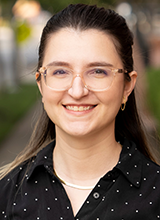
My passion and background are working with individuals with serious medical conditions, primarily cancer but also other chronic health conditions. I split my clinical time between FHCC and UW Diabetes Institute. I also passionate about conducting research about existential distress and post-traumatic growth in oncology.
Clinical Approach:
I practice an interpersonal approach to psychotherapy, rather than solely structured one. I enjoy building a collaborative relationship with my patients to identify goals to work on in therapy. I really want our time together to be worthwhile. There’s only so much time and energy someone with a major illness has. I am a big fan of the spoon theory and don’t want to be wasting their spoons. I love to use humor, metaphor and stories. I also find it important to provide space and opportunities to discuss heavier topics related to prognosis, morality, grief and legacy. I enjoy supporting patients with meaning making and trying to answer difficult questions such as “What’s the meaning of all this? How can we help patients live well with what life is remaining?”
Personal History:
I have a small, supportive family with my partner and our dog. Growing up, I was close with my grandparents. My grandfather who lived with Parkinson’s disease for most of my life. Parkinson’s has a lot of physical symptoms, but also mood symptoms. Additionally, he also lived with chronic melanoma and prostate cancer. His health had a large impact on his life, our family, and how I now view quality of life during treatment and at end of life. He always faced challenges and changes in his functioning with humor and creative to continue to engage in active he enjoyed like travel, golf and a fancy meal. Around the time I started graduate school for psychology, he passed away. His legacy influenced me work with people who were living with serious medical conditions or acquired new disability. I want to help patients live with it instead of against it.
Bill O’Connell
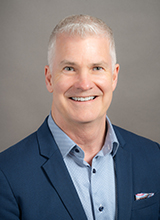
As part of my faculty appointment, I am Director of the Behavioral Health Support Specialist (BHSS) Workforce Development Project. My responsibilities include oversight of curriculum development, practicum guidelines, development of community partnerships and advocacy for reimbursement pathways.
Behavioral Health Support Specialist Workforce Development Project
I am working with a talented project team to develop a competency framework and curriculum to prepare a bachelor level Behavioral Health Support Specialist (BHSS). A BHSS will deliver brief, culturally responsive, evidence-informed interventions for common mental and behavioral health conditions under supervision in a team-based setting. The BHSS will use a measurement-based care approach to ensure patients are receiving the right level of care at the right dose. Crisis services, integrated care and specialty behavioral healthcare are examples of work environments that will benefit from a BHSS. Our project goal is to support higher educational programs across the state implement the BHSS clinical training program in academic year 25-26. During my time working as a primary care behavioral health consultant, I frequently met with senior patients from diverse backgrounds who had never spoken with a behavioral health provider in their lifetime despite experiencing moderate to severe symptoms of a mental or behavioral health condition. One reason I found unacceptable was lack of access to services. The bachelor level Behavioral Health Support Specialist role is one solution of many to improving access to care and expanding the available workforce.
Scholarship
My current scholarship focuses on behavioral health workforce development and best practices in teaching and training bachelor level intervention specialists for behavioral health settings. In addition to my current role as BHSS project co-investigator, I served as principal investigator for a philanthropic gift from Robert Craves to expand access to school counseling services at Bailey Gatzert Elementary School in the Yesler Terrace neighborhood of Seattle. I also engaged in community-based research with Village Spirit Center for Community Change and Healing located in the Central District to produce a mental health needs assessment for residents who had experienced homelessness prior to obtaining secure housing. Previous peer reviewed publications focused on counselor preparation for employment in behavioral health agencies, best practices in counselor preparation and ethical dilemmas in counselor practice.
Certification and Licensure
I am a Licensed Mental Health Counselor (LMHC) in the State of Washington and a Licensed Professional Counselor (LPC) in Colorado. Additionally, I am a National Certified Counselor (NCC), and an Approved Clinical Supervisor (ACS) through the National Board of Certified Counselors and the Center for Credentialing and Education.
Career Roles
- Associate Professor (WOT), Psychiatry and Behavioral Sciences, University of Washington, Seattle, Washington (2022-Present)
- Regional Director of Behavioral Health and Primary Care Behavioral Health Consultant for One Medical Seniors, Washington and Colorado Markets (2018-2021)
- Founding Chair, Department of Leadership and Professional Studies, Seattle University, Seattle, Washington (2014-2017)
- Associate Professor with Tenure of Clinical Mental Health and School Counseling, Seattle University, Seattle, Washington (2010-2019)
- Associate Professor with Tenure of Clinical Mental Health and School Counseling at Xavier University in Ohio (2006-2010)
- Assistant Professor, Clinical Mental Health and School Counseling, Xavier University, Cincinnati, Ohio (2001-2006)
- Past President of the Ohio Counseling Association (2006-2009)
- Continuous Adjunct Instructor, Community and School Counseling at Xavier University, Cincinnati, Ohio (1994-2001)
- Founding Assistant Clinical Director for Talbert House Inc. (1998-2001)
- *Private Practice Therapist and Consultant, Cincinnati, Ohio (1997-2010)
- Adjunct Instructor, University of Cincinnati College of Evening and Continuing Education (1997-2000)
- Adult Therapist, Clermont Counseling Center in Milford, Ohio (1994-1997)
- Crisis Intervention Specialist for Talbert House Inc., Cincinnati, Ohio (1990-1993)
- Adult Therapist, Care Unit Chemical Dependency Hospital, Cincinnati, Ohio (1988-1990)
- Clinical Pastoral Education Intern, Children’s Hospital Medical Center, Cincinnati, Ohio (1988)
*I owned a private practice in the Greater Cincinnati Area for twelve years providing behavioral medicine consultation in an integrated pain management practice, clinical consultation to behavioral health organizations, and training and education on ethical and professional issues for mental health providers. Additionally, I provided individual, couple and family counseling in a group psychology practice with a special focus on serving the LGBTQI+ community and persons with trauma history.
Koriann Cox
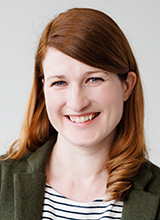
Koriann Cox, Ph.D. graduated from Northeastern University and is licensed in the state of Washington. She completed a postdoctoral fellowship in co-occurring addiction and mental health and has a range of clinical experience with a variety of concerns including depression, anxiety, trauma, reproductive mental health, and substance and behavioral addictions. Dr. Cox’s strengths-focused approach emphasizes the mutual development of goals for therapy and ongoing collaboration between herself, the patient, and the care team. Dr. Cox uses a number of therapeutic modalities including but not limited to Cognitive Behavioral Therapy, Acceptance and Commitment Therapy, and Cognitive Processing Therapy.
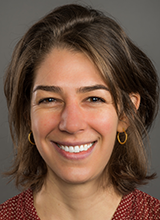
Alissa Hemke
I am a child and adolescent psychiatrist with interests in medical education, infant and early childhood mental health, and psychotherapy. I direct psychotherapy training for child and adolescent psychiatry (CAP) fellows, co-lead the CAP fellows’ didactic curriculum, and coordinate the CAP training experiences of general psychiatry residents.
My clinical work includes treatment in the outpatient setting for young children through adolescents, working closely with their families. I am passionate about psychiatrists supporting families comprehensively. I seek to use not only medications (if appropriate) but also behavioral/psychotherapeutic approaches.
I have done research on expanding behavioral treatments for young children by involving peer supports—caregivers who have previously participated in the programs for their own children—as members of the care team.
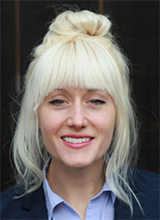
Jessica A. Blayney
Dr. Blayney’s research aims to understand the risks for and consequences of sexual victimization. More specifically, this work centers around how social contexts influence sexual victimization risk as well as variation in post-victimization recovery, such as posttraumatic stress disorder, alcohol use, and sexual risk behaviors.
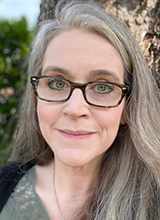
Susan Stoner
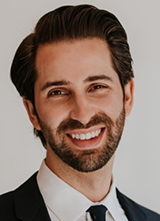
Wade Reiner
I have always been interested in the thoughts and feelings that drive us. This led me to major in Psychological and Brain Sciences at Johns Hopkins University and to later enroll in the psychiatry residency training program at Washington University in St. Louis. Since completing training, I have had an excellent experience working at UW/Harborview’s emergency and inpatient psychiatry services. My teaching interests include the psychiatric interview, documentation, and fundamentals of clinical decision-making. Clinically, I enjoy taking a holistic approach to care, utilizing interventions across behavioral changes, pharmacology, and psychotherapy.
Nancy Lau
I am a clinical psychologist and researcher. My research focuses on pediatric psychology, intervention science, and leveraging digital technologies to disseminate and implement evidence-based psychosocial interventions for children, teens, and young adults with serious medical conditions and co-occurring anxiety, stress, and depression. Digital mental health care initiatives have the potential to scale-up interventions and overcome structural barriers and unequal access to psychosocial care. Current and future research investigations aim to help improve patient and family coping skills, psychosocial well-being, and quality of life by developing and implementing evidence-based mental health interventions.