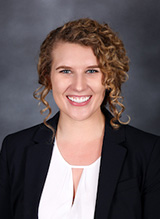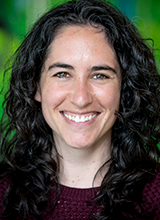
Dr. Samantha J. Reznik (she/her) is an Assistant Professor and licensed clinical psychologist in the Department of Psychiatry and Behavioral Sciences at the University of Washington School of Medicine. She is the Director for Seattle Children’s Psychosis Program, providing holistic mental health care to support individuals with psychosis ages 13-21 to reach goals aligned with personal values and passions. With a commitment to research, training, and clinical leadership in serious mental illness (SMI), she strives to create meaningful change in mental health services, ensuring individuals receive the recovery-oriented care they deserve.
As an investigator at the Supporting Psychosis Innovation through Research, Implementation, & Training (SPIRIT) Center, she focuses on dissemination and implementation research to increase access to and quality of care for individuals with SMI and other underserved populations. She currently supports the Central Assessment for Psychosis (CAPS) project to increase access to psychosis assessment and reduce barriers to early psychosis treatment engagement across Washington. She is also committed to advancing SMI and health service psychology training and is actively involved in related national service, including serving as the Chair-Elect of the APA SMI/SED Subsection and founding member and Co-Chair of SMI Future of Academia, Training, and Education (FATE) committee to advance doctoral psychology training in SMI.
Dr. Reznik earned her PhD in Clinical Psychology at the University of Arizona with a focus on psychophysiology and intervention science. Her clinical training included a Health Resources and Services Administration (HRSA)-funded Underserved Track clinical internship at University of Kansas Medical Center as well as an advanced clinical fellowship in rehabilitation and recovery for SMI at VA San Diego Healthcare System/University of California San Diego. She was previously a Research Assistant Professor at the University of Texas at Austin and investigator with the Advancing Early Psychosis Intervention Network in Texas (EPINET-TX) project.
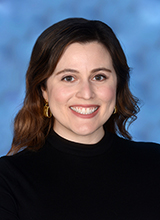
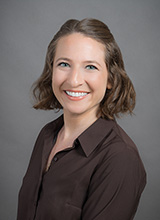
Christina Warner, MD (she/her) is the attending psychiatrist for the Early Psychosis Clinic and Partial Hospitalization Program at Seattle Children’s Hospital. She has clinical expertise in mood disorders, psychosis spectrum disorders, First Episode Psychosis, chronic suicidality, mood dysregulation, neurodiversity, and Dialectical Behavior Therapy.
Dr. Warner is a Washington native and graduate of the Seattle Public School system with a vested interest in expanding access to high quality mental health care in her community.
I am a clinical psychologist with specialized training in serious mental illness and inpatient psychiatric care. I earned my PhD from the University of Washington in 2023 after completing my pre-doctoral internship at the same institution, training in serious mental illness and inpatient care at Harborview Medical Center and psycho-oncology at Fred Hutch Cancer Center. My research focuses on developing novel technologies to support patients with serious mental illness, improving the provision of psychological interventions in the inpatient setting, and more efficiently and effectively training future generations of mental health clinicians. Toward this end, I study the use of artificial intelligence (AI) technologies in mental health care, including as training tools to expand the mental health care workforce. I also work as a psychologist on UW’s long-term civil commitment inpatient psychiatry program.
I am a psychiatrist at the UW. I primarily work at the Long-Term Civil Commitment Unit at Northwest and the consult service at University of Washington Montlake. I see patients with severe mental illness and chronic mental health problems. I also help with the treatment of patients with delirium and medical comorbidities that impact their mental health. I also help plan and give didactics for the Psychiatry residency at UW. My areas of interests are resident education, consult-liason, global mental health, perinatal psychiatry, and diversity, equity, and inclusion.
Hello! I’m the medical director for the Long Term Civil Commitment Units at the Center for Behavioral Health and Learning. This is a new program as of July 2024 and I am excited to help get it off the ground. I completed my medical school training at the University of Cincinnati, then residency at Oregon Health & Science University, then addiction psychiatry fellowship at UW, then worked at the Puget Sound VA for five years and Providence Swedish for six years prior to starting at UW. I’m thrilled to be part of the team here and looking forward to this next chapter in my career.
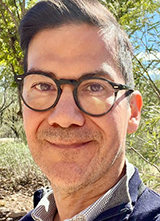
I am currently the Medical Director at the Garvey Institute Center for Neuromodulation and am providing leadership to help grow our portfolio in the area of Neuromodulation and Interventional Psychiatry. Before coming to the UW, I was the Muriel Harris Chair of Geriatric Psychiatry and Professor of Clinical Psychiatry at UCLA. While at UCLA, I held many administrative, clinical and teaching leadership positions including serving as Medical Director of Inpatient Geriatric Psychiatry, Chief of Staff of the UCLA Neuropsychiatric Hospital, Founding Faculty of the UCLA Neuromodulation Division, Medical Director of the ECT and Interventional Psychiatry Program, among others.
I recently became Editor-in-Chief of the Journal of ECT and Related Therapies, the official publication of the International Society of ECT and Neurostimulation. My research projects have included investigating various neuromodulation and interventional therapies and developing novel educational programs and curricula. I have an abiding interest in mentoring and helping faculty at the start of their careers and a commitment to fostering the advancement of women and underrepresented minority (URM) faculty in academic medicine.
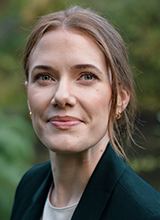
Sheena Friesen, PhD (she/her), is the attending psychologist for the Child Program on the inpatient Psychiatry and Behavioral Medicine Unit at Seattle Children’s Hospital and Assistant Professor in the Department of Psychiatry and Behavioral Sciences at the University of Washington. She has clinical expertise in disruptive behavior disorders, comprehensive assessment, Dialectical Behavior Therapy, Exposure Therapies, Parent Training, and Trauma-Focused Cognitive Behavioral Therapy.
Dr. Friesen’s research interests broadly focus on advancing knowledge of least restrictive interventions in acute and complex care contexts, trauma-informed care, and interventions designed to address children’s disruptive behavior problems. She has collaborated on and co-led efforts to design and implement a multi-tiered, Modified Positive Behavioral Interventions and Supports (M-PBIS) model of care aimed at increasing positive behavior interventions, reducing restraint and PRN use, and ameliorating racial gaps in care delivery.
Dr. Friesen received her Ph.D. in School Psychology from the University of Washington in Seattle, WA. She completed her pre-doctoral internship training at Johns Hopkins School of Medicine and Kennedy Krieger Institute and went on to complete her postdoctoral fellowship in acute care and clinical psychology at Seattle Children’s Hospital.
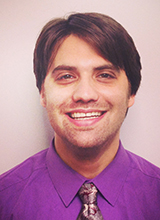
My clinical and research interests center around neuropsychiatric symptoms that present in neurodegenerative diseases, especially dementias. Though dementia is well-known to affect one’s memory and cognition, over 90% of people with dementia develop new neuropsychiatric symptoms – including apathy, dysphoria. anxiety, aggression, agitation, disinhibition, hallucinations, and delusions. Despite the ubiquity of these symptoms, very little is known about how they develop in dementia. My research interests are in understanding more about the molecular and cellular mechanisms of neuropsychiatric symptoms in dementia beyond the well-studied changes associated with cognitive deficits. Most of my research portfolio is currently dedicated to determining the underlying molecular and cellular features differentiating apathy from dysphoria in Alzheimer’s Disease.
Along with my research mentor Martin Darvas PhD (Department of Laboratory Medicine and Pathology), we employ numerous approaches to better understand these neuropsychiatric symptoms, including techniques involving rigorous clinical phenotyping of neuropsychiatric symptoms, exploring peripheral immune cell changes via mass cytometry, transcriptomic analyses of human and mouse post-mortem tissue, development and implementation of biomarkers derived from human and animal model fluids (plasma, serum, cerebrospinal fluid), virally-mediated gene manipulations, animal modeling of cognitive and neuropsychiatric phenotypes, and basic cellular and molecular biology techniques.