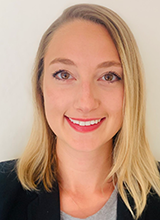
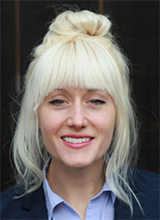
Dr. Walukevich-Dienst (hear my name) is a licensed clinical psychologist and an Assistant Professor at the University of Washington.
Her research is focused on identifying psychosocial and contextual factors associated with alcohol and cannabis misuse and co-use among young adults, including social influences (e.g., romantic partners, use partnerships), affect management motives, co-occurring mental health concerns, and high-risk substance use events and contexts.
Dr. Walukevich-Dienst aims to leverage this information to develop and test innovative, technology-informed prevention and intervention efforts to disseminate in real world settings.
She also provides psychotherapy to patients at the University of Washington’s Outpatient Psychiatry Clinic and provides supervision and training to psychology graduate students and psychiatry residents in Cognitive Behavioral Therapy.
Link to Dr. Walukevich-Dienst’s CV.
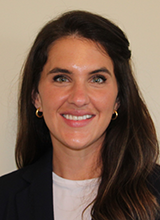
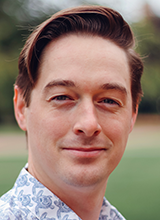
Dr. Prater holds a doctorate in public health from the Ohio State University, with a focus in health services research, pragmatic intervention development and policy evaluation. Her work focuses on understanding the circumstances around firearm suicide among vulnerable populations and developing health systems interventions for suicide prevention through firearm safety. Using a public health lens, she works on tailoring interventions to meet the unique needs of vulnerable populations (e.g. dementia, terminal illness) at increased risk for suicidal thoughts and behaviors. She is currently funded by the National Institutes on Aging and the American Foundation for Suicide Prevention to produce clinical decision-making tools to help persons with early dementia, their care partners, and primary clinicians, to make safer plans for firearm storage.
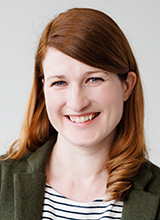
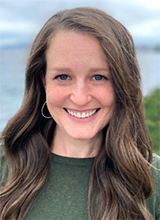
Koriann Cox, Ph.D. graduated from Northeastern University and is licensed in the state of Washington. She completed a postdoctoral fellowship in co-occurring addiction and mental health and has a range of clinical experience with a variety of concerns including depression, anxiety, trauma, reproductive mental health, and substance and behavioral addictions. Dr. Cox’s strengths-focused approach emphasizes the mutual development of goals for therapy and ongoing collaboration between herself, the patient, and the care team. Dr. Cox uses a number of therapeutic modalities including but not limited to Cognitive Behavioral Therapy, Acceptance and Commitment Therapy, and Cognitive Processing Therapy.
I am a counseling psychologist interested in developing and implementing culturally responsive, evidence-informed, family-centered, and non-pathologizing interventions. My practice and research are informed by postmodern ideas, especially narrative therapy. I provide clinical services at the Madison Clinic at Harborview Medical Center.
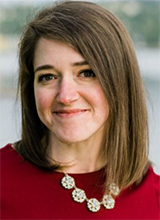
Dr. Blayney’s research aims to understand the risks for and consequences of sexual victimization. More specifically, this work centers around how social contexts influence sexual victimization risk as well as variation in post-victimization recovery, such as posttraumatic stress disorder, alcohol use, and sexual risk behaviors.
I am a behavioral neuroscientist who earned my PhD from Rutgers University and completed a postdoc here, in the Psychiatry and Behavioral Sciences Department at the University of Washington. My lab, located in the MIRECC at VA Puget Sound, aims to identify the neural mechanisms underlying substance use disorders and maladaptive decision making.
My primary focus is studying the neurobiological consequences and predictors of chronic fentanyl use. To accomplish this, I utilize cutting-edge in-vivo optical neuroscience tools (photometry, optogenetics, miniscopes) along with a newly developed oral-fentanyl self-administration model for rats and mice. I am also the lead developer for DeepSqueak, a popular software package for bioacoustics analysis that integrates machine-vision algorithms with an intuitive graphical interface to accelerate animal communication research.

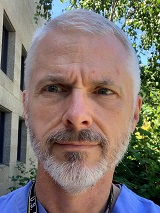
Dr. Charles Engel is Professor in the Department of Psychiatry and Behavioral Sciences at the University of Washington School of Medicine, Core VA HSR Investigator in the Seattle Center for Innovation, Co-Director of the Center’s Advanced Fellowship on Health Systems Research, and Adjunct Physician Policy Researcher at the RAND Corporation. Engel’s work focuses on trauma-informed health systems and strategies for improving the quality of primary care for chronic mental and physical health conditions. His research has covered traumatic injury and post-trauma syndromes ranging from blast injury, mild traumatic brain injury and Gulf War syndrome to PTSD and depression. Engel is experienced at mixed qualitative and quantitative methods and has led large pragmatic randomized trials, program evaluations, and implementation science studies. He has authored or coauthored nearly 200 scholarly papers, including in the New England Journal of Medicine, JAMA, and the American Journal of Psychiatry. Funding for his work has come from the National Institutes of Health, Centers for Disease Control, Department of Veterans Affairs, Department of Defense and other organizations. Before joining UW Psychiatry and the AIMS Center in 2021, Dr. Engel was Senior Physician Policy Researcher at the RAND Corporation from 2013 to 2020 and Associate Chair (Research) at Uniformed Services University’s Department of Psychiatry from 2001-2013. Engel has served on the board of directors of the International Society for Traumatic Stress Studies, has testified twice before Congress, received a number of awards, and delivered invited lectures in over 10 countries. He received both his MD and MPH from the University of Washington.
I am a clinical psychologist with board certification in geriatric psychology. I am based in the Geriatrics and Extended Care Service of the VA Puget Sound Healthcare System.