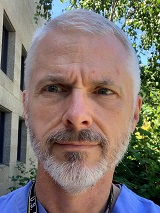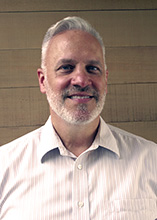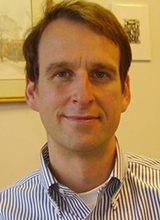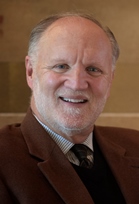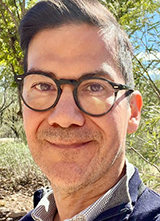
I am currently the Medical Director at the Garvey Institute Center for Neuromodulation and am providing leadership to help grow our portfolio in the area of Neuromodulation and Interventional Psychiatry. Before coming to the UW, I was the Muriel Harris Chair of Geriatric Psychiatry and Professor of Clinical Psychiatry at UCLA. While at UCLA, I held many administrative, clinical and teaching leadership positions including serving as Medical Director of Inpatient Geriatric Psychiatry, Chief of Staff of the UCLA Neuropsychiatric Hospital, Founding Faculty of the UCLA Neuromodulation Division, Medical Director of the ECT and Interventional Psychiatry Program, among others.
I recently became Editor-in-Chief of the Journal of ECT and Related Therapies, the official publication of the International Society of ECT and Neurostimulation. My research projects have included investigating various neuromodulation and interventional therapies and developing novel educational programs and curricula. I have an abiding interest in mentoring and helping faculty at the start of their careers and a commitment to fostering the advancement of women and underrepresented minority (URM) faculty in academic medicine.
I am a practicing psychiatrist and health services researcher whose research has focused on system-level strategies to deliver high-quality care in settings with few clinical resources or available specialists. I am board certified in general adult psychiatry and geriatric psychiatry and my clinical work has included provision of psychiatric outpatient, inpatient, and emergency services care. I am interested in leveraging existing community infrastructure and adapting evidence based clinical practices to suit community contexts to reduce treatment gaps.
I am a clinical psychologist with board certification in geriatric psychology. I am based in the Geriatrics and Extended Care Service of the VA Puget Sound Healthcare System.
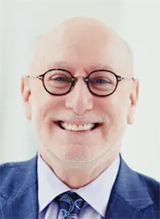
Dr. Michael Schrift is a Professor in the Department of Psychiatry and Behavioral Sciences at the University of Washington. He currently is an attending neuropsychiatrist at the Brain & Memory Center at Harborview Medical Center. He is he the director of the Behavioral Neurology/Neuropsychiatry Fellowship Training Program. He previously was the Division Director of Geriatric Psychiatry & Neuropsychiatry in the Department of Psychiatry and Behavioral Sciences at Northwestern University Feinberg School of Medicine in Chicago. He was also the director of the fellowship training program in Geriatric Psychiatry, co-director of the Clinical Neuroscience Fellowship program, and the director of the Neuromodulation Program and the Cancer Neuropsychiatry Program. He has many years of experience treating patients with Parkinson’s disease, Huntington’s disease, and Wilson’s, among other neuropsychiatric disorders. He also is an attending neuropsychiatrist in the Harborview Memory and Brain Wellness Clinic.
Dr. Schrift is the Book Review Editor for the Journal of Neuropsychiatry and Clinical Neurosciences.
He is board-certified in Psychiatry by the American Board of Psychiatry and Neurology as well as board certified in Behavioral Neurology and Neuropsychiatry by the United Council for Neurologic Subspecialties. He has training in Bioethics and serves on the ethics committee at Harborview Medical Center. Dr. Schrift is a fellow of the American Neuropsychiatric Association.
Personal Statement
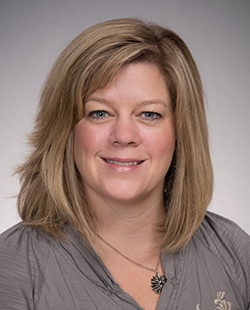
My passion for patient care is the core of who I am as a physician. As a consultation-liaison (C-L) psychiatrist, I have unique and broad teaching opportunities. The C-L role lets me teach non-psychiatrist peers, trainees from other specialties, and professionals from other disciplines. I particularly like helping providers to understand their patients’ psychiatric ailments, the complex interplay among psychiatric conditions and general medical problems, and the goals for recovery. Furthermore, I provide active support to patients and their families as they navigate our highly complex medical system with their illnesses and fears. Since the beginning of my tenure, I have been involved in the administrative aspects of medical student, resident and fellow training and curricular development. Education is the common thread that unites all of my academic activities. I have served as an Associate Program Director for 13 years at UWMC, Program Director of the Adult Psychiatry Residency program for 5 years and now work in CL psychiatry at the VA Puget Sound Health Care System. I am currently the Associate Program Director (APD) for the site and a core APD for Evaluation of our residency program.
Personal Statement
As a geriatric psychiatrist, my professional interests revolve around improving the quality of lives for people with dementia, dementia-related psychiatric symptoms, and their caregivers. I provide direct clinical care as a psychiatrist at the VA Puget Sound, and I am involved in projects addressing dementia-related agitation. As the UW geriatric psychiatry fellowship director, I also recognize that training the next generation of geriatric psychiatrists is vital in order to meet the growing population needs in geriatrics.
Personal Statement
I am Professor and Associate Director for Evidence-Based Psychosocial Interventions at the AIMS Center, and Director of the National Network of PST Clinicians, Trainers & Researchers. In these roles, I develop and lead implementation and training programs in a variety of behavioral health interventions.
Personal Statement
I am a geriatric psychiatrist and health services researcher. My research focuses on ways of improving mental health and well-being among older adults, especially those with dementia and their caregivers.
Personal Statement
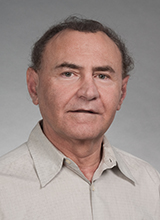
Over the last 25 years, my work has focused on relationships between stress and health in several risk groups (spouse caregivers of persons with Alzheimer’s disease, medical students, psychiatric/medical outpatients/inpatients, air traffic controllers, and camp counselors). We have developed and/or revised measures of medical student stress, caregiver burden, patient anger/dyscontrol, process coping, appraisal, neuropsychological function and physician awareness of patient problems. These measures have been used by university researchers, insurance companies, pharmaceutical companies in clinical trials, prisons, nursing homes/long term care, rehabilitation facilities, and public health organizations. These psychosocial and behavioral measures have been shown to predict and be predicted by physiological and cognitive measures. We have also focused on moderators of such relationships, such as gender, personality, and co-morbidities. We have used primarily multicohort long-term studies that allow for interactions between exposures to stressors, hard-wired vulnerabilities, and more temporal resources. We attempted to identify mechanisms that can be potentially altered to have long-term public health significance in persons under chronic stress. I have also attempted to isolate groups that are at high risk for negative outcomes. In a perfect world, interventions should be used to help all persons who have deleterious responses to stress, but society cannot afford this. For this reason, the identification of high risk groups is imperative for maximizing the effect of interventions.
My research program’s long range goal is to better understand the mechanisms by which chronic stress translates into physical, mental, or cognitive health problems. We are examining caregivers of spouses with AD and demographically-similar spouse non-caregivers across time and assessing the degree to which elevated depression, stress hormones, inflammation, and insulin resistance in caregivers predict cognitive decline in caregivers relative to non-caregivers. We are also attempting to replicate our earlier work that showed that chronic stress and chronic disease moderate each other’s physiological risks. For example, physiological dysregulation that is specific to a disease (e.g., metabolic syndrome with CHD, blood pressure reactivity with hypertension, and immune function with cancer history, HbA1c with diabetes) is exacerbated in caregivers with a chronic disease relative to non-caregivers with a chronic disease, but no such differences occur in caregivers versus non-caregivers without a chronic disease. Finally, we are examining a large cohort of older adults sampled from various U.S. communities in order to assess the influence of life stressors on long term cognitive function and potential mediators of such changes.