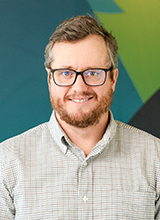
As a child and adolescent psychiatrist at the Child Study and Treatment Center, I am deeply inspired by the resilience of the youth we serve and by the collaborative spirit of our multidisciplinary teams. My work is grounded in curiosity, compassion, and respect for the complex systems that shape young people’s lives. My approach integrates evidence-based psychopharmacology with developmental and trauma-informed care, while always centering around the individual’s unique story and strengths. I value the relational and systemic dimensions of psychiatry: the interplay between family, community, and policy that influences recovery and growth. The multidisciplinary, relational model at CSTC reflects these values and continues to shape how I think about psychiatry: not only as a science, but as a deeply human endeavor.
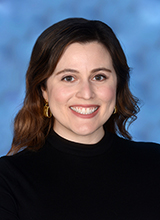
Dr. Dahyeon Kang is an Assistant Professor at the University of Washington School of Medicine. She earned her doctoral degree from the University of Illinois at Urbana-Champaign, where her work focused on the etiology of alcohol and substance use disorders through multimodal research methods, including alcohol administration, neuroimaging, transdermal biosensors, and ecological momentary assessments. At the University of Washington’s Department of Psychiatry, Dr. Kang investigates how individual and social factors interact to influence alcohol and cannabis use behaviors.
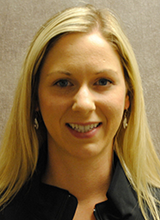
I am an Acting Assistant Professor in the Department of Psychiatry and Behavioral Sciences at the University of Washington. I received my MD, MPH from the University of Nebraska Medical Center and completed my adult residency at the University of Washington where I was chief resident. I then went on to complete a fellowship in Consultation-Liaison Psychiatry at the University of Washington. I am currently on faculty at Harborview Medical Center on the inpatient psychiatry unit and inpatient psychiatry consult service. I have a longstanding interest in the intersection between medicine and psychiatry and in working with people who suffer from serious mental illness and treatment-resistant conditions. I have clinical interests in ECT, psychopharmacology, co-morbid medical conditions, and adjunctive psychotherapies. I value caring for the whole person through thorough and accurate diagnosis, treating co-morbid medical conditions, and minimizing medications when possible. I have teaching interests in reducing stigma surrounding serious mental illness and educating residents and medical students about psychiatric care.

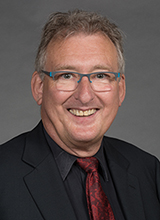
Dr. Charles Engel is Professor in the Department of Psychiatry and Behavioral Sciences at the University of Washington School of Medicine, Core VA HSR Investigator in the Seattle Center for Innovation, Co-Director of the Center’s Advanced Fellowship on Health Systems Research, and Adjunct Physician Policy Researcher at the RAND Corporation. Engel’s work focuses on trauma-informed health systems and strategies for improving the quality of primary care for chronic mental and physical health conditions. His research has covered traumatic injury and post-trauma syndromes ranging from blast injury, mild traumatic brain injury and Gulf War syndrome to PTSD and depression. Engel is experienced at mixed qualitative and quantitative methods and has led large pragmatic randomized trials, program evaluations, and implementation science studies. He has authored or coauthored nearly 200 scholarly papers, including in the New England Journal of Medicine, JAMA, and the American Journal of Psychiatry. Funding for his work has come from the National Institutes of Health, Centers for Disease Control, Department of Veterans Affairs, Department of Defense and other organizations. Before joining UW Psychiatry and the AIMS Center in 2021, Dr. Engel was Senior Physician Policy Researcher at the RAND Corporation from 2013 to 2020 and Associate Chair (Research) at Uniformed Services University’s Department of Psychiatry from 2001-2013. Engel has served on the board of directors of the International Society for Traumatic Stress Studies, has testified twice before Congress, received a number of awards, and delivered invited lectures in over 10 countries. He received both his MD and MPH from the University of Washington.
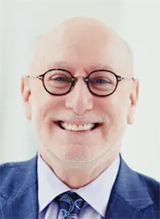
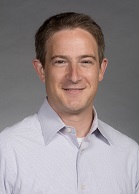
Dr. Michael Schrift is a Professor in the Department of Psychiatry and Behavioral Sciences at the University of Washington. He currently is an attending neuropsychiatrist at the Brain & Memory Center at Harborview Medical Center. He is he the director of the Behavioral Neurology/Neuropsychiatry Fellowship Training Program. He previously was the Division Director of Geriatric Psychiatry & Neuropsychiatry in the Department of Psychiatry and Behavioral Sciences at Northwestern University Feinberg School of Medicine in Chicago. He was also the director of the fellowship training program in Geriatric Psychiatry, co-director of the Clinical Neuroscience Fellowship program, and the director of the Neuromodulation Program and the Cancer Neuropsychiatry Program. He has many years of experience treating patients with Parkinson’s disease, Huntington’s disease, and Wilson’s, among other neuropsychiatric disorders. He also is an attending neuropsychiatrist in the Harborview Memory and Brain Wellness Clinic.
Dr. Schrift is the Book Review Editor for the Journal of Neuropsychiatry and Clinical Neurosciences.
He is board-certified in Psychiatry by the American Board of Psychiatry and Neurology as well as board certified in Behavioral Neurology and Neuropsychiatry by the United Council for Neurologic Subspecialties. He has training in Bioethics and serves on the ethics committee at Harborview Medical Center. Dr. Schrift is a fellow of the American Neuropsychiatric Association.
My work focuses on the diagnosis and treatment of post traumatic stress disorder (PTSD), mild traumatic brain injury (mTBI), and neurodegenerative dementias, as well as applications of positron emission tomography (PET) and other functional neuroimaging modalities to elucidating the pathophysiology of PTSD, mTBI, Alzheimer’s Disease, and other neurodegenerative dementias.
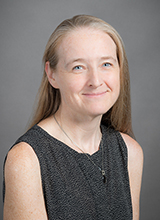
The Hendrickson research group explores underlying biological mechanisms related to the development and maintenance of posttraumatic stress disorder (PTSD) and related conditions, including mild traumatic brain injury, as well as the potential for interaction between different types of stress and trauma. Through the design and implementation of translational clinical studies, we apply this work directly to the pursuit of new treatment options for people who have experienced a traumatic stress.
A primary goal of our team is to understand broadly the ways traumatic stress interferes with people’s lives, and to prioritize the areas of greatest clinical need. We look for ways to prevent persistent symptoms after trauma, to match patients more quickly to the treatment options that will be most effective for them as individuals, and to develop new treatment options for those for whom current options are simply not adequate.
In addition to my research work, I am a staff psychiatrist in the VA PTSD Outpatient Clinic and a member of the VA Dialectical Behavioral Therapy (DBT) Team, and provide teaching and mentorship for residents in the UW Psychiatry Training Program.
Personal Statement
I have expertise in managing acute psychiatric presentations with research experience in studying neuroanatomy and the synaptic effects of schizophrenia. I have published in fields of neuroscience, schizophrenia, autism, and anxiety disorders. I also actively manage a telepsychiatry clinic based in eastern WA, and coordinate psychiatric management of emergency room mental health evaluations. I am very interested in the education of residents and fellows rotating on the consultation service, and participating in educational curriculum and recruitment committees.
Personal Statement
Dr. Jakupcak studies and treats posttraumatic stress disorder (PTSD) and associated high risk behaviors such as substance abuse and violence. He is also interested in novel treatment approaches to PTSD, including Behavioral Activation (BA) and primary care based treatment models. Dr. Jakupcak is currently funded to study BA and cognitive skills training for returning Veterans with PTSD and mild traumatic brain injury (mTBI).