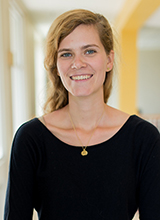
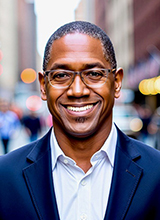
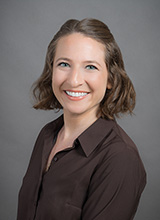
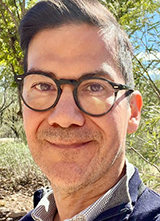
Eric R. Clausell

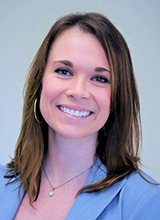
Dr. Clausell earned his doctoral degree in Clinical-Community Psychology from the University of Illinois at Urbana-Champaign in 2011. Dr. Clausell’s graduate research focused on the legacy of childhood attachment relationships on relationship satisfaction of Gay and Lesbian Romantic Couples. Results of this research were published in the journal Developmental Psychology (2008). He completed his Predoctoral Clinical Internship at Veterans Affairs Palo Alto Health Care System and served as a Postdoctoral Research Fellow in Clinical Psychology in the Department of Psychiatry and Behavioral Sciences, Stanford Medicine. Dr. Clausell currently serves as the Director of the Couples & Family Program at Veterans Affairs Puget Sound Health Care System, Seattle Division. In addition, Dr. Clausell serves as Lead Trainer and Consultant in VA Central Office of Family Services for the dissemination program of Integrative Behavioral Couple Therapy lead by Developer & Distinguished Research Professor Dr. Andrew Christensen, at University of California, Los Angeles. Currently, Dr. Clausell serves as clinical trainer and supervisor for Seattle VA’s Clinical training programs, including Predoctoral, Postdoctoral, and the University of Washington Department of Psychiatry and Behavioral Sciences Resident Program where he currently serves at Rotation Supervisor for the VA Outpatient Couple and Family Therapy Rotation.


Samantha Reznik

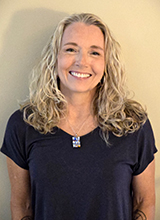
Dr. Samantha J. Reznik (she/her) is an Assistant Professor and licensed clinical psychologist in the Department of Psychiatry and Behavioral Sciences at the University of Washington School of Medicine. She is the Director for Seattle Children’s Psychosis Program, providing holistic mental health care to support individuals with psychosis ages 13-21 to reach goals aligned with personal values and passions. With a commitment to research, training, and clinical leadership in serious mental illness (SMI), she strives to create meaningful change in mental health services, ensuring individuals receive the recovery-oriented care they deserve.

As an investigator at the Supporting Psychosis Innovation through Research, Implementation, & Training (SPIRIT) Center, she focuses on dissemination and implementation research to increase access to and quality of care for individuals with SMI and other underserved populations. She currently supports the Central Assessment for Psychosis (CAPS) project to increase access to psychosis assessment and reduce barriers to early psychosis treatment engagement across Washington. She is also committed to advancing SMI and health service psychology training and is actively involved in related national service, including serving as the Chair-Elect of the APA SMI/SED Subsection and founding member and Co-Chair of SMI Future of Academia, Training, and Education (FATE) committee to advance doctoral psychology training in SMI.

Dr. Reznik earned her PhD in Clinical Psychology at the University of Arizona with a focus on psychophysiology and intervention science. Her clinical training included a Health Resources and Services Administration (HRSA)-funded Underserved Track clinical internship at University of Kansas Medical Center as well as an advanced clinical fellowship in rehabilitation and recovery for SMI at VA San Diego Healthcare System/University of California San Diego. She was previously a Research Assistant Professor at the University of Texas at Austin and investigator with the Advancing Early Psychosis Intervention Network in Texas (EPINET-TX) project.

Randall Espinoza

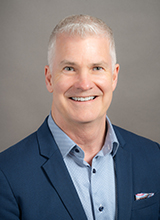
I am currently the Medical Director at the Garvey Institute Center for Neuromodulation and am providing leadership to help grow our portfolio in the area of Neuromodulation and Interventional Psychiatry. Before coming to the UW, I was the Muriel Harris Chair of Geriatric Psychiatry and Professor of Clinical Psychiatry at UCLA. While at UCLA, I held many administrative, clinical and teaching leadership positions including serving as Medical Director of Inpatient Geriatric Psychiatry, Chief of Staff of the UCLA Neuropsychiatric Hospital, Founding Faculty of the UCLA Neuromodulation Division, Medical Director of the ECT and Interventional Psychiatry Program, among others.

I recently became Editor-in-Chief of the Journal of ECT and Related Therapies, the official publication of the International Society of ECT and Neurostimulation. My research projects have included investigating various neuromodulation and interventional therapies and developing novel educational programs and curricula. I have an abiding interest in mentoring and helping faculty at the start of their careers and a commitment to fostering the advancement of women and underrepresented minority (URM) faculty in academic medicine.

Tessa Frohe

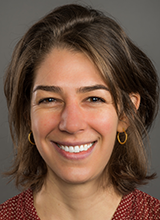
I am a trained Behavioral Scientist with a PhD in Health & Human Performance. The main goal of my work is to reduce substance-related harms and improve quality of life for people experiencing problems related to their substance use. I work closely with community members who use drugs to inform my line of research and address key needs identified. My primary appointment is at the Harm Reduction Research and Treatment (HaRRT) Center within the UW School of Medicine and hold an Affiliate Faculty appointment within the School of Public Health.​ My aim is to adapt, refine, and disseminate harm reduction programs through digital health interventions to empower individuals and ameliorate substance-related harms.

Christina N. Clayton

Christina has been in the behavioral health field since 1993, primarily serving adults who live with severe mental health issues, substance use, experience chronic homelessness, suffer from poor physical health, trauma and any number of co-occurring issues.

Prior to joining UW, she spent 25 years working in and managing numerous clinical programs including: HIV/AIDS housing and health care, school-based mental health, substance use outreach and treatment, homeless mental health outreach, intensive case management, assertive community treatment, crisis respite, integrated care, housing first and other evidence-based practices.  She has provided licensure supervision, training and consultation, and has worked on multi-disciplinary teams in a number of settings.  She highly values her years of clinical direct service and program management experience.

She has also been involved with the UW School of Social Work since getting her MSW, working with dozens of graduate and undergraduate students, teaching courses and workshops, presenting on panels.  She served as an Interim Assistant Dean and Director of Field Education from and currently is a Clinical Associate Professor.

For the Northwest MHTTC, a SAMHSA-funded regional training & TA center (2018-24), Christina co-directed the team and helped plan and oversee training for the mental health workforce in HHS Region 10 (AK/ID/OR/WA).  Activities include live webinars, research/practice briefs, online self-paced courses, learning communities and intensive cohort-based training. Most of this training was conducted virtually in collaboration with numerous faculty, instructional designers and presenters.

Currently, she humbly serves as Co-Chair for the PBSCI Department’s Equity, Diversity and Inclusion Staff Committee.

Starting in fall 2024, Christina now co-directs the Pacific West HUB of the new national Center for Mental Health Implementation Support (CMHIS), led by Stanford’s Center for Dissemination and Implementation (CDI). The MHDIS project will build the capacity to select and implement evidence-supported practices and programs, sharing pragmatic, accessible guidance and the West Coast MHTAC serves HHS regions 9 and 10.

She is grateful to all the staff and faculty who choose to work in this field, as it is their collective energy, passion, dedication and commitment to social justice that supports the people we serve and brings real change to our communities.  Most importantly, she is honored to work with people who every day, live their experience and share their journey through advocacy as they strive for a world where behavioral health is adequately supported and everyone can thrive equitably.

Bill O’Connell

As part of my faculty appointment, I am Director of the Behavioral Health Support Specialist (BHSS) Workforce Development Project.  My responsibilities include oversight of curriculum development, practicum guidelines, development of community partnerships and advocacy for reimbursement pathways.

Behavioral Health Support Specialist Workforce Development Project

I am working with a talented project team to develop a competency framework and curriculum to prepare a bachelor level Behavioral Health Support Specialist (BHSS).  A BHSS will deliver brief, culturally responsive, evidence-informed interventions for common mental and behavioral health conditions under supervision in a team-based setting.  The BHSS will use a measurement-based care approach to ensure patients are receiving the right level of care at the right dose.  Crisis services, integrated care and specialty behavioral healthcare are examples of work environments that will benefit from a BHSS.  Our project goal is to support higher educational programs across the state implement the BHSS clinical training program in academic year 25-26. During my time working as a primary care behavioral health consultant, I frequently met with senior patients from diverse backgrounds who had never spoken with a behavioral health provider in their lifetime despite experiencing moderate to severe symptoms of a mental or behavioral health condition.  One reason I found unacceptable was lack of access to services.  The bachelor level Behavioral Health Support Specialist role is one solution of many to improving access to care and expanding the available workforce.

Scholarship

My current scholarship focuses on behavioral health workforce development and best practices in teaching and training bachelor level intervention specialists for behavioral health settings. In addition to my current role as BHSS project co-investigator, I served as principal investigator for a philanthropic gift from Robert Craves to expand access to school counseling services at Bailey Gatzert Elementary School in the Yesler Terrace neighborhood of Seattle. I also engaged in community-based research with Village Spirit Center for Community Change and Healing located in the Central District to produce a mental health needs assessment for residents who had experienced homelessness prior to obtaining secure housing. Previous peer reviewed publications focused on counselor preparation for employment in behavioral health agencies, best practices in counselor preparation and ethical dilemmas in counselor practice.

Certification and Licensure

I am a Licensed Mental Health Counselor (LMHC) in the State of Washington and a Licensed Professional Counselor (LPC) in Colorado.  Additionally, I am a National Certified Counselor (NCC), and an Approved Clinical Supervisor (ACS) through the National Board of Certified Counselors and the Center for Credentialing and Education.

Career Roles

  • Associate Professor (WOT), Psychiatry and Behavioral Sciences, University of Washington (2022-Present).
  • Regional Director of Behavioral Health and Primary Care Behavioral Health Consultant for One Medical Seniors (2018-2021)
  • Founding Chair of the Department of Leadership and Professional Studies at Seattle University (2014-2017)
  • Associate Professor of Clinical Mental Health and School Counseling at Seattle University (2010-2019)
  • Associate Professor of Clinical Mental Health and School Counseling at Xavier University in Ohio (2001-2010)
  • Past President of the Ohio Counseling Association (2006-2009)
  • Assistant Clinical Director for Talbert House Inc. (1998-2001)
  • *Private Practice Therapist and Consultant (1997-2010)
  • Adult Therapist for Clermont Counseling Center in Milford, Ohio (1994-1997)
  • Crisis Intervention Specialist for Talbert House Inc. (1990-1993)
  • Adult Therapist for Care Unit Chemical Dependency Hospital in Ohio (1988-1990)

*I owned a private practice in the Greater Cincinnati Area for twelve years providing behavioral medicine consultation in an integrated pain management practice, clinical consultation to behavioral health organizations, and training and education on ethical and professional issues for mental health providers.  Additionally, I provided individual, couple and family counseling in a group psychology practice with a special focus on serving the LGBTQI+ community and persons with trauma history.

Alissa Hemke

I am a child and adolescent psychiatrist with interests in medical education, infant and early childhood mental health, and psychotherapy. I direct psychotherapy training for child and adolescent psychiatry (CAP) fellows, co-lead the CAP fellows’ didactic curriculum, and coordinate the CAP training experiences of general psychiatry residents.

My clinical work includes treatment in the outpatient setting for young children through adolescents, working closely with their families. I am passionate about psychiatrists supporting families comprehensively. I seek to use not only medications (if appropriate) but also behavioral/psychotherapeutic approaches.

I have done research on expanding behavioral treatments for young children by involving peer supports—caregivers who have previously participated in the programs for their own children—as members of the care team.

Bryan Hartzler

In two decades at UW, Dr. Hartzler’s principal focus has been on the dissemination and implementation of empirically-supported health services for persons with substance use disorders. To date, this includes local, regional, national, and international collaborations, encompassing federally-funded work with diverse community-based settings (i.e., addiction care, mental health, primary and specialty medical care, criminal justice, HIV care, schools, faith-based organizations), including those affiliated with the NIDA Clinical Trials Network.  As director of the UW Center for Advancing Addiction Health Services (CAAHS), he oversees a broad portfolio, including:  1) the SAMHSA-funded Northwest Addiction Technology Transfer Center (Northwest ATTC), which provides universal, targeted, and intensive technical assistance to the addiction workforce in Alaska, Idaho, Oregon, and Washington 2) regional contribution to SAMHSA’s national Opioid Response Network (ORN), 3) a host of externally-sponsored implementation projects with single-state authorities as well as other organizations, and 4) contribution to NIH-funded and intramural health services research.  In professional endeavors that span a science-to-service continuum, Dr. Hartzler seeks to promote adoption and implementation of useful treatment and recovery practices in community settings where they may benefit persons with substance use disorders.