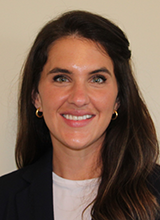
I am a clinical psychologist by training and an Assistant Professor at the University of Washington, Department of Psychiatry and Behavioral Sciences. I am also a Health Service Research Scientist at the Seattle-Denver HSR&D Center of Innovation for Veteran-Centered and Value-Driven Care at the VA Puget Sound Health Care System. My research program broadly focuses on bringing a more holistic approach to healthcare (i.e., mind, body, and spirit) and centers around two interconnected areas of investigation: 1) meaning-making and meaning in life among individuals with chronic pain and psychological distress (in particular, PTSD) and 2) developing and testing mind-body interventions that improve physical and emotional health and well-being. I am particularly interested in improving health for those in rural settings. My work has been supported by the National Center for Complementary and Integrative Health and the U.S. Department of Veterans Affairs.
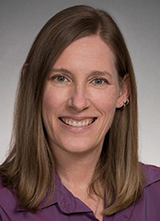
I am an epidemiologist and Assistant Professor in the Department of Psychiatry and Behavioral Sciences at the University of Washington. My research primarily focuses on improving mental health outcomes throughout the life course to support family wellbeing and thriving in low- and middle-income settings, with emphasis on: 1. men’s/father’s mental health and parenting skills, 2. digital mental health interventions to support families affected by early psychosis, 3. integrating perinatal mental health services into maternal-child health care. Current projects are based in East and West Africa. My work utilizes methods ranging from user-centered design of digital mental health interventions to advanced epidemiologic and statistical methods.
Dr. Prater holds a doctorate in public health from the Ohio State University, with a focus in health services research, pragmatic intervention development and policy evaluation. Her work focuses on understanding the circumstances around firearm suicide among vulnerable populations and developing health systems interventions for suicide prevention through firearm safety. Using a public health lens, she works on tailoring interventions to meet the unique needs of vulnerable populations (e.g. dementia, terminal illness) at increased risk for suicidal thoughts and behaviors. She is currently funded by the National Institutes on Aging and the American Foundation for Suicide Prevention to produce clinical decision-making tools to help persons with early dementia, their care partners, and primary clinicians, to make safer plans for firearm storage.

Dr. Charles Engel is Professor in the Department of Psychiatry and Behavioral Sciences at the University of Washington School of Medicine, Core VA HSR Investigator in the Seattle Center for Innovation, Co-Director of the Center’s Advanced Fellowship on Health Systems Research, and Adjunct Physician Policy Researcher at the RAND Corporation. Engel’s work focuses on trauma-informed health systems and strategies for improving the quality of primary care for chronic mental and physical health conditions. His research has covered traumatic injury and post-trauma syndromes ranging from blast injury, mild traumatic brain injury and Gulf War syndrome to PTSD and depression. Engel is experienced at mixed qualitative and quantitative methods and has led large pragmatic randomized trials, program evaluations, and implementation science studies. He has authored or coauthored nearly 200 scholarly papers, including in the New England Journal of Medicine, JAMA, and the American Journal of Psychiatry. Funding for his work has come from the National Institutes of Health, Centers for Disease Control, Department of Veterans Affairs, Department of Defense and other organizations. Before joining UW Psychiatry and the AIMS Center in 2021, Dr. Engel was Senior Physician Policy Researcher at the RAND Corporation from 2013 to 2020 and Associate Chair (Research) at Uniformed Services University’s Department of Psychiatry from 2001-2013. Engel has served on the board of directors of the International Society for Traumatic Stress Studies, has testified twice before Congress, received a number of awards, and delivered invited lectures in over 10 countries. He received both his MD and MPH from the University of Washington.

Dr. Hatch is an Associate Professor at the Addictions, Drug & Alcohol Institute (ADAI), Department of Psychiatry & Behavioral Sciences, UW School of Medicine. Her research interests are in the development and testing of behavioral and pharmacologic interventions for substance use disorders and HIV prevention. In particular, her work has focused on the intersection of substance use and HIV-related sex and drug risk behaviors from both the consumer and workforce perspectives, and on implementation factors that affect uptake of interventions. She has held multiple and varied roles in research projects since 1994, and has long-standing experience developing, implementing, and overseeing large-scale multi-site clinical trials with community treatment providers. In addition to her work at the University of Washington, Dr. Hatch is a licensed clinical psychologist at UWMC Outpatient Psychiatry Clinic. Her clinical work specializes in the treatment of drug and alcohol addictions and co-occurring depression, anxiety and trauma.

In two decades at UW, Dr. Hartzler’s principal focus has been on the dissemination and implementation of empirically-supported health services for persons with substance use disorders. To date, this includes local, regional, national, and international collaborations, encompassing federally-funded work with diverse community-based settings (i.e., addiction care, mental health, primary and specialty medical care, criminal justice, HIV care, schools, faith-based organizations), including those affiliated with the NIDA Clinical Trials Network. As director of the UW Center for Advancing Addiction Health Services (CAAHS), he oversees a broad portfolio, including: 1) the SAMHSA-funded Northwest Addiction Technology Transfer Center (Northwest ATTC), which provides universal, targeted, and intensive technical assistance to the addiction workforce in Alaska, Idaho, Oregon, and Washington 2) regional contribution to SAMHSA’s national Opioid Response Network (ORN), 3) a host of externally-sponsored implementation projects with single-state authorities as well as other organizations, and 4) contribution to NIH-funded and intramural health services research. In professional endeavors that span a science-to-service continuum, Dr. Hartzler seeks to promote adoption and implementation of useful treatment and recovery practices in community settings where they may benefit persons with substance use disorders.

I am a Psychologist and the Coordinator of the DBT Program at the VA Puget Sound Health Care System as well as an Associate Professor in the Department of Psychiatry and Behavioral Sciences and Adjunct Associate Professor in the Department of Psychology at the University of Washington. I previously worked as the Research Director of Dr. Marsha Linehan’s Behavioral Research and Therapy Clinics at the University of Washington (2006-2018), Director of Research and Development for Behavioral Tech, LLC (2014-2017), and Director of Behavioral Tech Research, Inc. (2013-2016). My research focuses on the development and evaluation of the DBT Prolonged Exposure protocol for PTSD as well as methods of disseminating and implementing this and other evidence-based treatments into clinical practice. I regularly provide training and consultation nationally and internationally in DBT and DBT PE and have published extensively on these treatments. I am a certified DBT therapist, a certified PE therapist and supervisor, am board certified in Behavioral and Cognitive therapy, and am licensed as a psychologist in the state of Washington.
Personal Statement
As a practicing psychiatrist and health services researcher, I seek to improve mental health services in medical settings, especially among underserved populations. I work with colleagues in a wide array of disciplines (medical, public health, engineering and others) to develop new ways to increase the reach of evidence-based mental health services using technology-enabled service models to leverage limited specialty mental health expertise. I have a strong interest in using consumer technologies to empower patients, improve communication with providers, and provide targeted treatment.

Personal Statement
I am a clinical psychologist with research interests in the treatment of alcohol and substance use disorders and co-occurring mental health conditions.
My research focuses on understanding how to improve access to evidence-based treatments and understanding why and how patients benefit from treatment. I am particularly interested in research measurement-based care — i.e., the use of standardized measures to monitor treatment progress and inform clinical decision-making.
Broad areas of interest include:
- Alcohol and drug use disorder treatment, including the effectiveness of digital and behavioral interventions, mechanisms of behavioral change, and social and environmental determinants of change.
- Technology to support behavioral change, including patient- and clinician-facing tools that support clinical decision-making, treatment adherence, and treatment progress monitoring.
- Applied statistical analysis, including methods for analyzing longitudinal data, clinical trials data, multilevel data, missing data, psychometric analysis, and data visualization.

Personal Statement
I am a Professor in the Department of Psychiatry and Behavioral Sciences at the University of Washington School of Medicine, and the Director of the Division of Population Health. I am also a Core Investigator at the HSR&D Center for Innovation for Veteran-Centered and Value-Driven Care at the VA Puget Sound Health Care System, and the Director of the VA Virtual Care QUERI Program.
For the last 35 years, my research has focused on access to care. I have published a framework for conceptualizing access to care in the digital age that incorporates virtual care technologies. I have conducted clinical trials to test the effectiveness of virtual care technologies to facilitate the delivery of evidence-based mental health services in rural primary care clinics. I have also conducted implementation trials to test the effectiveness of strategies to promote the uptake of virtual care technologies by primary care patients and providers. My research has been supported by NIMH, NIAAA, PCORI, and VA HSR/QUERI.