Dr. Dahyeon Kang is an Assistant Professor at the University of Washington School of Medicine. She earned her doctoral degree from the University of Illinois at Urbana-Champaign, where her work focused on the etiology of alcohol and substance use disorders through multimodal research methods, including alcohol administration, neuroimaging, transdermal biosensors, and ecological momentary assessments. At the University of Washington’s Department of Psychiatry, Dr. Kang investigates how individual and social factors interact to influence alcohol and cannabis use behaviors.
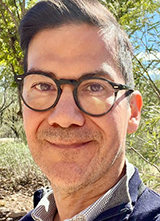
I am currently the Medical Director at the Garvey Institute Center for Neuromodulation and am providing leadership to help grow our portfolio in the area of Neuromodulation and Interventional Psychiatry. Before coming to the UW, I was the Muriel Harris Chair of Geriatric Psychiatry and Professor of Clinical Psychiatry at UCLA. While at UCLA, I held many administrative, clinical and teaching leadership positions including serving as Medical Director of Inpatient Geriatric Psychiatry, Chief of Staff of the UCLA Neuropsychiatric Hospital, Founding Faculty of the UCLA Neuromodulation Division, Medical Director of the ECT and Interventional Psychiatry Program, among others.
I recently became Editor-in-Chief of the Journal of ECT and Related Therapies, the official publication of the International Society of ECT and Neurostimulation. My research projects have included investigating various neuromodulation and interventional therapies and developing novel educational programs and curricula. I have an abiding interest in mentoring and helping faculty at the start of their careers and a commitment to fostering the advancement of women and underrepresented minority (URM) faculty in academic medicine.
My work focuses on the diagnosis and treatment of post traumatic stress disorder (PTSD), mild traumatic brain injury (mTBI), and neurodegenerative dementias, as well as applications of positron emission tomography (PET) and other functional neuroimaging modalities to elucidating the pathophysiology of PTSD, mTBI, Alzheimer’s Disease, and other neurodegenerative dementias.

Dr. Jenness is a clinical child psychologist and Associate Professor in the Department of Psychiatry and Behavioral Sciences at the University of Washington. She earned her Ph.D. in Clinical Psychology from the University of Denver in 2015. Her past research includes NIMH-funded studies on the neural and behavioral changes that predict treatment response to behavioral activation for depressed adolescents (K23/NARSAD). As the director of the Adolescent Depression and Intervention Innovations (ADII) lab, her recent work focuses on innovative digital treatment approaches to improve adolescent depression care. Current projects include 1) adapting behavioral activation to an online platform, ActivaTeen (R03, NIMH R34); 2) leveraging paraprofessional coaching of video-guided depression care (Garvey Innovation Grant); and 3) developing and testing a digital just-in-time adaptive intervention (Sidekick; NIMH R61) as a first-step adolescent depression treatment within primary care settings. In addition to research, Dr. Jenness is an Attending Psychologist in the Mood and Anxiety Disorders Program at Seattle Children’s Hospital where she primarily treats adolescent depression and suicide. She has also trained mental health professionals at various sites around the US in the use of behavioral activation with adolescents.
Personal Statement
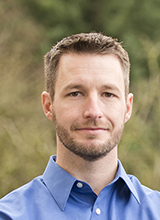
I focus on neurodegeneration and traumatic brain injury research at the VA Puget Sound and at the UW Alzheimer’s Disease Research Center.
My work has probed the ‘glymphatic’ system, a brain-wide network of perivascular spaces that facilitates the clearance of waste products, including amyloid beta and tau, from the brain interstitium during sleep. Previously at OHSU, my group demonstrated that the glymphatic system fails in the aging brain and in the young brain after traumatic brain injury. The studies suggest that impairment of glymphatic function may be one factor that renders the aging brain vulnerable to protein aggregation and neurodegeneration and may link brain trauma early in life with the development of dementia in the decades that follow. My ongoing work seeks to define the molecular and cellular underpinnings of impaired glymphatic function in the aging and post-traumatic brain, and to use novel MRI-based imaging approaches to extend these findings into clinical Alzheimer’s disease and post-traumatic populations.
As the leader of the ADRC’s new Research Education Component, I oversee the effort to train and develop a community of clinical, basic and translational Alzheimer’s disease researchers with the necessary clinical, scientific and technical competence to effectively collaborate to define the mechanistic and biological underpinnings of Alzheimer’s and related dementia, and to translate this understanding to improve the lives of those living with memory loss and dementia.