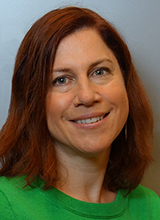
Christina N. Clayton

Christina has been in the behavioral health field since 1993, primarily serving adults who live with severe mental health issues, substance use, experience chronic homelessness, suffer from poor physical health, trauma and any number of co-occurring issues.

Prior to joining UW in 2018, she spent 25 years working in and managing numerous clinical programs including: HIV/AIDS housing and health care, school-based mental health, substance use outreach and treatment, homeless mental health outreach, intensive case management, assertive community treatment, crisis respite, integrated care, housing first and other evidence-based practices.  She has provided licensure supervision, training and consultation, and has worked on multi-disciplinary teams in a number of settings.  She highly values her years of clinical direct service and program management experience.

She has also been involved with the UW School of Social Work since getting her MSW, working with dozens of graduate and undergraduate students, teaching courses and workshops, presenting on panels.  She has served as a Practicum Instructor, the Interim Assistant Dean and Director of Field Education, and is currently is a Clinical Associate Professor teaching in the MSW program.

Starting in fall 2024, Christina became one of the Co-Directors of the Pacific West HUB for Mental Health Implementation Support (CMHIS), led by Stanford’s Center for Dissemination and Implementation (CDI). The CMHIS project builds the capacity to select and implement evidence-supported practices and programs, sharing pragmatic, accessible guidance.

Since 2023, she has served as Co-Chair for the PBSCI Department’s Equity, Diversity and Inclusion Staff Committee, also having been a member since it’s inception in 2021.

From 2018-2024, Christina was the Co-Director of the Northwest MHTTC, a SAMHSA-funded regional training & TA center.  Christina co-directed the team and helped plan and oversee training for the mental health workforce in HHS Region 10 (AK/ID/OR/WA).  Activities include live webinars, research/practice briefs, online self-paced courses, learning communities and intensive cohort-based training. Most of this training was conducted virtually in collaboration with numerous faculty, instructional designers and presenters.

She is grateful to all the staff and faculty who choose to work in this field, as it is their collective energy, passion, dedication and commitment to social justice that supports the people we serve and brings real change to our communities.  Most importantly, she is honored to work with people who every day, live their experience and share their journey through advocacy as they strive for a world where behavioral health is adequately supported and everyone can thrive equitably.
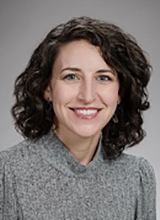
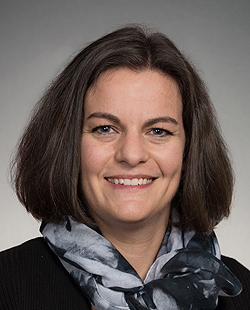
Dana Dieringer

I am an adult psychiatrist and palliative medicine physician within the Department of Psychiatry and Behavioral Sciences. I am dual board certified within the American Board of Psychiatry and Neurology and American Board of Internal Medicine. I practice at Harborview Medical Center (HMC) on both palliative care consult and inpatient psychiatry teams. I chair HMC Psychiatry Quality Improvement (QI) committee. My main areas of interest and expertise are in: the care and treatment of patients facing serious mental illness (SMI), particularly those with co-occurring chronic medical illness; complex communication skills with patients and families; the use of person-centered language in medicine; interprofessional teamwork. I provide clinical teaching and QI mentorship to medical trainees such as residents and medical students. I am the former co-director of the interprofessional health-sciences elective “The Healer’s Art.” I am a member of the Northwest Narrative Medicine Collaborative.

Tawnya Christiansen

Personal Statement

I specialize in emergency psychiatric care, including triage, rapid assessment and stabilization of individuals in psychiatric or substance-induced crises, and identification/ appropriate referrals for physical conditions that may mimic psychiatric illness. I strongly believe in the approach, “The right care, in the right place, at the right time.”

Benjamin Buck

Personal Statement

My research is focused on (1) developing innovative mHealth assessments and interventions for schizophrenia-spectrum disorders and cross-diagnostic persecutory ideation, as well as (2) “engagement mHealth,” or the development of mobile health interventions that increase the likelihood that underserved populations present to and receive evidence-based treatment, with a particular focus on young adults at risk for psychosis and their families. My research is supported by a NARSAD Young Investigator Award from the Brain and Behavior Research Foundation and multiple grants from NIMH including a K23 Mentored Patient-Oriented Research Career Development Award.

Prior to my faculty position at UW, I was an Advanced Fellow in VA Health Services Research and Development and the Department of Health Services at UW. I completed my clinical psychology internship at the VA Puget Sound Health Care System, where I was awarded the APA Division 18 Outstanding VA Trainee Award. Prior to internship, I completed my undergraduate and doctoral training at the University of North Carolina at Chapel Hill. Throughout my training, I have been dedicated to services for individual with serious mental illness, with experience in an inpatient state hospital, VA psychosocial rehabilitation, intensive outpatient and dual-diagnosis clinics, and in coordinated specialty care for young people with early psychosis.

In addition to my program of research and clinical work, I am committed to clinical supervision and training. I currently lead the development of one of the first clinical training sequences designed for frontline clinicians integrating mHealth into community mental health. I was the first-ever graduate student to win UNC’s David Galinsky Award, an honor recognizing excellence in clinical supervision that had previously only ever been won by faculty. I am currently active in providing supervision in CBT to third-year psychiatry residents at UW.

Julia Ruark

Personal Statement

I am a board certified psychiatrist and work at Fred Hutchinson Cancer Center. I am a Clinical Assistant Professor of Psychiatry and Behavioral Sciences at the University of Washington.  I obtained a fellowship in consultation-liaison psychiatry, a specialty that focuses on providing psychiatric care for people with complex medical conditions.  My primary clinical focus is people with cancer. I love my work.  Being ill is a vulnerable time and my goal is to ease suffering and provide a sense of connection and understanding for all I work with.  I believe in working collaboratively with patients and families. We work together to identify what the goals of treatment are. I have expertise in diagnosis, psychopharmacology and psychotherapy and adapt my recommendations to best serve the goals of the person before me. I am also passionate about education. I am the site director at Fred Hutch Cancer Center for our Psycho-oncology Fellowship Program. I supervise Cl fellows, addiction fellows, psychiatry residents and provide education to social workers and psychology trainees.

Amelia Dubovsky

Personal Statement

I am a Clinical Assistant Professor in the Department of Psychiatry and Behavioral Sciences at the University of Washington. I received my MD from New York University and completed my adult residency at the Harvard Massachusetts General Hospital/McLean Hospital program where I was chief resident. I then went on to complete a fellowship in psychosomatic medicine at the University of Washington. I am currently on faculty at Harborview Medical Center on the inpatient psychiatry consult service. I have a longstanding interest in the intersection between medicine and psychiatry, and am the author of numerous published articles on topics ranging from the neuropsychiatric effects of steroids to managing borderline personality disorder in the primary care setting. I have a particular interest in the use of electroconvulsive therapy, including in the treatment of catatonia. I am currently involved in research projects in conjunction with the division of nephrology and the neurosurgery department. In addition to my clinical and research interests, I am also an associate program director for the UW Adult Psychiatry Residency at Harborview Medical Center.

Katherine Anne (Kate) Comtois

Personal Statement

My career goal is to give suicidal clients and their clinicians the best chance to succeed. I have been working in the area of health services, treatment development, and clinical trials research to prevent suicide for over 30 years. My graduate training was in community/clinical psychology and focused on achieving clinical ends through prevention and other systemic interventions in socio-culturally diverse populations. I have brought these perspectives into health services research.  I have developed or adapted interventions to improve care and clinician willingness to work with suicidal patients including Caring Contacts, Dialectical Behavior Therapy (DBT), Collaborative Assessment and Management of Suicidality (CAMS), and Preventing Addiction Related Suicide (PARS). I have developed an adaptation of DBT Next Steps, a program to assist psychiatrically disabled individuals find and maintain living wage employment. My research has been funded by NIMH, NIDA, the Department of Defense, American Foundation for Suicide Prevention, and the State of Washington.

I am the director of the Center for Suicide Prevention and Recovery (CSPAR) whose mission is to promote the recovery of suicidal individuals and the effectiveness and well-being the clinicians and families who care for them by conducting rigorous and ecologically valid research, developing innovative interventions, improving policies, systems and environments of care, and providing expert training and consultation. CSPAR faculty and staff seek a deep understanding of the cultures and settings in which we work that leads to meaningful and effective interventions ready for implementation.

I also direct the Suicide Care Research Center, an NIMH P50 funded research center focused on using Human Centered Design and MOST optimization methodology to improve the care of adolescents and young adults (age 13-30 years) in outpatient medical settings. We are conducting one fully powered trial, three R34s, and 4 pilot studies within UW Medicine and Seattle Children’s hospital to develop innovative interventions to support primary care, Collaborative Care, and specialty medical clinics care for patients experiencing suicidal thoughts and behavior. The center supports effort of over 20 faculty and 16 staff as well as 11 emerging and advanced collaborating scholars and funds 2 annual pilot grants (each $100,000 over two years).

In addition to clinical research, I founded the Society for Implementation Research Collaboration (SIRC) focused on disseminating and implementing innovative, evidence-based interventions in the systems that need them. Beyond my research, I directed the Harborview Dialectical Behavior Therapy program at Harborview Medical Center 1996-2019, co-lead the UWAnnual Comprehensive DBT Training Program and Suicide Care in Healthcare Systems: We Can Do Better Serving our Patients and Caring for our Clinicians, both of which meet the Washington State requirement for suicide prevention training.  I have a long history of training and mentoring junior faculty, post-doctoral scholars, psychiatry residents, pre-doctoral psychology interns, undergraduate students, and post-baccalaureate trainees. I provide psychotherapy and consultation at the UWMC Outpatient Psychiatry Clinic.

Dror Ben-Zeev

Personal Statement

I am a Professor in the Department of Psychiatry and Behavioral Sciences at the University of Washington and licensed Clinical Psychologist who specializes in development and evaluation of technology-based approaches in the study, assessment, treatment, and prevention of mental illness. This work includes development of illness self-management apps for people with schizophrenia, texting interventions, behavioral sensing/digital phenotyping, computational psychiatry/predictive modelling, applications of Natural Language Processing (NLP), and development of culturally-relevant digital mental health resources for communities in low-and-middle-income countries. My research has been supported by grants and awards from the National Institutes of Health (NIH), National Science Foundation (NSF), Center for Medicare and Medicaid Innovation (CMMI) Patient Centered Outcomes Research Institute (PCORI), SYNERGY Clinical and Translational Science Institute, Myrtlewood Foundation, and John Sloan Dickey Center for International Understanding.  I publish extensively in scientific journals and am a regular speaker at national and international scientific meetings including invited presentations at the White House and National Institute of Mental Health Director’s Innovation Speaker series. I have written editorials and commentaries on the use of technology-based interventions for Psychiatric Services, the BMJ, and the New York Times, and my research has been covered by Public Radio, Nature, Wired Magazine, Slate, and The Economist. I served on the Editorial Board of Schizophrenia Bulletin and am the Inaugural Editor of the “Technology in Mental Health” Column for Psychiatric Services (APA journal).