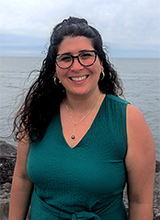
I am a health services researcher and implementation scientist focused on improving care for substance use disorders. My work seeks to increase access to this care through telehealth and implementation outside of traditional substance use treatment settings, as well as to improve care quality and patient-centeredness. I am an investigator at VA Puget Sound Health Care System and a VA Career Development Awardee.
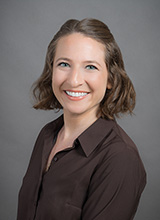
Dr. Samantha J. Reznik (she/her) is an Assistant Professor and licensed clinical psychologist in the Department of Psychiatry and Behavioral Sciences at the University of Washington School of Medicine. She is the Director for Seattle Children’s Psychosis Program, providing holistic mental health care to support individuals with psychosis ages 13-21 to reach goals aligned with personal values and passions. With a commitment to research, training, and clinical leadership in serious mental illness (SMI), she strives to create meaningful change in mental health services, ensuring individuals receive the recovery-oriented care they deserve.
As an investigator at the Supporting Psychosis Innovation through Research, Implementation, & Training (SPIRIT) Center, she focuses on dissemination and implementation research to increase access to and quality of care for individuals with SMI and other underserved populations. She currently supports the Central Assessment for Psychosis (CAPS) project to increase access to psychosis assessment and reduce barriers to early psychosis treatment engagement across Washington. She is also committed to advancing SMI and health service psychology training and is actively involved in related national service, including serving as the Chair-Elect of the APA SMI/SED Subsection and founding member and Co-Chair of SMI Future of Academia, Training, and Education (FATE) committee to advance doctoral psychology training in SMI.
Dr. Reznik earned her PhD in Clinical Psychology at the University of Arizona with a focus on psychophysiology and intervention science. Her clinical training included a Health Resources and Services Administration (HRSA)-funded Underserved Track clinical internship at University of Kansas Medical Center as well as an advanced clinical fellowship in rehabilitation and recovery for SMI at VA San Diego Healthcare System/University of California San Diego. She was previously a Research Assistant Professor at the University of Texas at Austin and investigator with the Advancing Early Psychosis Intervention Network in Texas (EPINET-TX) project.
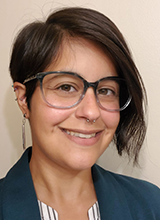
I am an epidemiologist and Assistant Professor in the Department of Psychiatry and Behavioral Sciences at the University of Washington. My research primarily focuses on improving mental health outcomes throughout the life course to support family wellbeing and thriving in low- and middle-income settings, with emphasis on: 1. men’s/father’s mental health and parenting skills, 2. digital mental health interventions to support families affected by early psychosis, 3. integrating perinatal mental health services into maternal-child health care. Current projects are based in East and West Africa. My work utilizes methods ranging from user-centered design of digital mental health interventions to advanced epidemiologic and statistical methods.
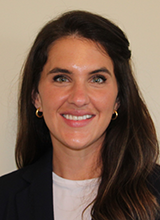
I am a practicing psychiatrist and health services researcher whose research has focused on system-level strategies to deliver high-quality care in settings with few clinical resources or available specialists. I am board certified in general adult psychiatry and geriatric psychiatry and my clinical work has included provision of psychiatric outpatient, inpatient, and emergency services care. I am interested in leveraging existing community infrastructure and adapting evidence based clinical practices to suit community contexts to reduce treatment gaps.
I am a trained Behavioral Scientist with a PhD in Health & Human Performance. The main goal of my work is to reduce substance-related harms and improve quality of life for people experiencing problems related to their substance use. I work closely with community members who use drugs to inform my line of research and address key needs identified. My primary appointment is at the Harm Reduction Research and Treatment (HaRRT) Center within the UW School of Medicine and hold an Affiliate Faculty appointment within the School of Public Health. My aim is to adapt, refine, and disseminate harm reduction programs through digital health interventions to empower individuals and ameliorate substance-related harms.
Dr. Prater holds a doctorate in public health from the Ohio State University, with a focus in health services research, pragmatic intervention development and policy evaluation. Her work focuses on understanding the circumstances around firearm suicide among vulnerable populations and developing health systems interventions for suicide prevention through firearm safety. Using a public health lens, she works on tailoring interventions to meet the unique needs of vulnerable populations (e.g. dementia, terminal illness) at increased risk for suicidal thoughts and behaviors. She is currently funded by the National Institutes on Aging and the American Foundation for Suicide Prevention to produce clinical decision-making tools to help persons with early dementia, their care partners, and primary clinicians, to make safer plans for firearm storage.

Dr. Charles Engel is Professor in the Department of Psychiatry and Behavioral Sciences at the University of Washington School of Medicine, Core VA HSR Investigator in the Seattle Center for Innovation, Co-Director of the Center’s Advanced Fellowship on Health Systems Research, and Adjunct Physician Policy Researcher at the RAND Corporation. Engel’s work focuses on trauma-informed health systems and strategies for improving the quality of primary care for chronic mental and physical health conditions. His research has covered traumatic injury and post-trauma syndromes ranging from blast injury, mild traumatic brain injury and Gulf War syndrome to PTSD and depression. Engel is experienced at mixed qualitative and quantitative methods and has led large pragmatic randomized trials, program evaluations, and implementation science studies. He has authored or coauthored nearly 200 scholarly papers, including in the New England Journal of Medicine, JAMA, and the American Journal of Psychiatry. Funding for his work has come from the National Institutes of Health, Centers for Disease Control, Department of Veterans Affairs, Department of Defense and other organizations. Before joining UW Psychiatry and the AIMS Center in 2021, Dr. Engel was Senior Physician Policy Researcher at the RAND Corporation from 2013 to 2020 and Associate Chair (Research) at Uniformed Services University’s Department of Psychiatry from 2001-2013. Engel has served on the board of directors of the International Society for Traumatic Stress Studies, has testified twice before Congress, received a number of awards, and delivered invited lectures in over 10 countries. He received both his MD and MPH from the University of Washington.