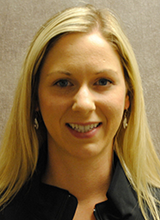
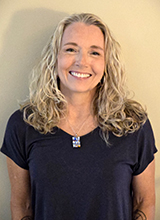
Jay Davidson

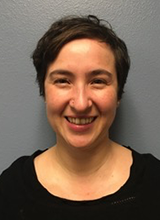
As a child and adolescent psychiatrist at the Child Study and Treatment Center, I am deeply inspired by the resilience of the youth we serve and by the collaborative spirit of our multidisciplinary teams. My work is grounded in curiosity, compassion, and respect for the complex systems that shape young people’s lives. My approach integrates evidence-based psychopharmacology with developmental and trauma-informed care, while always centering around the individual’s unique story and strengths. I value the relational and systemic dimensions of psychiatry: the interplay between family, community, and policy that influences recovery and growth. The multidisciplinary, relational model at CSTC reflects these values and continues to shape how I think about psychiatry: not only as a science, but as a deeply human endeavor.

Christina Warner

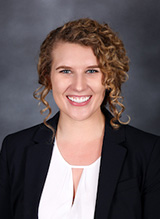
Christina Warner, MD (she/her) is the attending psychiatrist for the Early Psychosis Clinic and Partial Hospitalization Program at Seattle Children’s Hospital. She has clinical expertise in mood disorders, psychosis spectrum disorders, First Episode Psychosis, chronic suicidality, mood dysregulation, neurodiversity, and Dialectical Behavior Therapy.

Dr. Warner is a Washington native and graduate of the Seattle Public School system with a vested interest in expanding access to high quality mental health care in her community.

Adam Kuczynski

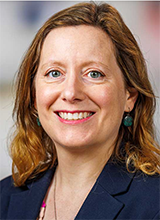
I am a clinical psychologist with specialized training in serious mental illness and inpatient psychiatric care. I earned my PhD from the University of Washington in 2023 after completing my pre-doctoral internship at the same institution, training in serious mental illness and inpatient care at Harborview Medical Center and psycho-oncology at Fred Hutch Cancer Center. My research focuses on developing novel technologies to support patients with serious mental illness, improve the provision of psychological interventions in the inpatient setting, and more efficiently and effectively train future generations of mental health clinicians. I also work as a psychologist on UW’s long-term civil commitment inpatient psychiatry program.

Susanne Weber

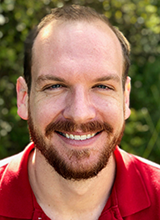
I am a consult psychiatrist and clinical instructor at the Fred Hutch Cancer Center. I work with people undergoing active cancer care. I previously practiced in the VA outpatient mental health clinic with veterans with mood disorders, anxiety, post-traumatic stress disorder, and chronic and serious mental illness. I recently worked as a consult psychiatrist with the Swedish Primary Care Clinics, address a wide variety of concerns in a collaborative behavioral health care setting. I enjoy being a part of medical education, both learning and teaching. However, patient care always comes first.

Samuel Jackson

I am an Assistant Professor in the Department of Psychiatry and Behavioral Sciences at the University of Washington. I received my MD from the University of Arkansas for Medical Sciences, and completed my General Psychiatry Residency at the same institution. I completed a fellowship in Consultation-Liaison Psychiatry (formerly Psychosomatic Medicine) at the University of Washington. I have academic interests in the intersection of medicine and psychiatry, LGBTQ mental health and wellbeing, and medical education. I currently see patients at Harborview Medical Center’s Madison HIV Clinic.

Michelle Wiese

I am an Acting Assistant Professor in the Department of Psychiatry and Behavioral Sciences at the University of Washington. I received my MD, MPH from the University of Nebraska Medical Center and completed my adult residency at the University of Washington where I was chief resident. I then went on to complete a fellowship in Consultation-Liaison Psychiatry at the University of Washington. I am currently on faculty at Harborview Medical Center on the inpatient psychiatry unit and inpatient psychiatry consult service. I have a longstanding interest in the intersection between medicine and psychiatry and in working with people who suffer from serious mental illness and treatment-resistant conditions. I have clinical interests in ECT, psychopharmacology, co-morbid medical conditions, and adjunctive psychotherapies. I value caring for the whole person through thorough and accurate diagnosis, treating co-morbid medical conditions, and minimizing medications when possible. I have teaching interests in reducing stigma surrounding serious mental illness and educating residents and medical students about psychiatric care.

Christina N. Clayton

Christina has been in the behavioral health field since 1993, primarily serving adults who live with severe mental health issues, substance use, experience chronic homelessness, suffer from poor physical health, trauma and any number of co-occurring issues.

Prior to joining UW, she spent 25 years working in and managing numerous clinical programs including: HIV/AIDS housing and health care, school-based mental health, substance use outreach and treatment, homeless mental health outreach, intensive case management, assertive community treatment, crisis respite, integrated care, housing first and other evidence-based practices.  She has provided licensure supervision, training and consultation, and has worked on multi-disciplinary teams in a number of settings.  She highly values her years of clinical direct service and program management experience.

She has also been involved with the UW School of Social Work since getting her MSW, working with dozens of graduate and undergraduate students, teaching courses and workshops, presenting on panels.  She served as an Interim Assistant Dean and Director of Field Education from and currently is a Clinical Associate Professor.

For the Northwest MHTTC, a SAMHSA-funded regional training & TA center (2018-24), Christina co-directed the team and helped plan and oversee training for the mental health workforce in HHS Region 10 (AK/ID/OR/WA).  Activities include live webinars, research/practice briefs, online self-paced courses, learning communities and intensive cohort-based training. Most of this training was conducted virtually in collaboration with numerous faculty, instructional designers and presenters.

Currently, she humbly serves as Co-Chair for the PBSCI Department’s Equity, Diversity and Inclusion Staff Committee.

Starting in fall 2024, Christina now co-directs the Pacific West HUB of the new national Center for Mental Health Implementation Support (CMHIS), led by Stanford’s Center for Dissemination and Implementation (CDI). The MHDIS project will build the capacity to select and implement evidence-supported practices and programs, sharing pragmatic, accessible guidance and the West Coast MHTAC serves HHS regions 9 and 10.

She is grateful to all the staff and faculty who choose to work in this field, as it is their collective energy, passion, dedication and commitment to social justice that supports the people we serve and brings real change to our communities.  Most importantly, she is honored to work with people who every day, live their experience and share their journey through advocacy as they strive for a world where behavioral health is adequately supported and everyone can thrive equitably.
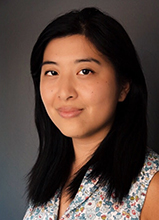
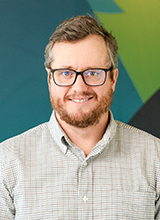
Anna Sunshine

Anna Sunshine completed her medical school, graduate school and psychiatry training at the University of Washington. Her graduate training was completed in the Department of Genome Sciences where she used high-throughput sequencing approaches to study the biological effects of complex genetic changes in the model organism Saccharomyces cerevisiae.

Connecting her background in genomics with psychiatry, Dr. Sunshine’s research now focuses on identifying genetic risk factors for schizophrenia and characterizing the biological effects of these risk alleles using induced pluripotent stem cell (iPSC) systems. Dr. Sunshine engages individuals living with schizophrenia and their families in research to further our current understanding of schizophrenia biology and help lay groundwork for future treatment development.