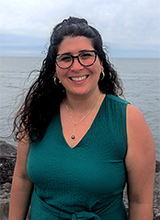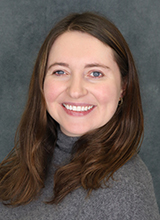
Caitlin Courshon, PhD (she/her), is an attending psychologist for the Behavior and Attention Management (BAM) Program within Outpatient Psychiatry at Seattle Children’s Hospital and an Acting Assistant Professor in the Department of Psychiatry and Behavioral Sciences at the University of Washington. Dr. Courshon has clinical expertise in the treatment, consultation, and assessment of children with disruptive behaviors and their families, including, but not limited to, neurodevelopmental disorders such as attention-deficit/hyperactivity disorder (ADHD), autism spectrum disorder, and disruptive behavior disorders. Her clinical work integrates evidence-based treatments, including parent behavior management training (PBMT), cognitive-behavioral therapy (CBT), and dialectical behavior therapy (DBT).
Dr. Courshon’s current academic interests focus on researching clinical outcomes of PBMT programs and contributing to ongoing program development to expand services for caregivers navigating challenges related to home-school communication and disruptive behaviors in school settings. She is deeply committed to helping children improve their behaviors, empowering caregivers and educators to enhance their self-efficacy in supporting children with disruptive behaviors, and fostering healthy, safe, and inclusive environments across home, school, and community settings.
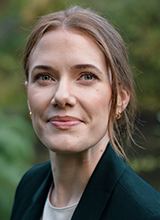
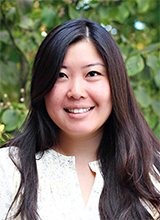
Sheena Friesen, PhD (she/her), is the attending psychologist for the Child Program on the inpatient Psychiatry and Behavioral Medicine Unit at Seattle Children’s Hospital and Assistant Professor in the Department of Psychiatry and Behavioral Sciences at the University of Washington. She has clinical expertise in disruptive behavior disorders, comprehensive assessment, Dialectical Behavior Therapy, Exposure Therapies, Parent Training, and Trauma-Focused Cognitive Behavioral Therapy.
Dr. Friesen’s research interests broadly focus on advancing knowledge of least restrictive interventions in acute and complex care contexts, trauma-informed care, and interventions designed to address children’s disruptive behavior problems. She has collaborated on and co-led efforts to design and implement a multi-tiered, Modified Positive Behavioral Interventions and Supports (M-PBIS) model of care aimed at increasing positive behavior interventions, reducing restraint and PRN use, and ameliorating racial gaps in care delivery.
Dr. Friesen received her Ph.D. in School Psychology from the University of Washington in Seattle, WA. She completed her pre-doctoral internship training at Johns Hopkins School of Medicine and Kennedy Krieger Institute and went on to complete her postdoctoral fellowship in acute care and clinical psychology at Seattle Children’s Hospital.
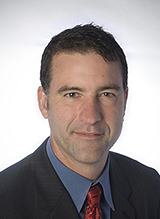
Jill Locke, Ph.D., is an Associate Professor in the UW Department of Psychiatry and Behavioral Sciences, a licensed child psychologist and the former co-Director of the SMART Center from 2020-23. To date, her research has focused on the: 1) presentation of social impairment for autistic youth; 2) identification of best practices for autistic youth; and 3) understanding of successful implementation and sustainment of evidence-based practices (EBPs) for autistic youth in public school settings. Her current research focuses on understanding EBP use to support autistic youth in inclusive settings and developing and testing implementation strategies to support the adoption, implementation, and sustainment of EBPs in public schools.
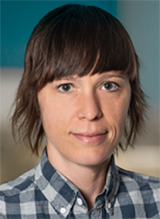
I am a child and adolescent psychiatrist at Seattle Children’s Hospital and faculty member at the University of Washington Medicine. My SCH practice locations include the Gender Clinic (Adolescent Medicine), Outpatient Psychiatry Clinic, Autism Center, and the inpatient unit- Psychiatry and Behavioral Medicine Unit (PBMU). I believe in delivering compassionate, evidence-based care in supporting patients and their families. My approach is both comprehensive and patient-centered, as it is important to consider the needs of the individual while also appreciating societal and cultural context. I specialize in working with diverse patient populations with various marginalized identities, such as those who identify as LGBTQ, gender diverse, and/or neurodiverse. I also work closely with the Adolescent Medicine Gender Clinic in supporting any mental health needs of transgender/gender diverse youth and their families. I also collaborate with colleagues in specialty medical clinics to coordinate care of medically complex patients. Additionally, I serve as a consultant with various school programs to support mental health initiatives and advocacy efforts.
Academically, I am involved with several initiatives both locally and nationally, particularly those that work to promote diversity and equity. I serve on committees supporting the SCH/UW CAP Fellowship Program, educating trainees and students through direct clinical supervision as well as with lectures and discussions. On a national level, I serve on the Sexual Orientation and Gender Identity Issues Committee (SOGIIC) for the American Academy of Child and Adolescent Psychiatry (AACAP). My clinical research focuses on finding strategies to better support the mental health and well-being of patients and families who are LGBTQ+. Additionally, I work on studies that explore the intersection between gender diversity and neuro diversity/autism spectrum.
Personal Statement
I am a board certified child and adolescent psychiatrist in the Pediatric Clinic at Harborview, Seattle Children’s Hospital, and Odessa Brown Children’s Clinic in the Division of Psychiatry and Behavioral Medicine.
In my clinical work, I strive to create active partnerships with my patients and their families to achieve the best possible outcomes regardless of their needs and circumstances. I am lucky to have great behavioral health and primary care partners across the different clinics I work in, who are invaluable collaborators in caring for our patients and families.
I am involved in the child and adolescent training program and supervises trainees at several outpatient clinics. My clinical and research interests include integrating mental healthcare into primary care settings, ADHD, disruptive behaviors, aggression, trauma-related disorders, and improving clinical supervision of child and adolescent psychiatry trainees.
Personal Statement
My research focuses on increasing the accessibility, efficiency, and effectiveness of community- and school-based interventions for children, adolescents, and families. I am particularly interested in (1) the identification and implementation of low-cost, high-yield practices – such as the use of measurement-based care – to reduce the gap between typical and optimal practice in schools; (2) development of individual- and organization-level implementation strategies to promote adoption and sustainment of evidence-based psychosocial interventions within a multi-tier systems of support (MTSS) framework; and (3) human-centered design (and redesign) of psychosocial and digital technologies to improve their implementability, accessibility, and effectiveness. I am the founder and Director of the School Mental Health Assessment, Research, and Training (SMART) Center, dually housed in UW’s School of Medicine and College of Education.
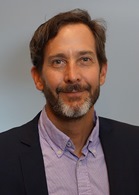
Personal Statement
I am a clinical psychologist and mental health services researcher. My overarching research aim is to produce and promote use of research, evaluation, and continuous quality improvement that aids high-quality implementation of effective models of care in real world service settings, such as in schools, public mental health systems, and family-and youth-run organizations. My research can be summarized as falling into three categories: (1) Care coordination models for youth with the most complex behavioral health needs; (2) school mental health; and (3) public sector implementation of research-based practices. In each area, I co-direct national training and TA centers. For example the National Wraparound Implementation Center (www.nwic.org), provides support to dozens of states and localities internationally on Wraparound. The National Wraparound Initiative (www.pdx.edu) serves to mobilize our research and policy activities. Our Wraparound fidelity tools and data systems can be found at www.wrapinfo.org. With respect to school mental health, our interdisciplinary UW School Mental Health Assessment, Research, and Training (SMART) Center — www.smartcenter.uw.edu — currently has over a dozen federal grants as well as state, local, and foundation funding focused on how best to ensure that evidence for effective mental health intervention and prevention is translated into effective programming in schools. The SMART Center also hosts the school mental health supplement of the UW Department of Psychiatry’s SAMHSA-funded Northwest Mental Health Training and Technical Assistance Center (MHTTC). Check out our extraordinary array of resources at https://mhttcnetwork.org/centers/northwest-mhttc/northwest-mhttc-school-mental-health.