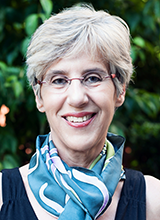
Beatriz Carlini

I am a Research Associate Professor at the Psychiatry Department,  Addiction, Drug & Alcohol Institute where I direct the Cannabis Education and Research Program, a team (CERP) that systematically interacts with state and county agencies and community coalitions, with the purpose of supporting the adoption of evidence-base policies and interventions. I have published extensively in peer-reviewed journals, secured research funds both as Principal Investigator and Co-Investigator, and have collaborated with colleagues from various U.S. universities and abroad. Besides cannabis, I have interest and research experience in tobacco control.

A little bit about my trajectory: I obtained my PhD in Social Psychology in my home country, Brazil. As a faculty in the University of Sao Paulo Preventive Medicine Department, my professional life was dedicated to research and service disparate populations, such as street kids and substance-using youth. As an academic of a developing nation, I had the honor to collaborate internationally and serve in various World Health Organization working groups and committees.

After moving to the United States in 2000, I obtained a Master of Public Health at UW, with an emphasis in Social and Behavioral Sciences. This second degree provided me with the skills and the contextual perspective to successfully transition my professional focus from health care disparities in developing nations to the inequities experienced by historically marginalized communities living in the richest and most powerful country on Earth, the U.S. As a dual citizen, I consider inequity, racism, discrimination and stigma as important determinants of addiction and substance use in an increased globalized world.

I prefer the pronouns she, her, hers.
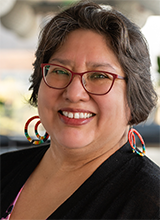
Ruth Varkovitzky

Thank you for your interest in learning more about me! My name is Dr. Ruth Varkovitzky (she/her) and I am a licensed clinical psychologist. I use a culturally sensitive evidence based approach in my clinical work; combining the best science while tailoring therapy to each individual. In the spirit of providing the highest quality of care possible, I am board certified in Behavioral and Cognitive Psychology by the American Board of Professional Psychology.

I specialize in providing therapy for trauma and sleep disorders, such as PTSD and insomnia. In addition, I offer a variety of treatments to address problems with depression, anxiety, and OCD. Supporting folks with these challenges is my passion; it’s an honor to work alongside my clients and see them heal and grow.

Public service has always been part of my journey, including collaboration with shelters for survivors of domestic violence, the Department of Veterans Affairs, the University of Washington Department of Psychiatry and Behavioral Sciences, and the Washington State Board of Psychologist Examiners. In addition to my passion for clinical work, I’ve enjoyed contributing to psychological science through academic and media publications. I established my private practice Renewal Psychology to offer my services to clients in Washington as well as the many state members of the Psychology Interjurisdictional Compact (PSYPACT).

Myra Parker

Personal Statement

​Myra Parker, JD, PhD is an Associate Professor of Psychiatry and Behavioral  Sciences, and Director of Seven Directions: A Center for Indigenous Public Health, based within the Center for the Study of Health and Risk Behaviors, University of Washington. She received her doctorate in Health Services at UW School of Public Health, and has been a member of the faculty since 2014.

Dr. Parker’s research and clinical interests include: (1) cultural adaptation of alcohol and drug interventions among American Indians and Alaska Natives (with a particular focus on  tribal college drinking harm reduction), (2) development and testing of parenting interventions to support early childhood development in American Indian and Alaska Native communities, (3) co-morbidity of substance use with depression, suicide, trauma, and PTSD, (4) research capacity development, including ethical aspects of research, for tribal and urban Indian communities; and, (5) dissemination and translation of evidence-based prevention and intervention approaches at the individual, institutional, and community level, including policy development. She has worked with tribal and urban Indian communities across the United States on these topics.