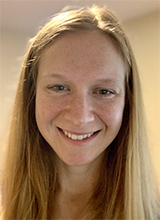
My research broadly aims to better understand the etiology of depression and risk behaviors such as suicide and substance use across development, and translate findings to inform prevention and intervention strategies for youth and families. My work focuses on partnering with communities and primary care clinics to improve access to and use of effective mental health services.
My current projects include studies focused on adapting and evaluating suicide prevention intervention and implementation strategies for use with adolescents and their families in primary care and outpatient medical settings, including developing and adapting brief, just-in-time, and digital interventions to expand access to services.
In addition to research, I am also a clinical psychologist in the Mood and Anxiety Disorders Program and the Crisis Care Clinic at Seattle Children’s Hospital.
Personal Statement
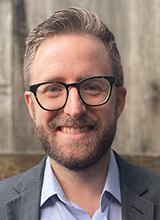
My research is focused on (1) developing innovative mHealth assessments and interventions for schizophrenia-spectrum disorders and cross-diagnostic persecutory ideation, as well as (2) “engagement mHealth,” or the development of mobile health interventions that increase the likelihood that underserved populations present to and receive evidence-based treatment, with a particular focus on young adults at risk for psychosis and their families. My research is supported by a NARSAD Young Investigator Award from the Brain and Behavior Research Foundation and multiple grants from NIMH including a K23 Mentored Patient-Oriented Research Career Development Award.
Prior to my faculty position at UW, I was an Advanced Fellow in VA Health Services Research and Development and the Department of Health Services at UW. I completed my clinical psychology internship at the VA Puget Sound Health Care System, where I was awarded the APA Division 18 Outstanding VA Trainee Award. Prior to internship, I completed my undergraduate and doctoral training at the University of North Carolina at Chapel Hill. Throughout my training, I have been dedicated to services for individual with serious mental illness, with experience in an inpatient state hospital, VA psychosocial rehabilitation, intensive outpatient and dual-diagnosis clinics, and in coordinated specialty care for young people with early psychosis.
In addition to my program of research and clinical work, I am committed to clinical supervision and training. I currently lead the development of one of the first clinical training sequences designed for frontline clinicians integrating mHealth into community mental health. I was the first-ever graduate student to win UNC’s David Galinsky Award, an honor recognizing excellence in clinical supervision that had previously only ever been won by faculty. I am currently active in providing supervision in CBT to third-year psychiatry residents at UW.
Personal Statement
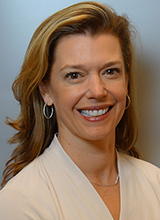
As a clinical neuropsychologist who has specialized in aging, I have over 20 years of experience in the field of geriatrics. My clinical work and research has been focused on the full continuum of cognitive aging – from neurodegenerative disease of varied etiologies to healthy brain aging into the 90s and beyond. I have been based at the VA Puget Health Care System since 2008. In this time, I have developed additional and complementary interests in the older adult Veteran who has PTSD, especially how this disorder can interfere with cognition and might contribute to decline and also in the area of reducing disparities in neuropsychological care for individuals who are transgender and gender diverse. Currently, I am the Associate Director for Education and Evaluation for the VISN 20 Geriatric Research Education and Clinical Center (GRECC) at VA Puget Sound. I am a Professor in the Department of Psychiatry. Provision of training for future geriatric care providers (MD, PhD, RN, SW, etc) is an important part of my personal mission. I also enjoy connecting with the older adult community through various events and at local senior centers.
Personal Statement
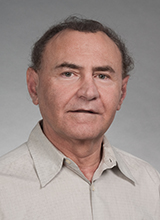
Over the last 25 years, my work has focused on relationships between stress and health in several risk groups (spouse caregivers of persons with Alzheimer’s disease, medical students, psychiatric/medical outpatients/inpatients, air traffic controllers, and camp counselors). We have developed and/or revised measures of medical student stress, caregiver burden, patient anger/dyscontrol, process coping, appraisal, neuropsychological function and physician awareness of patient problems. These measures have been used by university researchers, insurance companies, pharmaceutical companies in clinical trials, prisons, nursing homes/long term care, rehabilitation facilities, and public health organizations. These psychosocial and behavioral measures have been shown to predict and be predicted by physiological and cognitive measures. We have also focused on moderators of such relationships, such as gender, personality, and co-morbidities. We have used primarily multicohort long-term studies that allow for interactions between exposures to stressors, hard-wired vulnerabilities, and more temporal resources. We attempted to identify mechanisms that can be potentially altered to have long-term public health significance in persons under chronic stress. I have also attempted to isolate groups that are at high risk for negative outcomes. In a perfect world, interventions should be used to help all persons who have deleterious responses to stress, but society cannot afford this. For this reason, the identification of high risk groups is imperative for maximizing the effect of interventions.
My research program’s long range goal is to better understand the mechanisms by which chronic stress translates into physical, mental, or cognitive health problems. We are examining caregivers of spouses with AD and demographically-similar spouse non-caregivers across time and assessing the degree to which elevated depression, stress hormones, inflammation, and insulin resistance in caregivers predict cognitive decline in caregivers relative to non-caregivers. We are also attempting to replicate our earlier work that showed that chronic stress and chronic disease moderate each other’s physiological risks. For example, physiological dysregulation that is specific to a disease (e.g., metabolic syndrome with CHD, blood pressure reactivity with hypertension, and immune function with cancer history, HbA1c with diabetes) is exacerbated in caregivers with a chronic disease relative to non-caregivers with a chronic disease, but no such differences occur in caregivers versus non-caregivers without a chronic disease. Finally, we are examining a large cohort of older adults sampled from various U.S. communities in order to assess the influence of life stressors on long term cognitive function and potential mediators of such changes.
Personal Statement
I am a psychologist who carries out research, provides community education to a broad range of audiences, trains postgraduate students, works on public policy– and has served as a clinician with children and families for many years. My main interests are fetal alcohol spectrum disorders (FASD), early childhood mental health, and interventions for children born prenatally exposed to alcohol and other drugs and their families. My research is currently based at the Seattle Children’s Research Institute, but I also work in collaboration with UW researchers– and scientists at the University of Rochester in New York and multiple other academic institutions. A main research focus has been the Families Moving Forward (FMF) Program, a family-focused FASD intervention, now being disseminated primarily in the USA and Canada. The FMF Program is also now being translated into a mobile health application, called FMF Connect, for even broader use. Through Seattle Children’s, I co-direct a pilot service focused on assessment and short-term consultation for youth with prenatal substance exposure (including alcohol), and their families. I also offer mental health services to a broad range of young children and develops research focused on early childhood mental health.
Over the years, beyond research and clinical work, I have been able to work toward change in national US public policy, collaborate with Indigenous communities and researchers in remote Northwestern Australia, and train dedicated young professionals in psychology and psychiatry. I am grateful for these remarkable career opportunities… and the chance to meet so many resilient and inspiring families.
Note that you can only reach me through my Seattle Children’s email, at: heather.carmichaelolson@seattlechildrens.org
Personal Statement
I am a clinical psychologist and mental health services researcher. My overarching research aim is to produce and promote use of research, evaluation, and continuous quality improvement that aids high-quality implementation of effective models of care in real world service settings, such as in schools, public mental health systems, and family-and youth-run organizations. My research can be summarized as falling into three categories: (1) Care coordination models for youth with the most complex behavioral health needs; (2) school mental health; and (3) public sector implementation of research-based practices. In each area, I co-direct national training and TA centers. For example the National Wraparound Implementation Center (www.nwic.org), provides support to dozens of states and localities internationally on Wraparound. The National Wraparound Initiative (www.pdx.edu) serves to mobilize our research and policy activities. Our Wraparound fidelity tools and data systems can be found at www.wrapinfo.org. With respect to school mental health, our interdisciplinary UW School Mental Health Assessment, Research, and Training (SMART) Center — www.smartcenter.uw.edu — currently has over a dozen federal grants as well as state, local, and foundation funding focused on how best to ensure that evidence for effective mental health intervention and prevention is translated into effective programming in schools. The SMART Center also hosts the school mental health supplement of the UW Department of Psychiatry’s SAMHSA-funded Northwest Mental Health Training and Technical Assistance Center (MHTTC). Check out our extraordinary array of resources at https://mhttcnetwork.org/centers/northwest-mhttc/northwest-mhttc-school-mental-health.
Personal Statement
I am Medical Director of Inpatient and Acute Mental Health Services at Seattle Children’s Hospital, where I provide clinical leadership and clinical care to patients with a broad range of diagnoses and presenting concerns in the Psychiatry and Behavioral Medicine Unit, Partial Hospitalization Program, and Emergency Department Mental Health program. I aim to provide high quality, family-focused, evidence-based care as part of a multidisciplinary team. I am highly involved in educating residents, fellows, and medical students, and serve as Associate Training Director for Inpatient Psychiatry for the child psychiatry fellowship program.