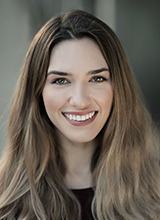
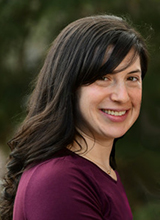
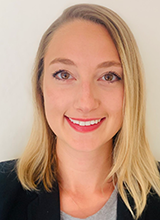
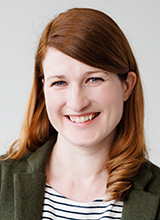
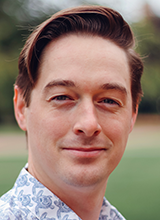
Dr. Katherine Seldin is a faculty member and licensed clinical psychologist in the University of Washington’s Department of Psychiatry and Behavioral Sciences. Before joining this department, Dr. Seldin completed her PhD in Clinical Psychology at the University of Washington, residency at Northwestern University Feinberg School of Medicine, and fellowship at the University of Ilinois Chicago.
Dr. Seldin specializes in delivering evidence-based cognitive behavioral therapies (CBTs), including mindfulness-based and exposure-based psychotherapies such as Acceptance and Commitment Therapy (ACT) and Exposure and Response Prevention (ERP). Her research interests include mood disorders, sleep, digital intervention, emotional impulsivity, and ecological momentary assessment methodology.
My research focuses on improving clinical outcome measures and intervention outcomes for individuals with Down syndrome, neurodevelopmental disorders, and other special healthcare needs. I conduct research in real-world, clinical settings using multiple different tools, including caregiver-report, behavioral assessments, and electroencephalography (EEG) to study the development of and interventions for challenging behaviors. I am currently a KL2 INCLUDE Scholar conducting research on cognitive abilities and challenging behaviors in youth with Down syndrome.
Dr. Walukevich-Dienst (hear my name) is a licensed clinical psychologist and an Assistant Professor at the University of Washington.
Her research is focused on identifying psychosocial and contextual factors associated with alcohol and cannabis misuse and co-use among young adults, including social influences (e.g., romantic partners, use partnerships), affect management motives, co-occurring mental health concerns, and high-risk substance use events and contexts.
Dr. Walukevich-Dienst aims to leverage this information to develop and test innovative, technology-informed prevention and intervention efforts to disseminate in real world settings.
She also provides psychotherapy to patients at the University of Washington’s Outpatient Psychiatry Clinic and provides supervision and training to psychology graduate students and psychiatry residents in Cognitive Behavioral Therapy.
Link to Dr. Walukevich-Dienst’s CV.
Koriann Cox, Ph.D. graduated from Northeastern University and is licensed in the state of Washington. She completed a postdoctoral fellowship in co-occurring addiction and mental health and has a range of clinical experience with a variety of concerns including depression, anxiety, trauma, reproductive mental health, and substance and behavioral addictions. Dr. Cox’s strengths-focused approach emphasizes the mutual development of goals for therapy and ongoing collaboration between herself, the patient, and the care team. Dr. Cox uses a number of therapeutic modalities including but not limited to Cognitive Behavioral Therapy, Acceptance and Commitment Therapy, and Cognitive Processing Therapy.
I am a behavioral neuroscientist who earned my PhD from Rutgers University and completed a postdoc here, in the Psychiatry and Behavioral Sciences Department at the University of Washington. My lab, located in the MIRECC at VA Puget Sound, aims to identify the neural mechanisms underlying substance use disorders and maladaptive decision making.
My primary focus is studying the neurobiological consequences and predictors of chronic fentanyl use. To accomplish this, I utilize cutting-edge in-vivo optical neuroscience tools (photometry, optogenetics, miniscopes) along with a newly developed oral-fentanyl self-administration model for rats and mice. I am also the lead developer for DeepSqueak, a popular software package for bioacoustics analysis that integrates machine-vision algorithms with an intuitive graphical interface to accelerate animal communication research.
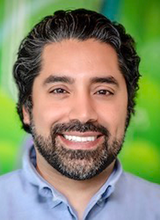
I am a Board-certified Child and Adolescent Psychiatrist at Seattle Children’s Hospital, a faculty member of the University of Washington School of Medicine since 2020, a board member of the ARC Trust of Washington. Clinically, I am an inpatient attending psychiatrist on the Psychiatry and Behavioral Medicine Unit at SCH, and I also see children and families on an outpatient basis at the SCH Autism Center. In each of these roles I am involved in the teaching and supervision of medical students, residents, and fellows. Academically, I am the Director of Career Advising in Psychiatry, helping guide graduating medical students towards residency and careers in Psychiatry. In the CAP fellowship, I am the course director for the Genetics component of the didactics series, and also presenter for the Child Psychiatry portion of the Mind, Brain, and Body course. My professional interests include autism spectrum disorder, neurodevelopmental and genetic disorders, catatonia, bullying, trauma-informed care, and anxiety in children of immigrant families. In all facets of my work I utilize evidence-based practices, and aim to to create strong partnerships with patients and families to achieve positive outcomes.
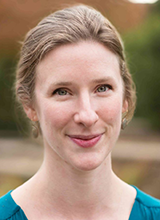
My research broadly seeks to understand the ways in which our social and romantic relationships intersect with physical and mental health. Additionally, I work in treatment development and evaluation with the aim of improving and harnessing social relationships to increase physical and mental wellbeing. I was recently funded by a 5-year Career Development Award through VA HSR&D. This award aims to both improve clinicians’ measurement of social relationships in the context of mental health care and modify and test brief, Primary Care-based interventions for PTSD and social support. In this line of research, I am PI of an HSR&D and VAPS R&D-funded nationwide survey of veterans both with and without PTSD that seeks to collect psychometric and acceptability data on social support instruments for future use in measurement-based care. I am also collaborating with colleagues in HSR&D to develop and test a dyadic intervention for improving health behavior. I am lucky to provide clinical care as a staff psychologist in the PTSD Outpatient Clinic at VA Puget Sound, where I deliver individual, group, and couples treatments for PTSD and provide psychoeducation on trauma and related conditions to loved ones of veterans with PTSD.
I am a clinical psychologist and researcher. My research focuses on pediatric psychology, intervention science, and leveraging digital technologies to disseminate and implement evidence-based psychosocial interventions for children, teens, and young adults with serious medical conditions and co-occurring anxiety, stress, and depression. Digital mental health care initiatives have the potential to scale-up interventions and overcome structural barriers and unequal access to psychosocial care. Current and future research investigations aim to help improve patient and family coping skills, psychosocial well-being, and quality of life by developing and implementing evidence-based mental health interventions.
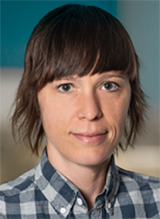
I am a child and adolescent psychiatrist at Seattle Children’s Hospital and faculty member at the University of Washington Medicine. My SCH practice locations include the Gender Clinic (Adolescent Medicine), Outpatient Psychiatry Clinic, Autism Center, and the inpatient unit- Psychiatry and Behavioral Medicine Unit (PBMU). I believe in delivering compassionate, evidence-based care in supporting patients and their families. My approach is both comprehensive and patient-centered, as it is important to consider the needs of the individual while also appreciating societal and cultural context. I specialize in working with diverse patient populations with various marginalized identities, such as those who identify as LGBTQ, gender diverse, and/or neurodiverse. I also work closely with the Adolescent Medicine Gender Clinic in supporting any mental health needs of transgender/gender diverse youth and their families. I also collaborate with colleagues in specialty medical clinics to coordinate care of medically complex patients. Additionally, I serve as a consultant with various school programs to support mental health initiatives and advocacy efforts.
Academically, I am involved with several initiatives both locally and nationally, particularly those that work to promote diversity and equity. I serve on committees supporting the SCH/UW CAP Fellowship Program, educating trainees and students through direct clinical supervision as well as with lectures and discussions. On a national level, I serve on the Sexual Orientation and Gender Identity Issues Committee (SOGIIC) for the American Academy of Child and Adolescent Psychiatry (AACAP). My clinical research focuses on finding strategies to better support the mental health and well-being of patients and families who are LGBTQ+. Additionally, I work on studies that explore the intersection between gender diversity and neuro diversity/autism spectrum.