Personal Statement
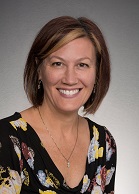
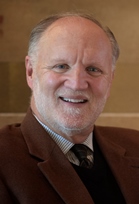
I completed my undergraduate, medical school, and residency training at the University of Washington in Seattle. I am board certified in family medicine and psychiatry with subspecialty training in addiction medicine. My clinical interests include inpatient and outpatient psychiatric consultation to primary care providers, mood disorders in pregnant and postpartum mothers, and clinical service in underserved communities.
Personal Statement
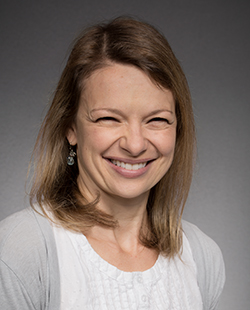
I am a Clinical Assistant Professor in the Department of Psychiatry and Behavioral Sciences at the University of Washington. I received my MD from New York University and completed my adult residency at the Harvard Massachusetts General Hospital/McLean Hospital program where I was chief resident. I then went on to complete a fellowship in psychosomatic medicine at the University of Washington. I am currently on faculty at Harborview Medical Center on the inpatient psychiatry consult service.
I have a longstanding interest in the intersection between medicine and psychiatry, and am the author of numerous published articles on topics ranging from the neuropsychiatric effects of steroids to managing borderline personality disorder in the primary care setting. I have a particular interest in the use of electroconvulsive therapy, including in the treatment of catatonia. I am currently involved in research projects in conjunction with the division of nephrology and the neurosurgery department. In addition to my clinical and research interests, I am also an associate program director for the UW Adult Psychiatry Residency at Harborview Medical Center.
Personal Statement
My clinical service and research focuses on the interaction of mental and physical illness, especially in patients with chronic pain. Much of my research in recent decades has focused on the risks of treating chronic pain with opioids. I have developed educational programs and outcome tracking tools to assist with opioid treatment of chronic pain. I have published a book about patient empowerment in chronic disease care, The Patient as Agent of Health and Health Care (Oxford, 2017). I have another book written with Jane Ballantyne forthcoming, The Right to Pain Relief and other deep roots of the opioid epidemic (Oxford, 2022).
Personal Statement
My primary clinical interest and expertise is in the evaluation and treatment of women with mental health issues during pregnancy and postpartum, as well as women’s mental health throughout the life cycle, including premenstrual and menopause-related psychiatric symptoms. In addition, I am interested and experienced in evaluation and treatment of anxiety disorders and depression.
Personal Statement
My primary interests are in diagnostic evaluation, psychiatric methods, psychosomatic medicine, fatigue syndromes, pain disorders, abnormal illness behaviors, and human temperament and personality. I have conducted research jointly with colleagues at the University of Washington and the University of Washington Twin Registry on chronic widespread pain, depression and related phenomena.
Personal Statement
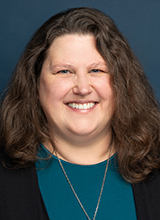
My career goal is to give suicidal clients and their clinicians the best chance to succeed. I have been working in the area of health services, treatment development, and clinical trials research to prevent suicide for over 30 years. My graduate training was in community/clinical psychology and focused on achieving clinical ends through prevention and other systemic interventions in socio-culturally diverse populations. I have brought these perspectives into health services research. I have developed or adapted interventions to improve care and clinician willingness to work with suicidal patients including Caring Contacts, Dialectical Behavior Therapy (DBT), Collaborative Assessment and Management of Suicidality (CAMS), and Preventing Addiction Related Suicide (PARS). I have developed an adaptation of DBT Next Steps, a program to assist psychiatrically disabled individuals find and maintain living wage employment. My research has been funded by NIMH, NIDA, the Department of Defense, American Foundation for Suicide Prevention, and the State of Washington.
I am the director of the Center for Suicide Prevention and Recovery (CSPAR) whose mission is to promote the recovery of suicidal individuals and the effectiveness and well-being the clinicians and families who care for them by conducting rigorous and ecologically valid research, developing innovative interventions, improving policies, systems and environments of care, and providing expert training and consultation. CSPAR faculty and staff seek a deep understanding of the cultures and settings in which we work that leads to meaningful and effective interventions ready for implementation.
I also direct the Suicide Care Research Center, an NIMH P50 funded research center focused on using Human Centered Design and MOST optimization methodology to improve the care of adolescents and young adults (age 13-30 years) in outpatient medical settings. We are conducting one fully powered trial, three R34s, and 4 pilot studies within UW Medicine and Seattle Children’s hospital to develop innovative interventions to support primary care, Collaborative Care, and specialty medical clinics care for patients experiencing suicidal thoughts and behavior. The center supports effort of over 20 faculty and 16 staff as well as 11 emerging and advanced collaborating scholars and funds 2 annual pilot grants (each $100,000 over two years).
In addition to clinical research, I founded the Society for Implementation Research Collaboration (SIRC) focused on disseminating and implementing innovative, evidence-based interventions in the systems that need them. Beyond my research, I directed the Harborview Dialectical Behavior Therapy program at Harborview Medical Center 1996-2019, co-lead the UWAnnual Comprehensive DBT Training Program and Suicide Care in Healthcare Systems: We Can Do Better Serving our Patients and Caring for our Clinicians, both of which meet the Washington State requirement for suicide prevention training. I have a long history of training and mentoring junior faculty, post-doctoral scholars, psychiatry residents, pre-doctoral psychology interns, undergraduate students, and post-baccalaureate trainees. I provide psychotherapy and consultation at the UWMC Outpatient Psychiatry Clinic.
Personal Statement
Early in my training it became clear that intense pathology transfixed me so inpatient psychiatry was a natural fit. My specific area of expertise within psychiatry is care of the acutely ill hospitalized psychiatric patient. I have also developed clinical expertise in the diagnosis and management of Catatonia. In addition to clinical care, education is another area of interest. I love to teach and it has been the focus of my career. I am intimately involved in the education of psychiatry residents and am a founding faculty member of the Clinician-Teacher Pathway for our residency program. In addition to teaching medical students and residents, I regularly educate primary care providers on detection and treatment of psychiatric illnesses in primary settings. I assumed the role of Vice Chair of Education in 2020 and in that role I oversee all educational efforts for our department.
Personal Statement
As a clinical and forensic psychiatrist, my professional roles include being the Director of the UW Center for Mental Health, Policy, and the Law; Associate Professor in the Department of Psychiatry; and a Staff Psychiatrist at the VA Puget Sound. I hold multiple board certifications: Psychiatry, Forensic Psychiatry, Brain Injury Medicine, and Sports and Performance Psychiatry. In addition to my medical training, I earned my law degree from the University of Washington.
As a member of the American Academy of Psychiatry and the Law (AAPL), I serve on the Ethics, Research, and Resident Education Committees and I twice earned AAPL’s Young Investigator Award. I am the Legal Digest Editor for the Journal of the American Academy of Psychiatry and the Law.
I have served as an expert witness or consultant in legal cases involving criminal and civil competencies; criminal responsibility; malpractice; personal injury; sexual and gender harassment; and fitness for duty, among others. I teach courses in forensic mental health at the University of Washington and speak locally and nationally on topics related to psychiatry and the law.
Personal Statement
I completed my Residency in Psychiatry with the UW in 1982 and since then have worked at Harborview Medical Center in the Psychiatry Department. I am a Clinical Associate Professor and provide weekend and on-call coverage for 5MB on the Intensive Psychiatric Unit.